Morocco: Berber Village & Cooking Class
Some days on a trip stay with you long after you’ve left and our time in a Berber village at the foot of the High Atlas Mountains was undoubtedly one of them.
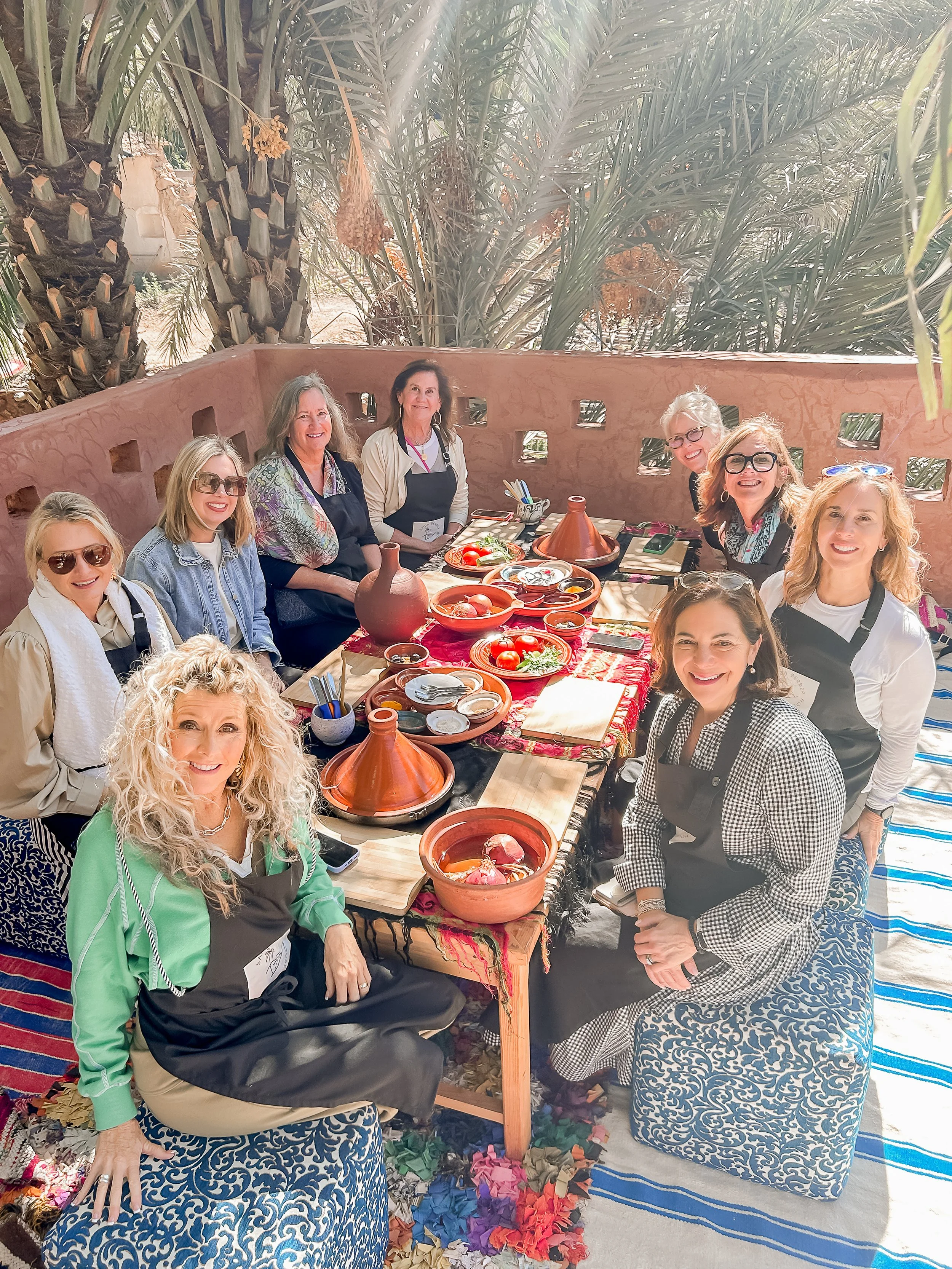
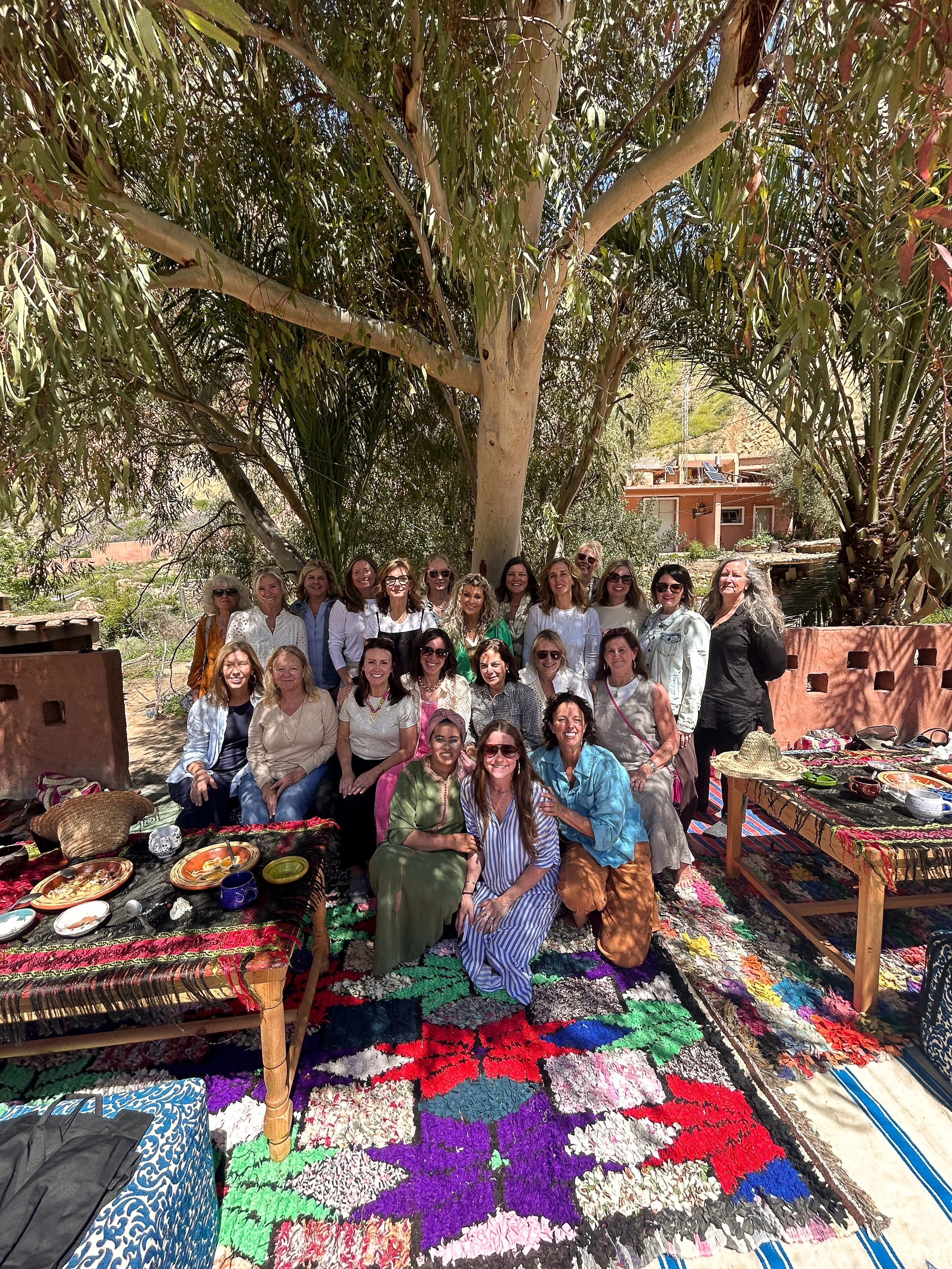
From the moment our group arrived at Saida Berber House, it felt like stepping into something deeply personal and meaningful. This wasn’t a curated experience from a distance; it was an invitation into someone’s home, their story, and their way of life.
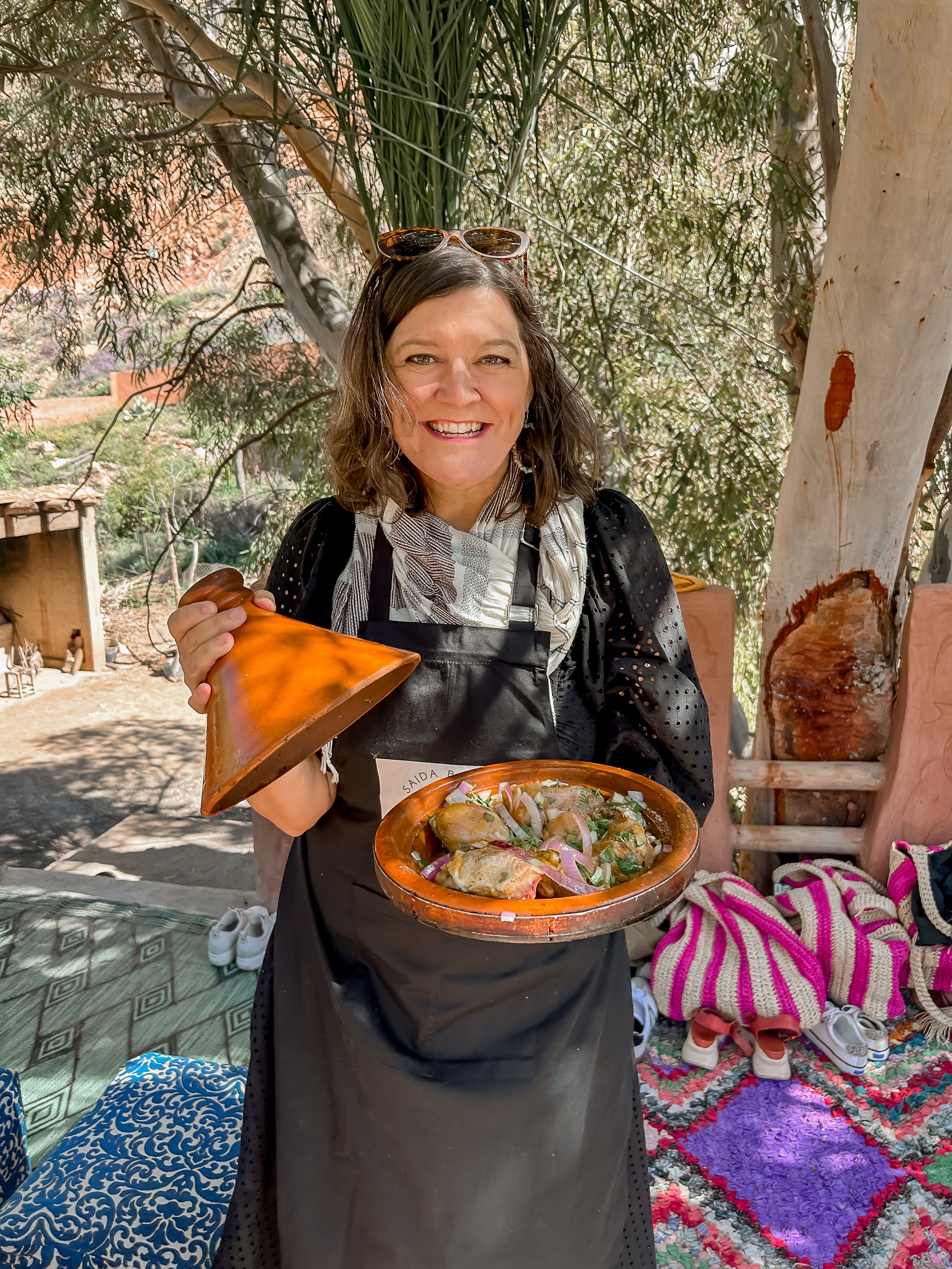
We were welcomed by Saida, a remarkable female entrepreneur who has transformed her family home into a cooking school that beautifully bridges cultures while honoring the artisanal traditions of the Berber people. Through her work, she’s not only creating immersive experiences for travelers, but also opening doors for local women—building community and opportunity in a way that feels both intentional and inspiring.
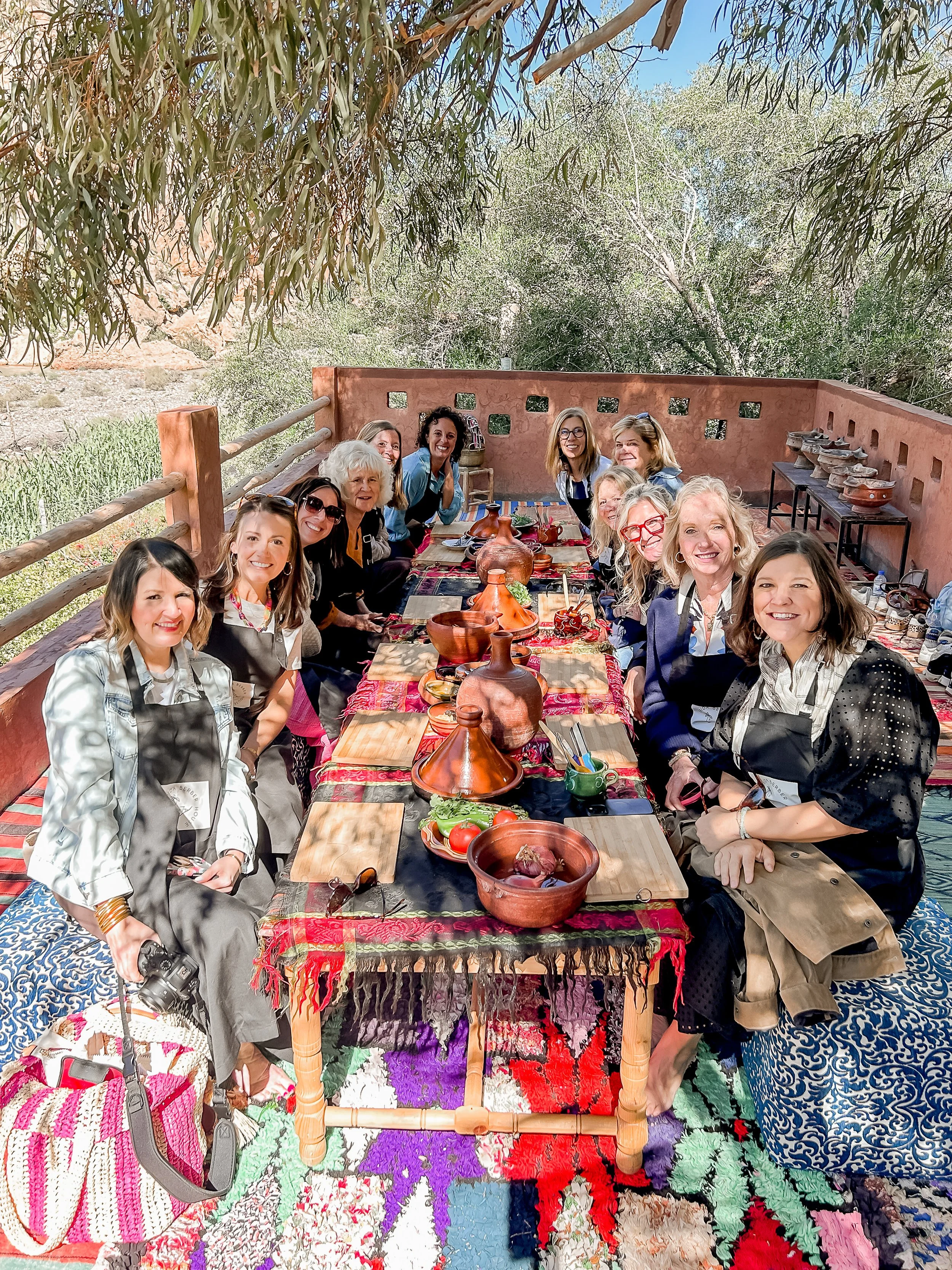
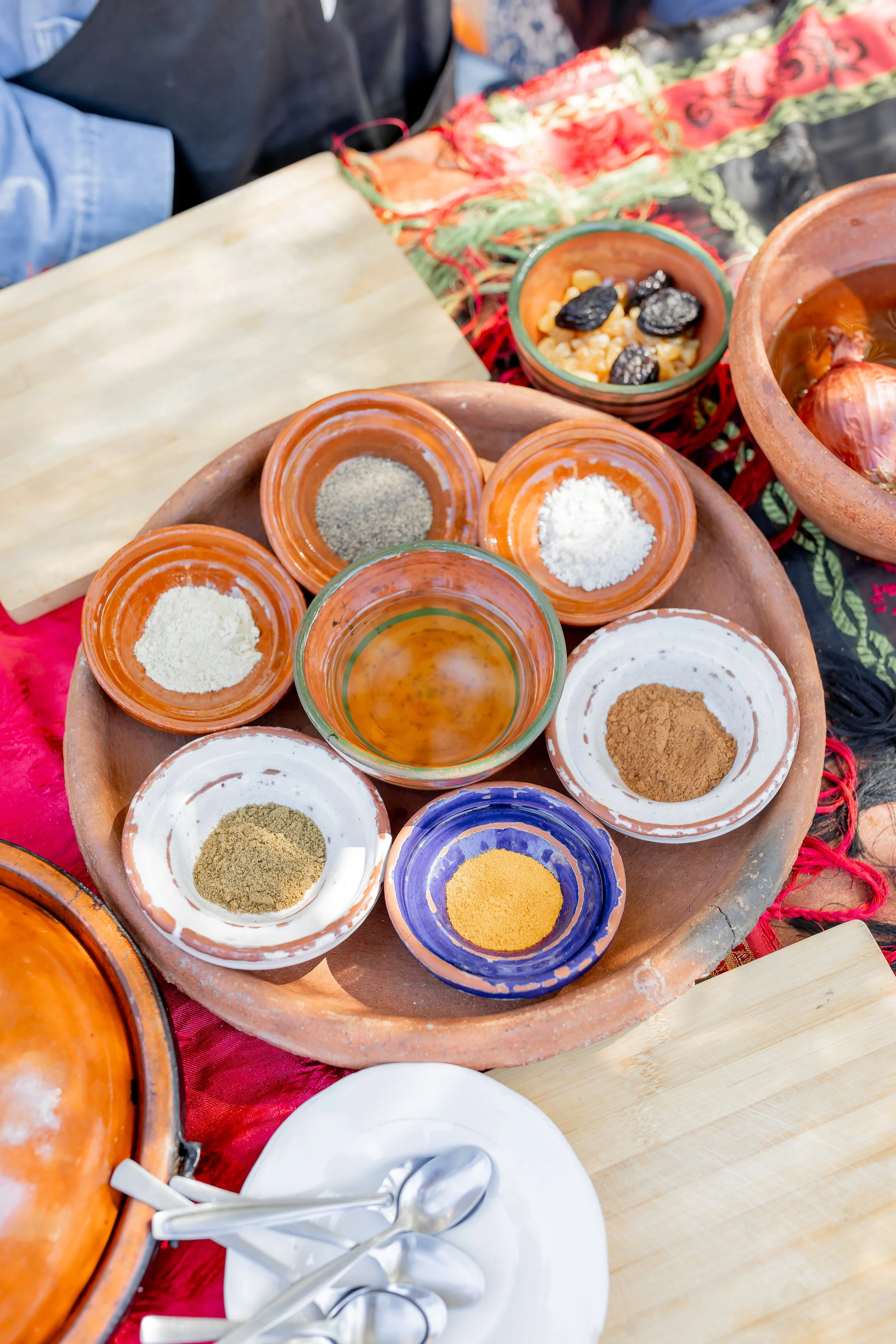
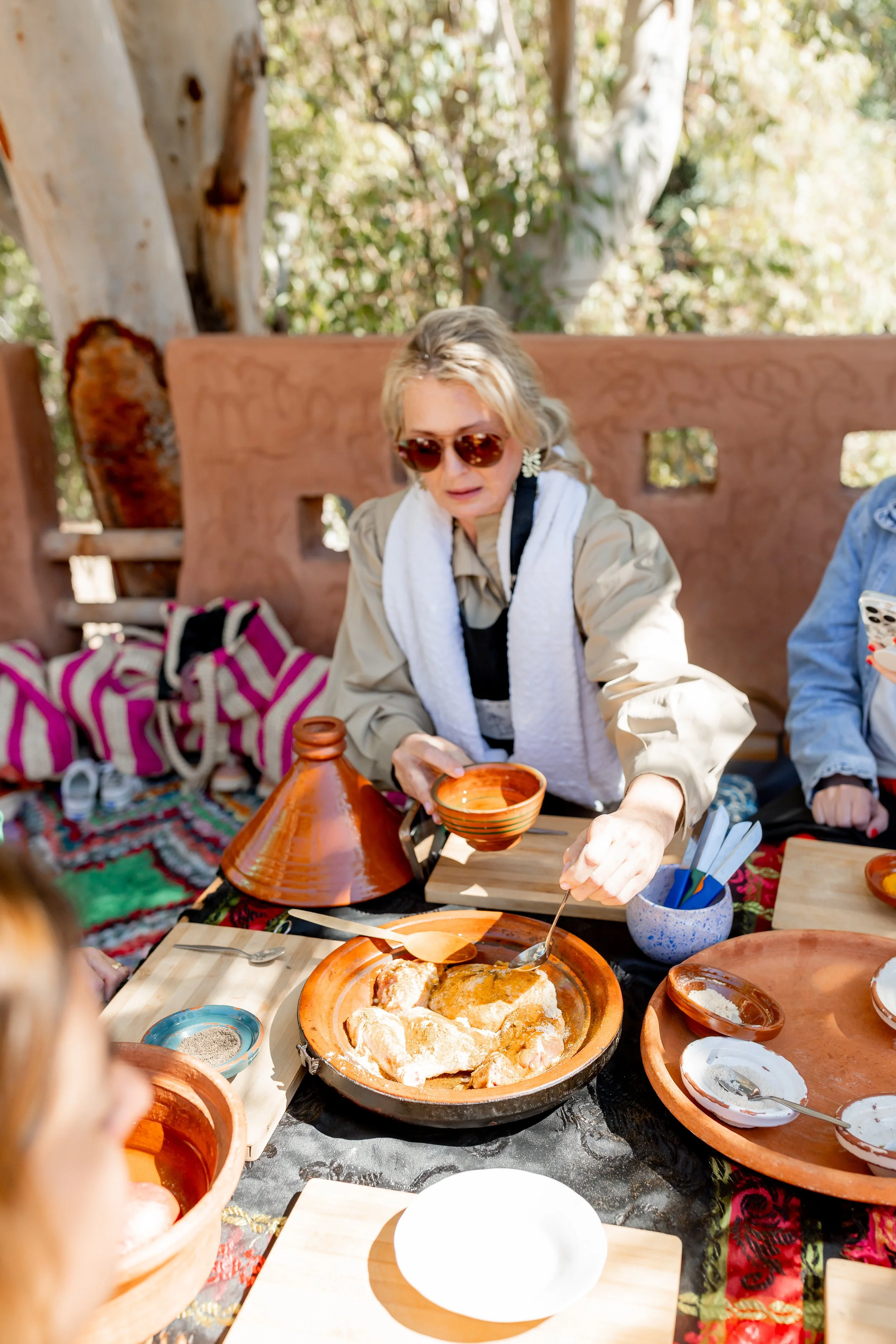
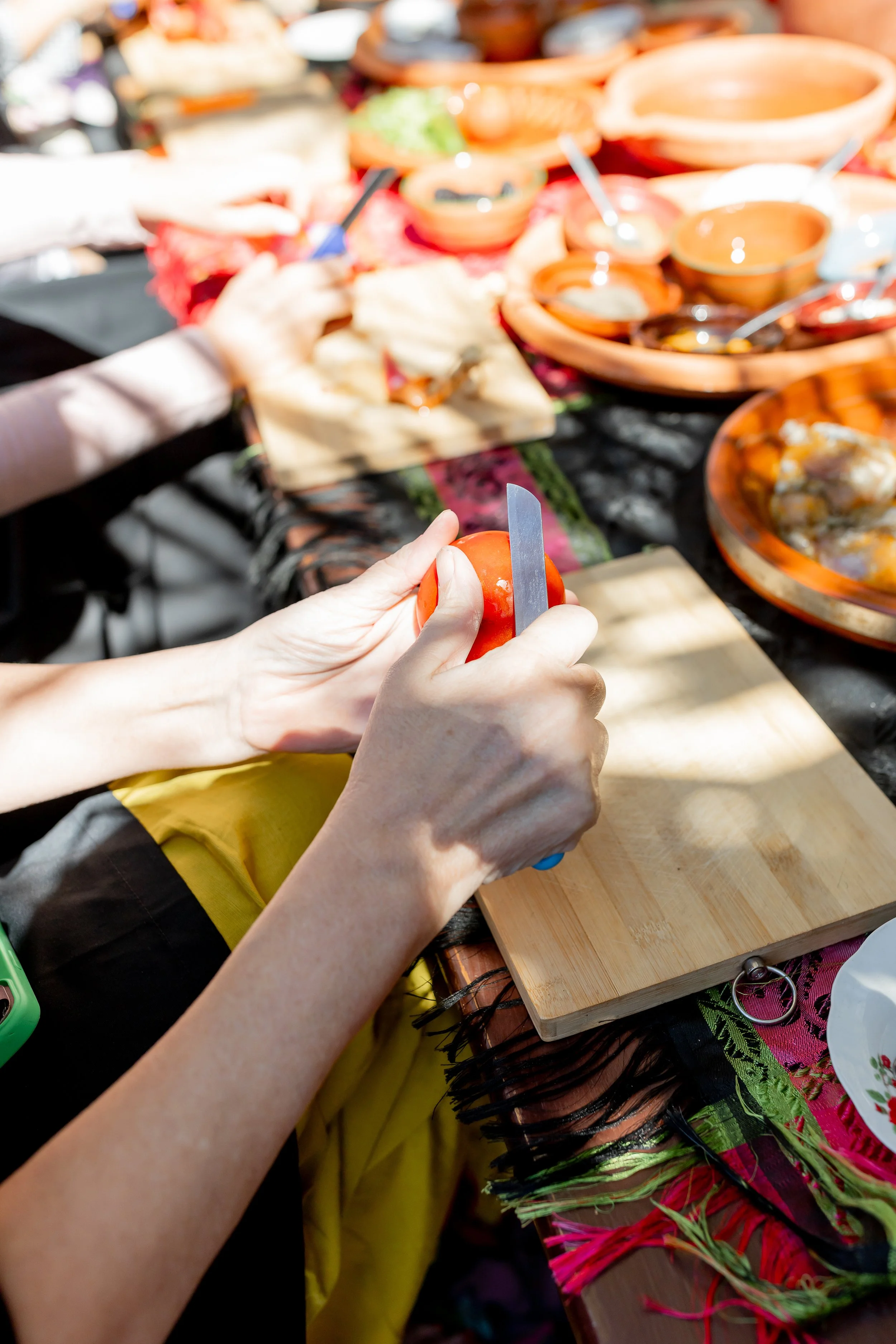
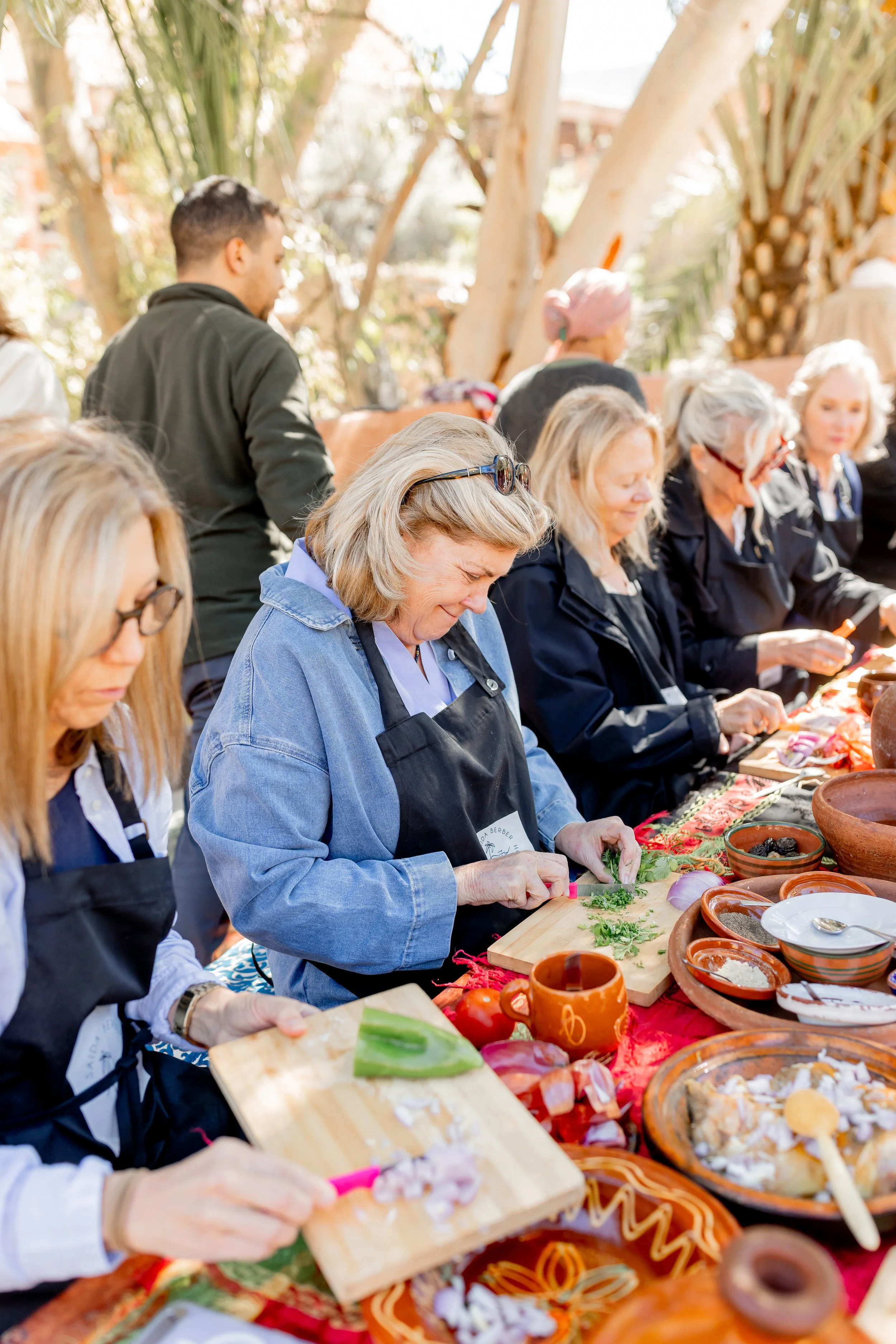
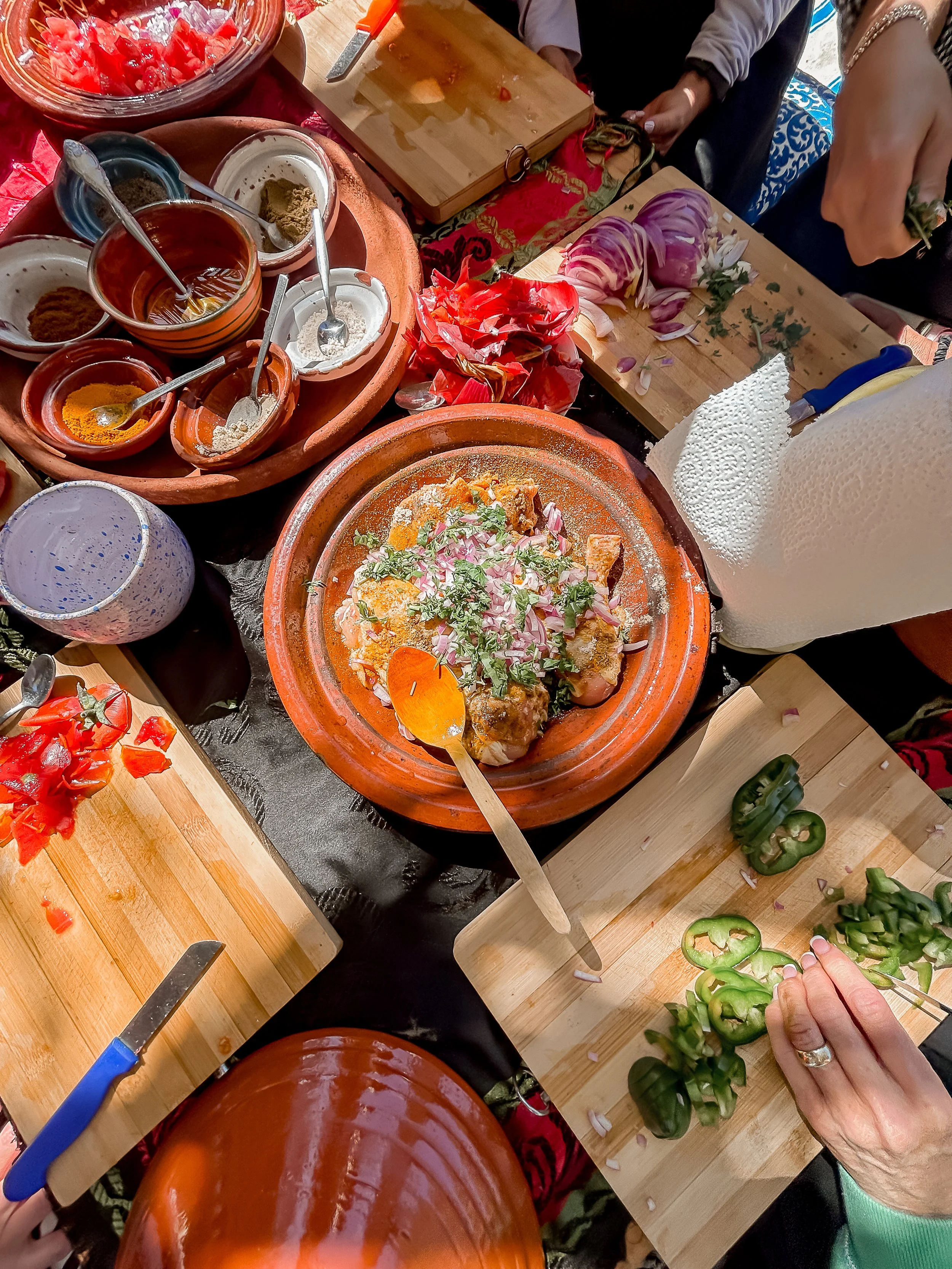
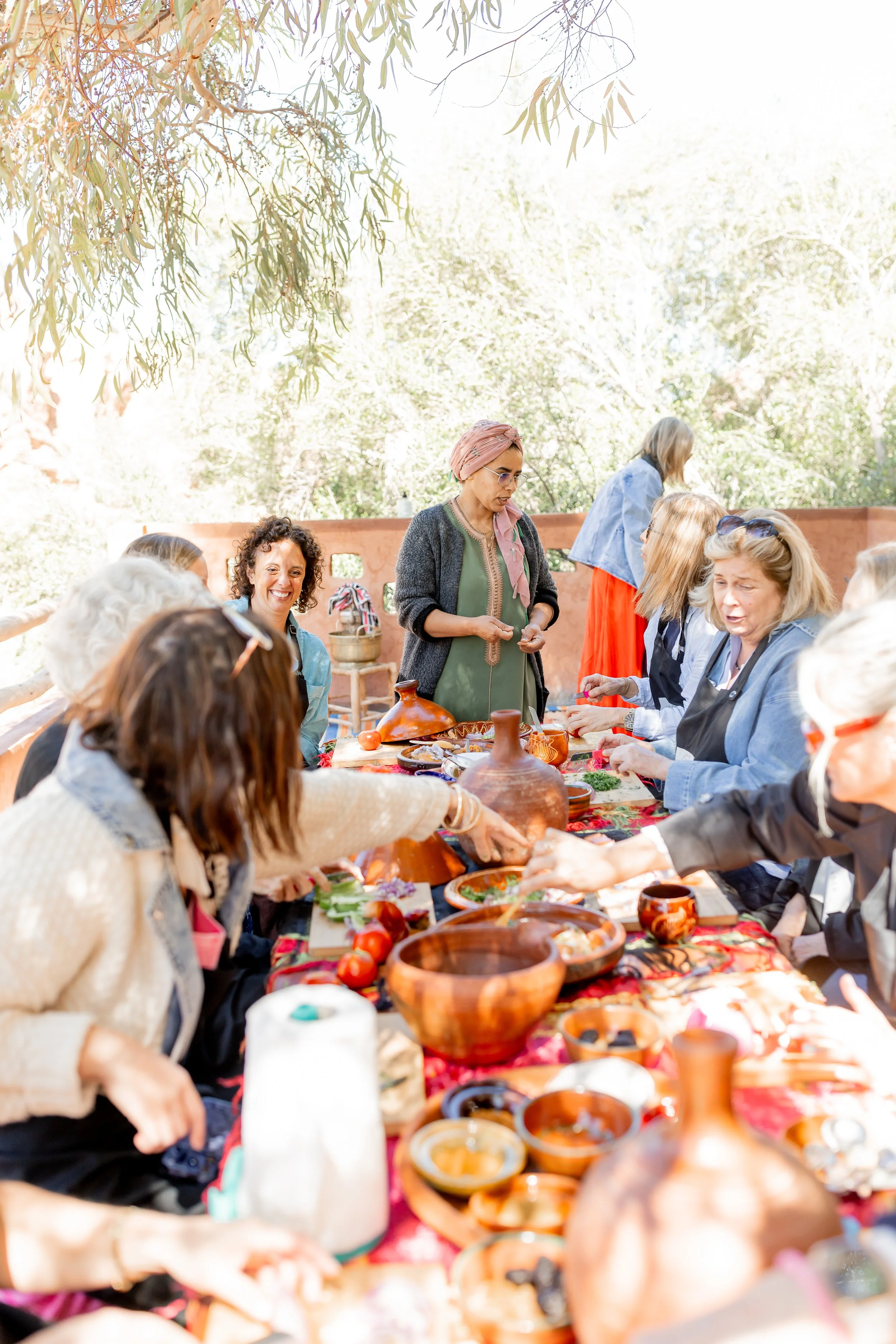
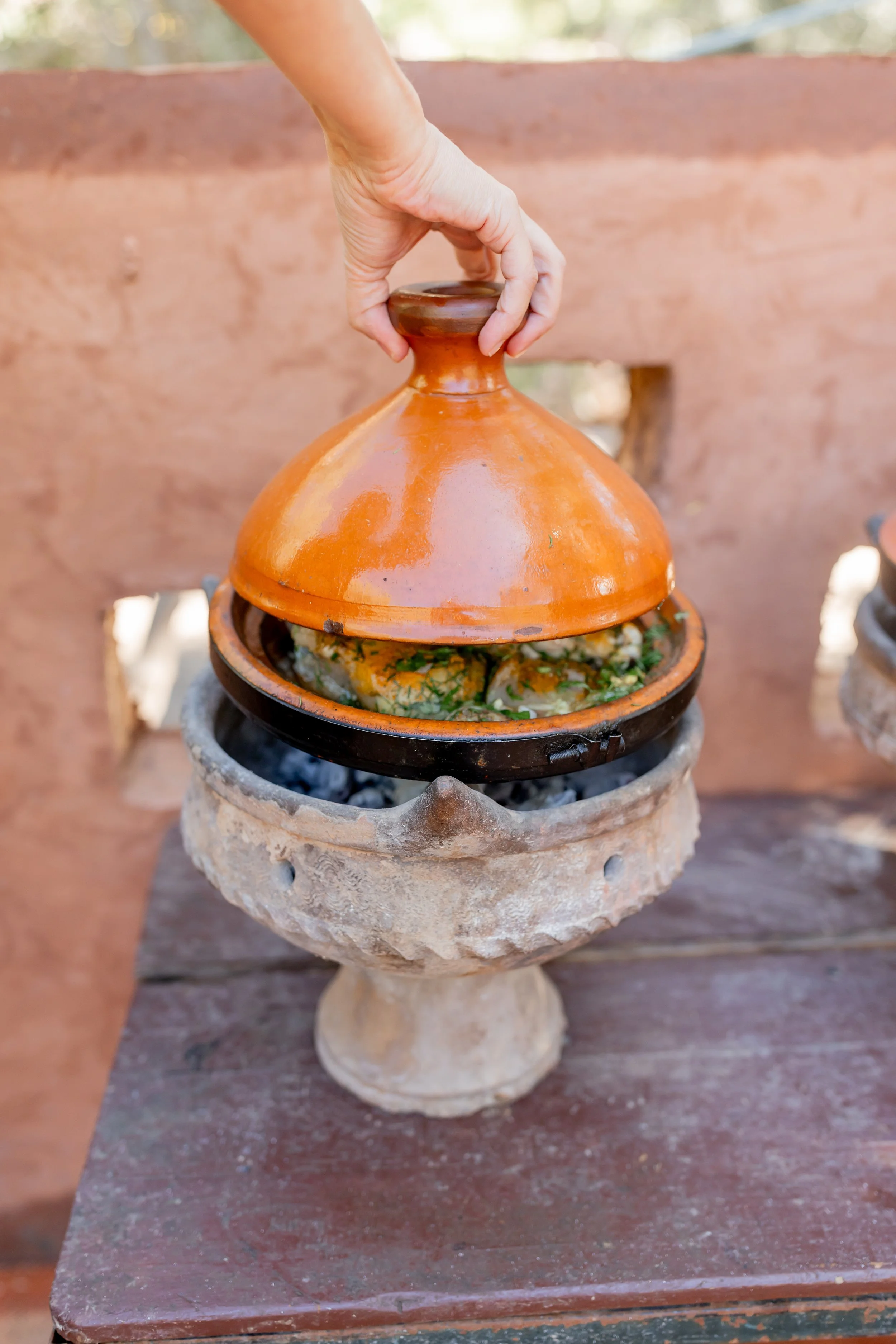
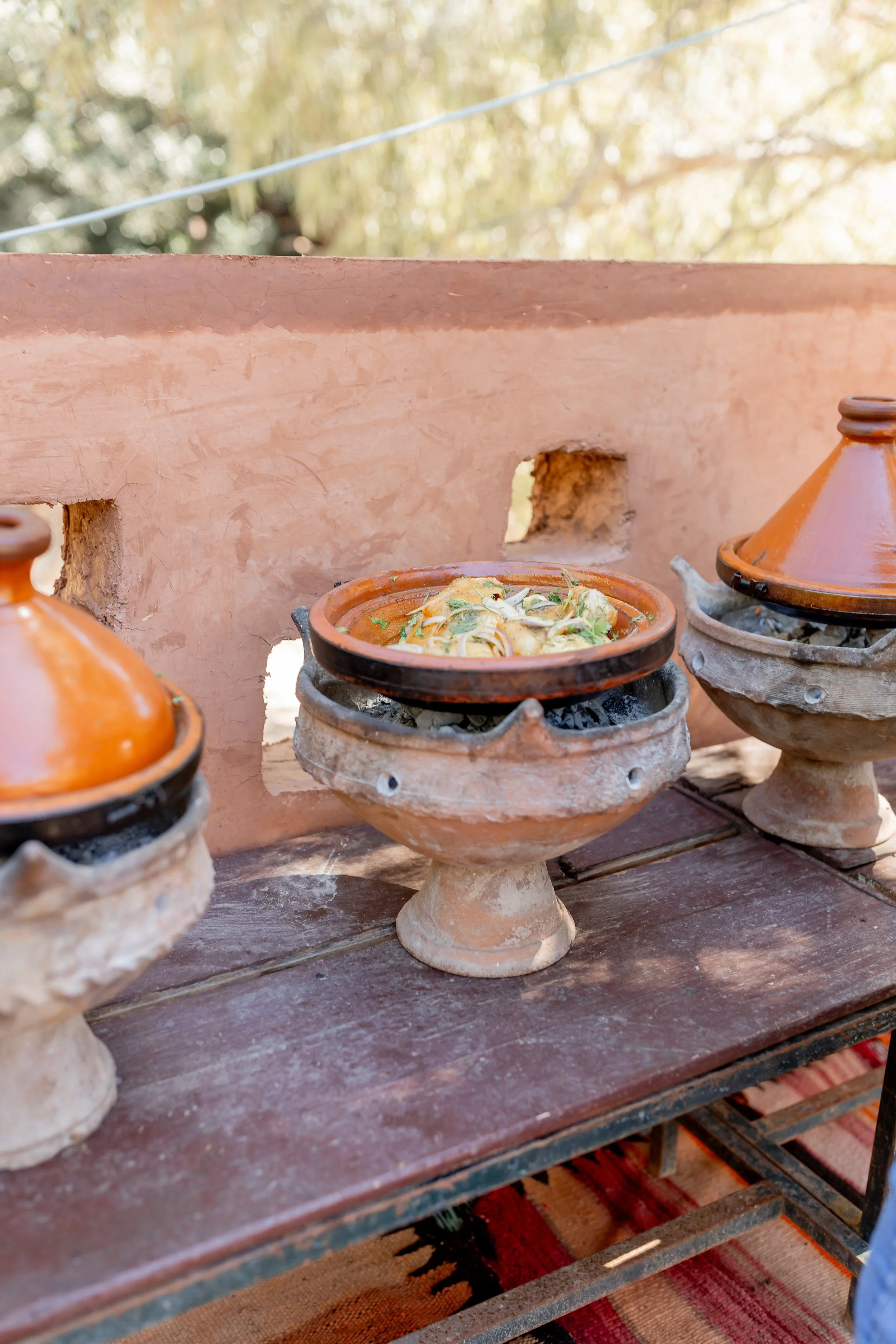
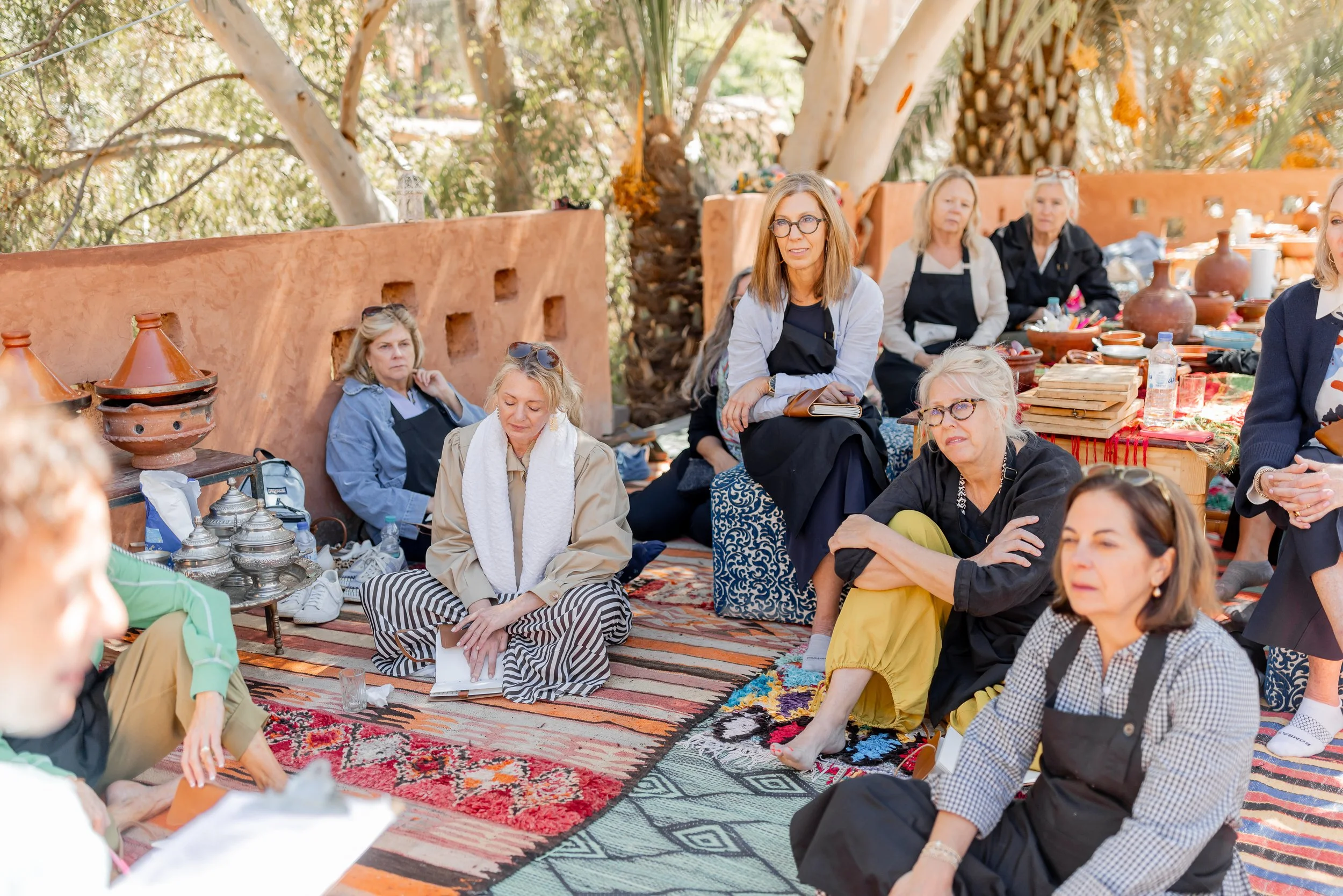
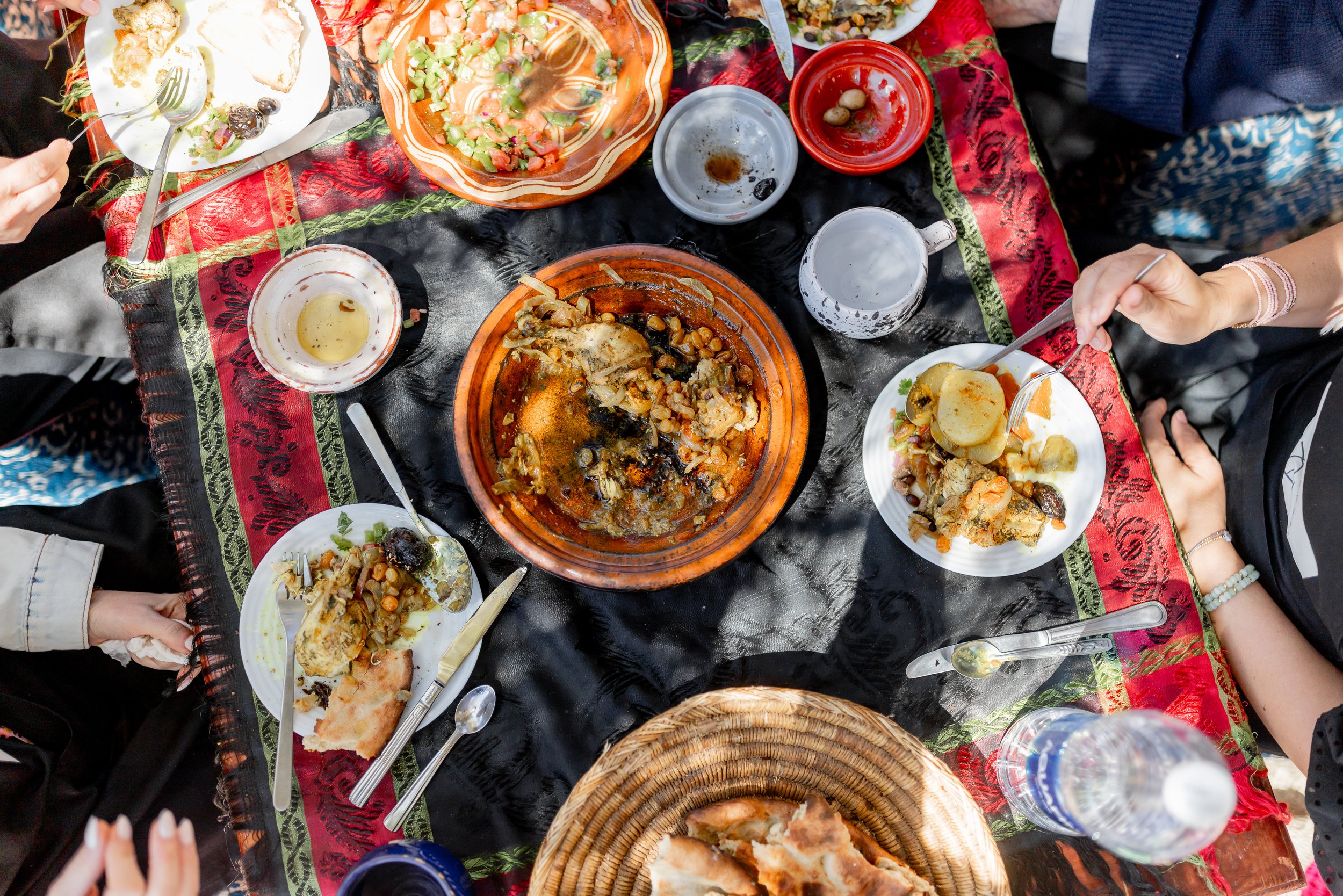
Our morning began hands-on and with ingredients laid out before us, we were guided step by step through preparing a traditional chicken tagine. A tagine is both a dish and the vessel it’s cooked in; a conical clay pot designed to trap steam and slowly circulate moisture, resulting in tender, deeply flavorful meals. As we layered spices, vegetables, and chicken into our pots, we began to understand that this wasn’t just about cooking, it was about patience, balance, and tradition.
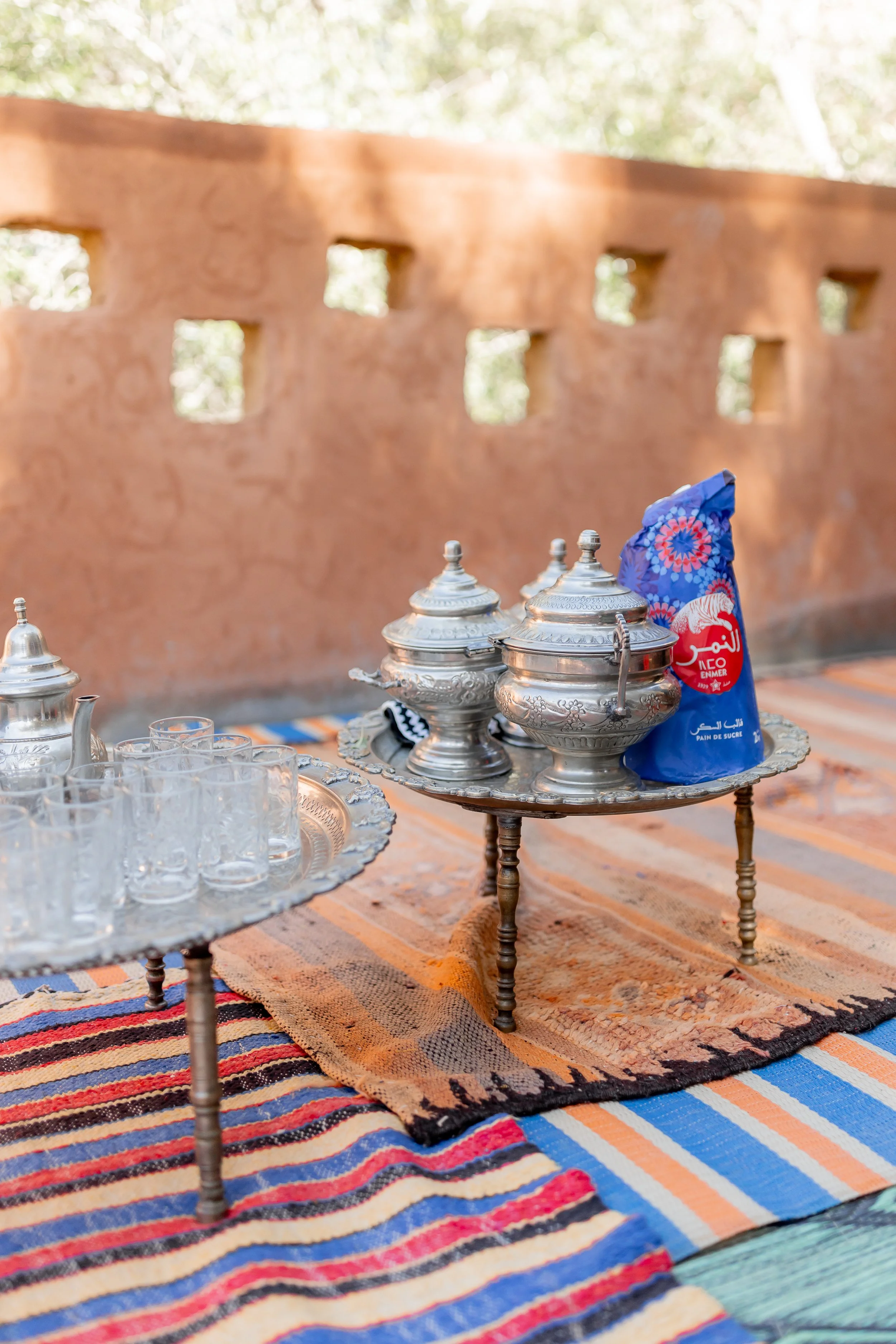
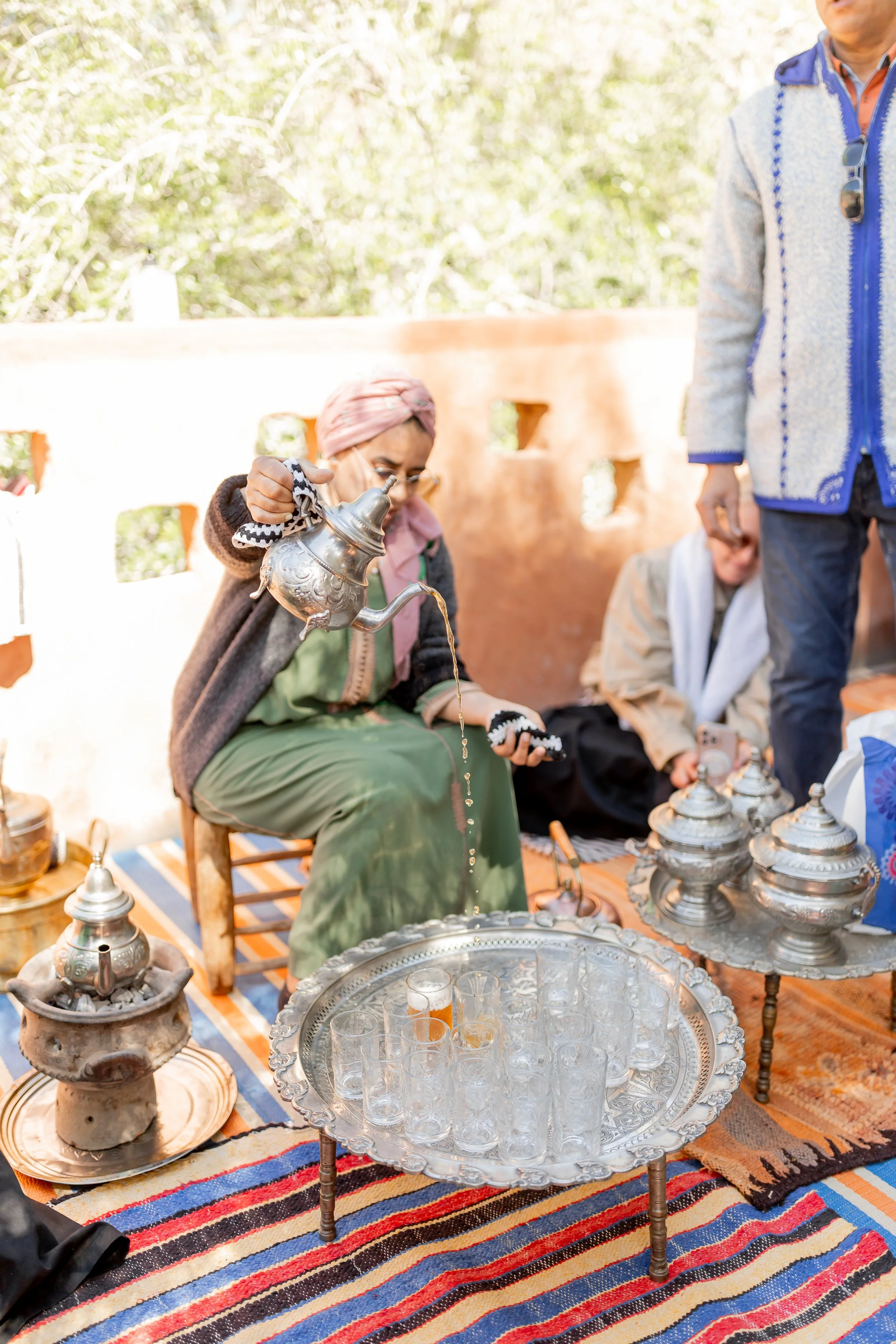
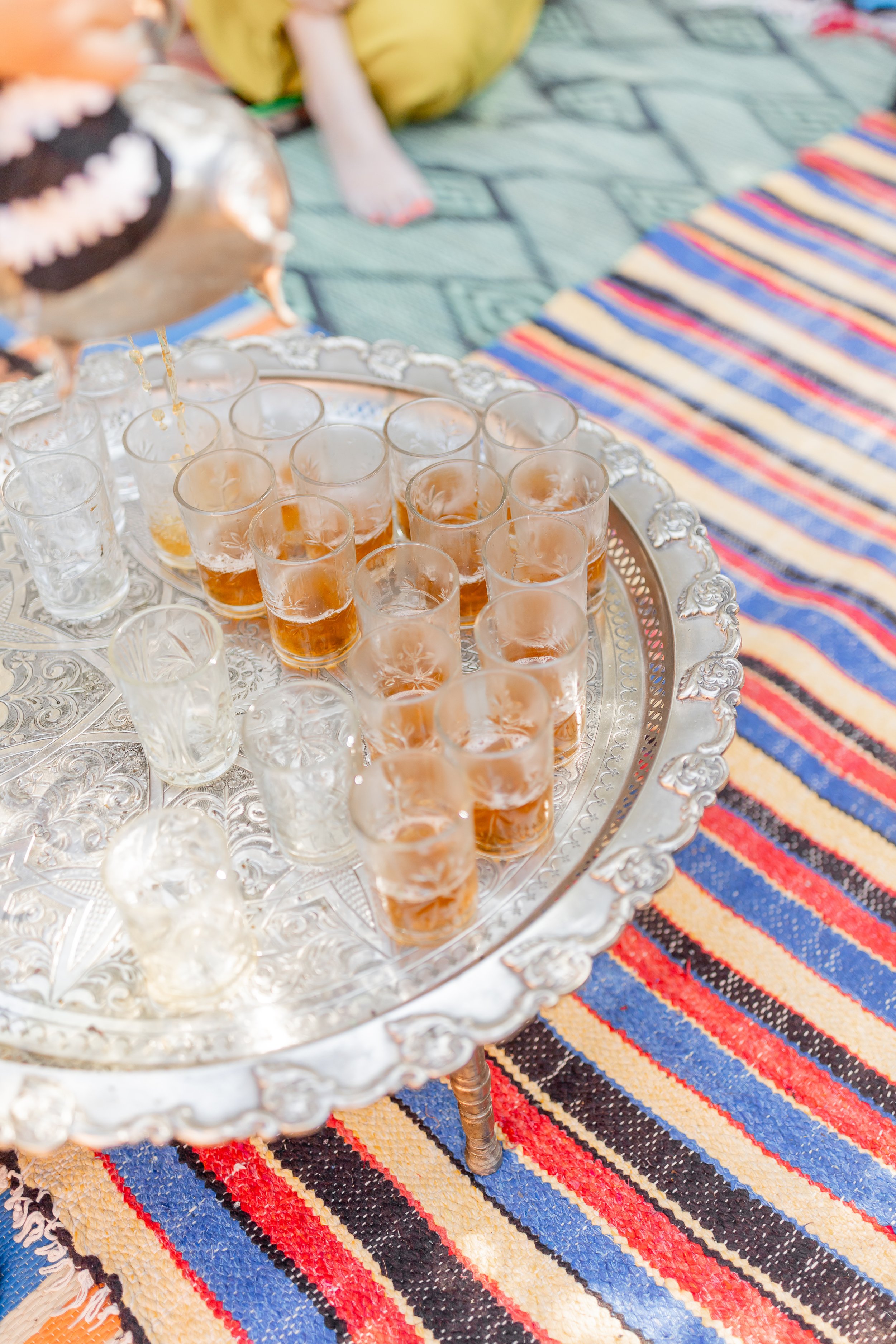
From there, we transitioned into a traditional Moroccan tea ceremony, a ritual that carries as much meaning as the drink itself. The tea—typically green tea sourced from China—is combined with fresh mint and a distinctive cone-shaped sugar made from sugar beets. The method of pouring, from a height into small glasses, isn’t simply for show; it aerates the tea, enhancing its flavor and creating that signature frothy top. It’s a practice rooted in hospitality, care, and precision to ensure each glass is just right.
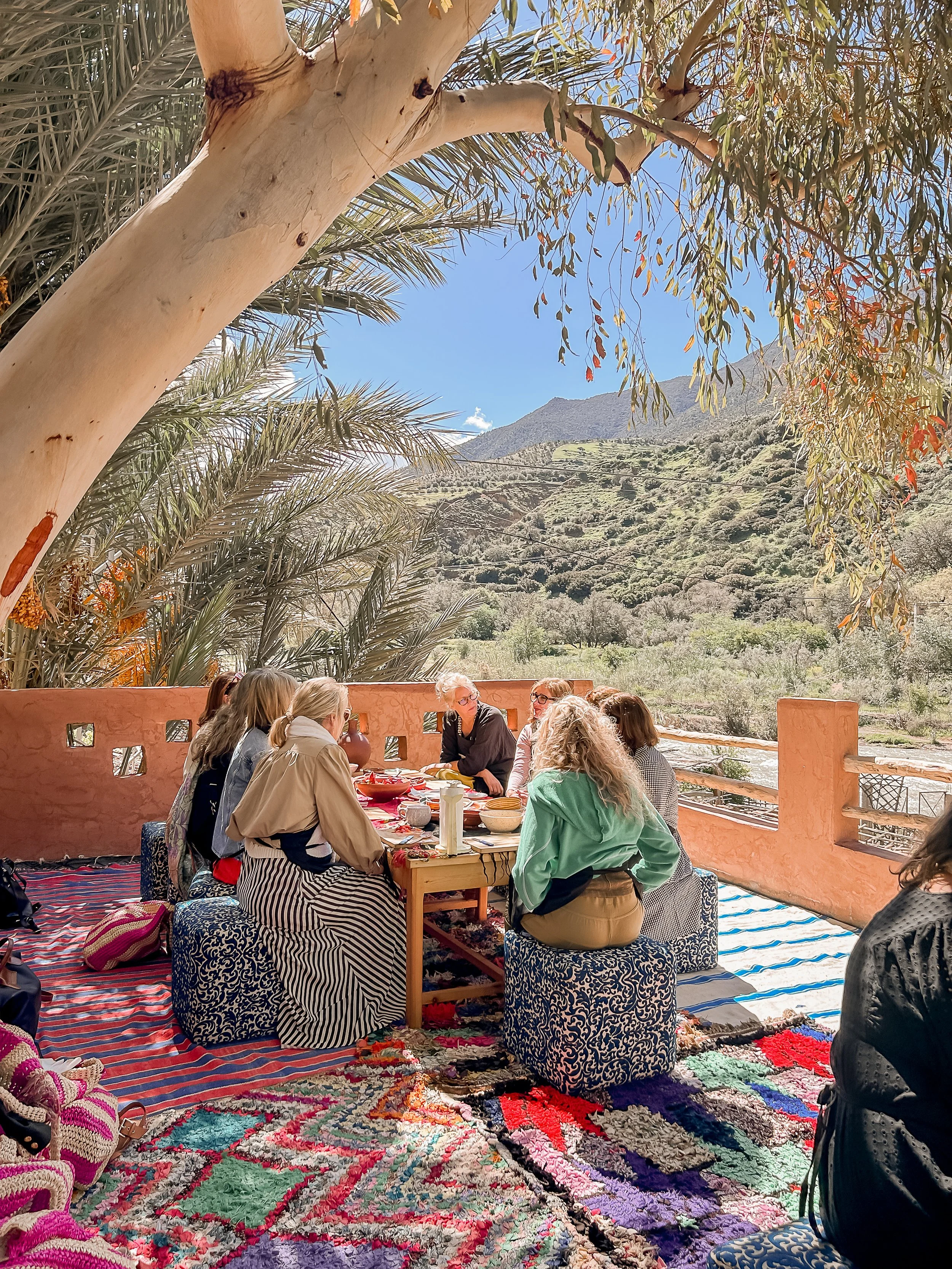
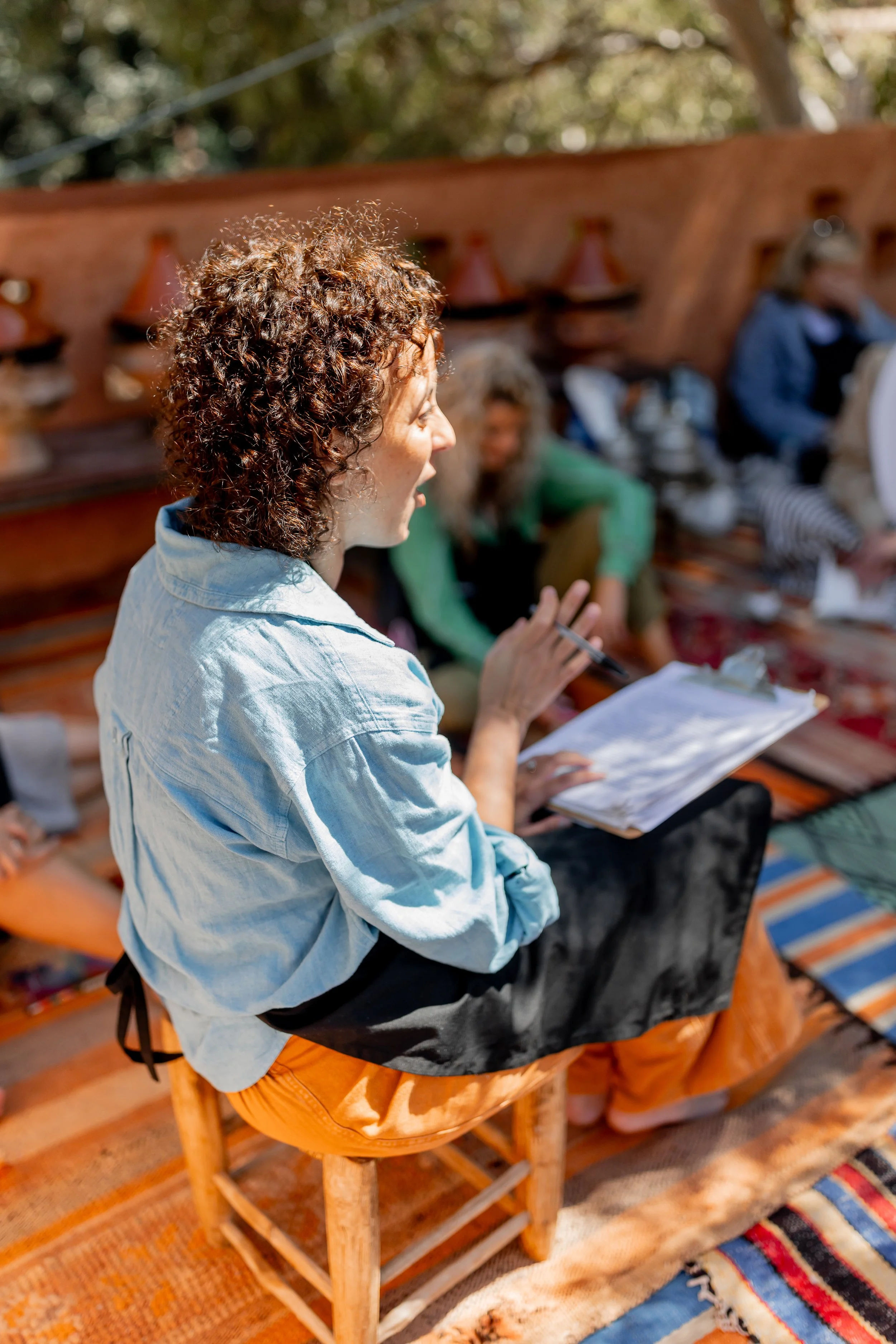
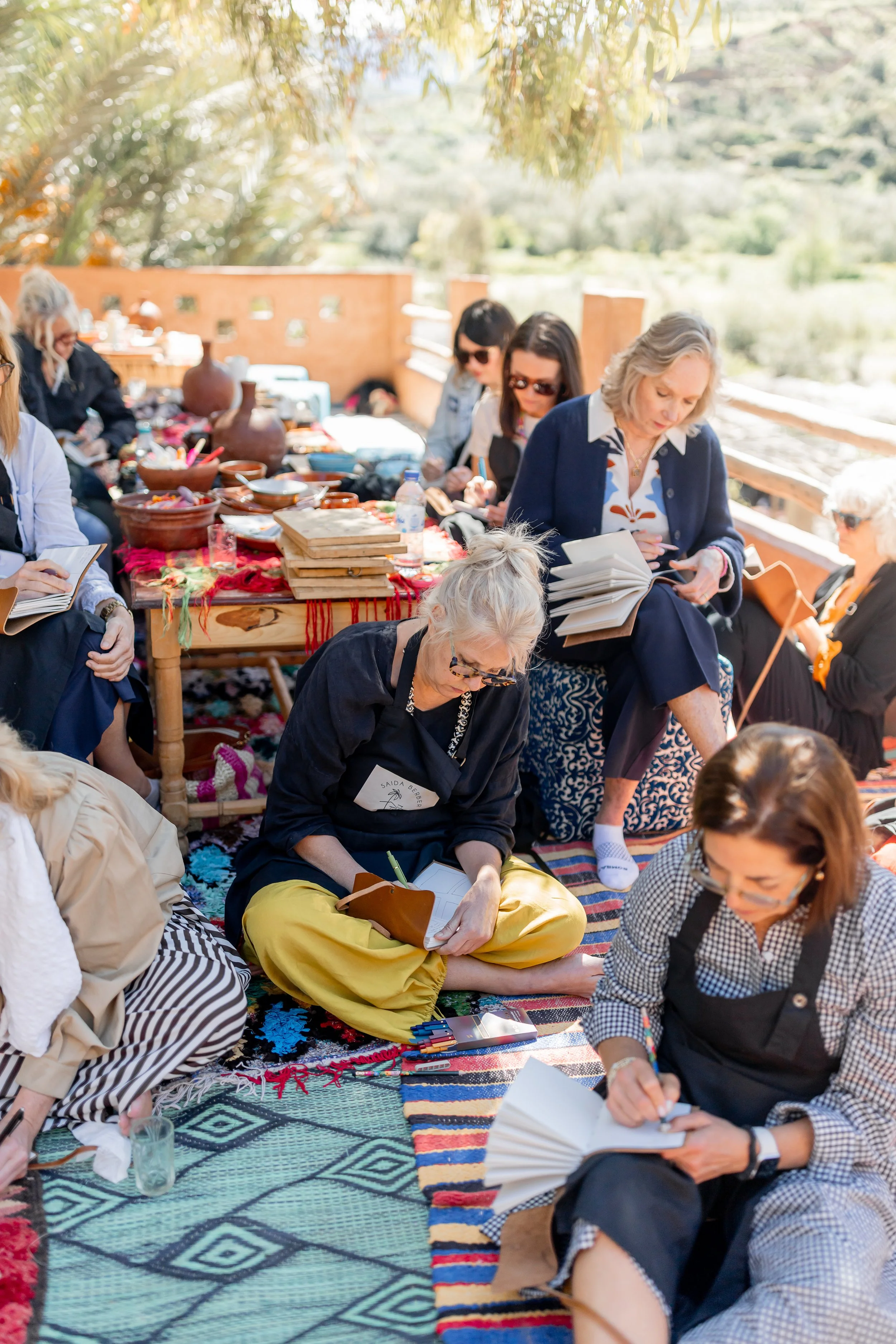
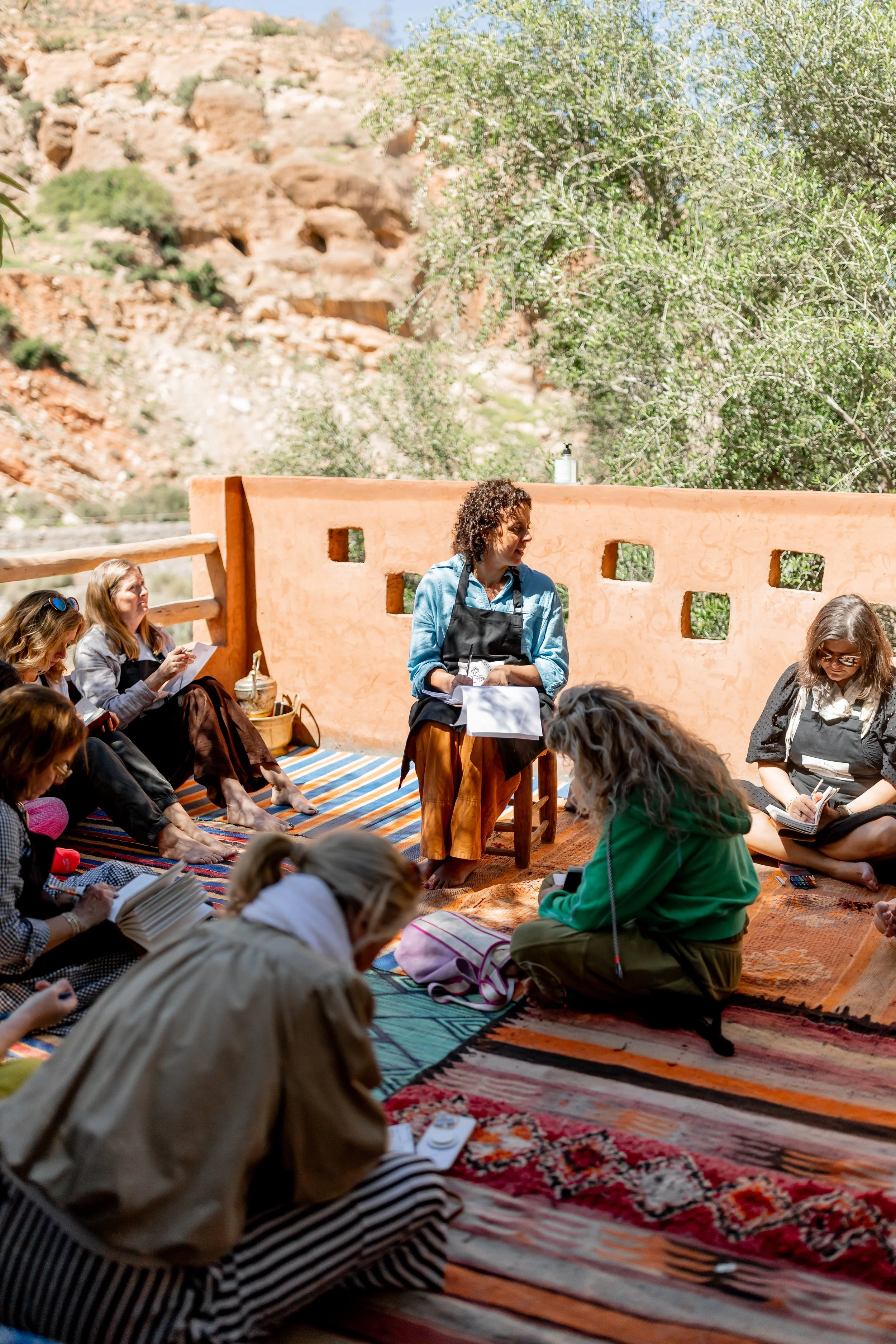
With the gentle rush of the river beside us, Berber carpets beneath our feet, and the warmth of the sun overhead, we were guided through a reflective journaling exercise following the tea ceremony. It was a rare and beautiful pause—a chance to absorb, process, and simply be present in a place that asked nothing more of us than our attention.
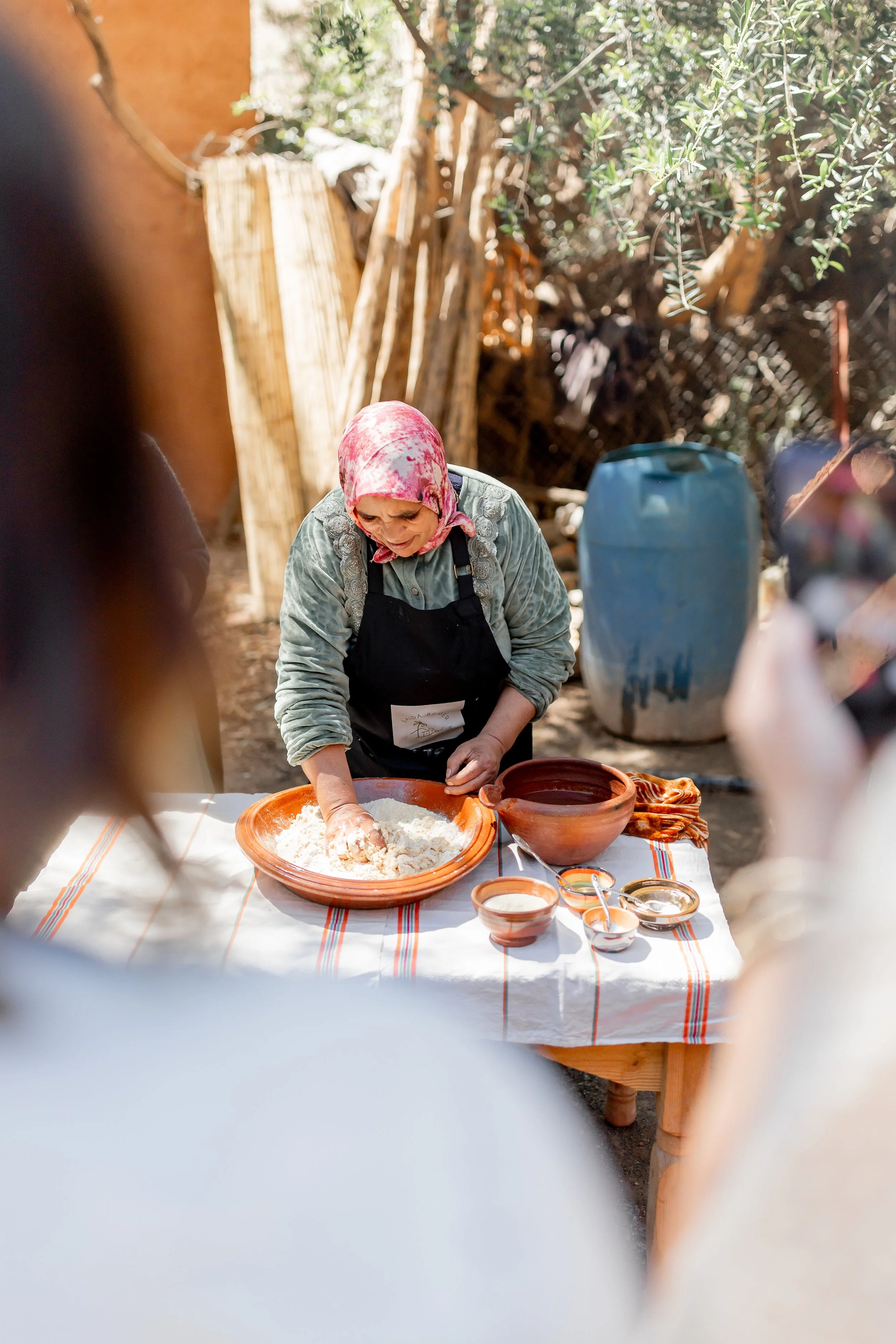
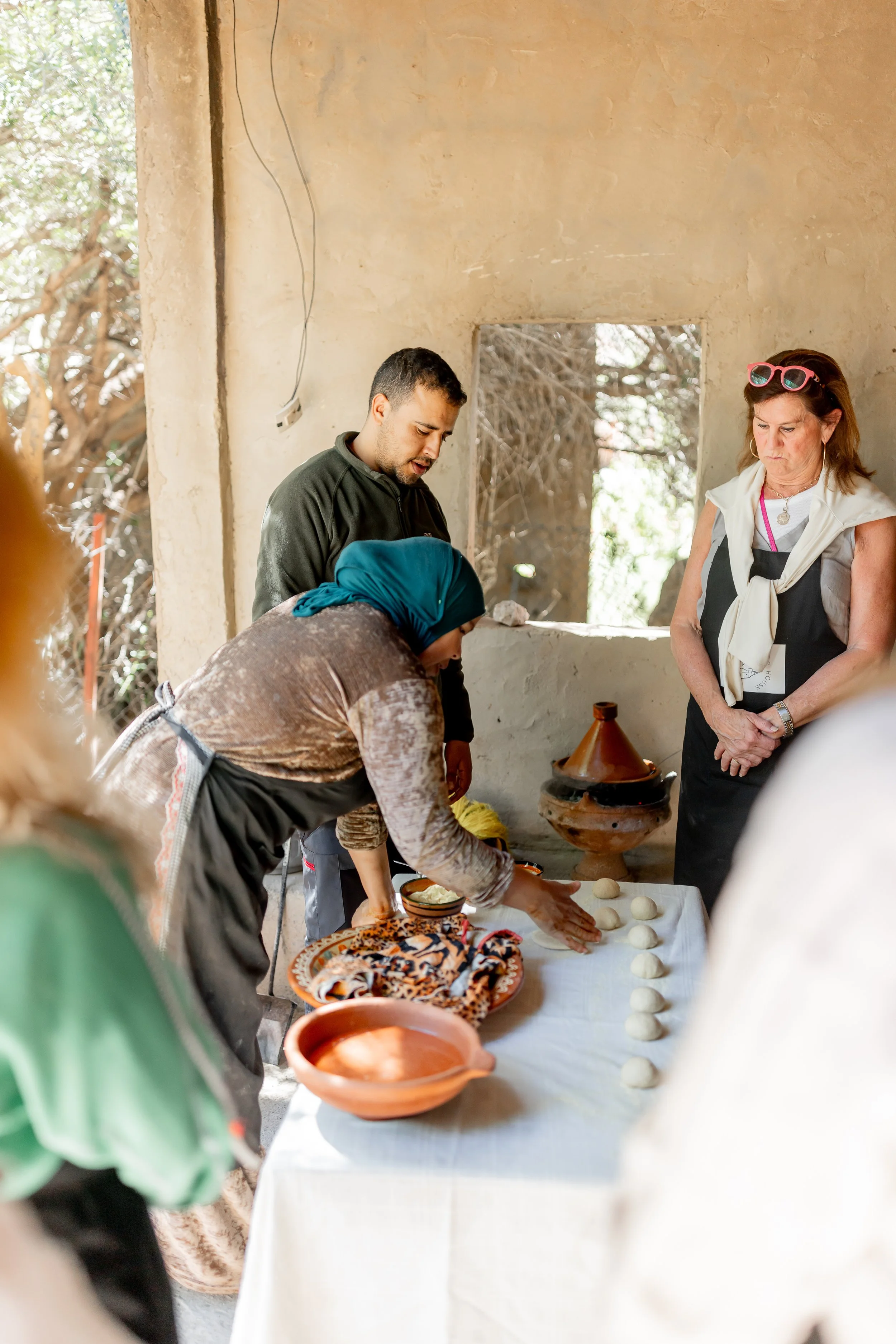
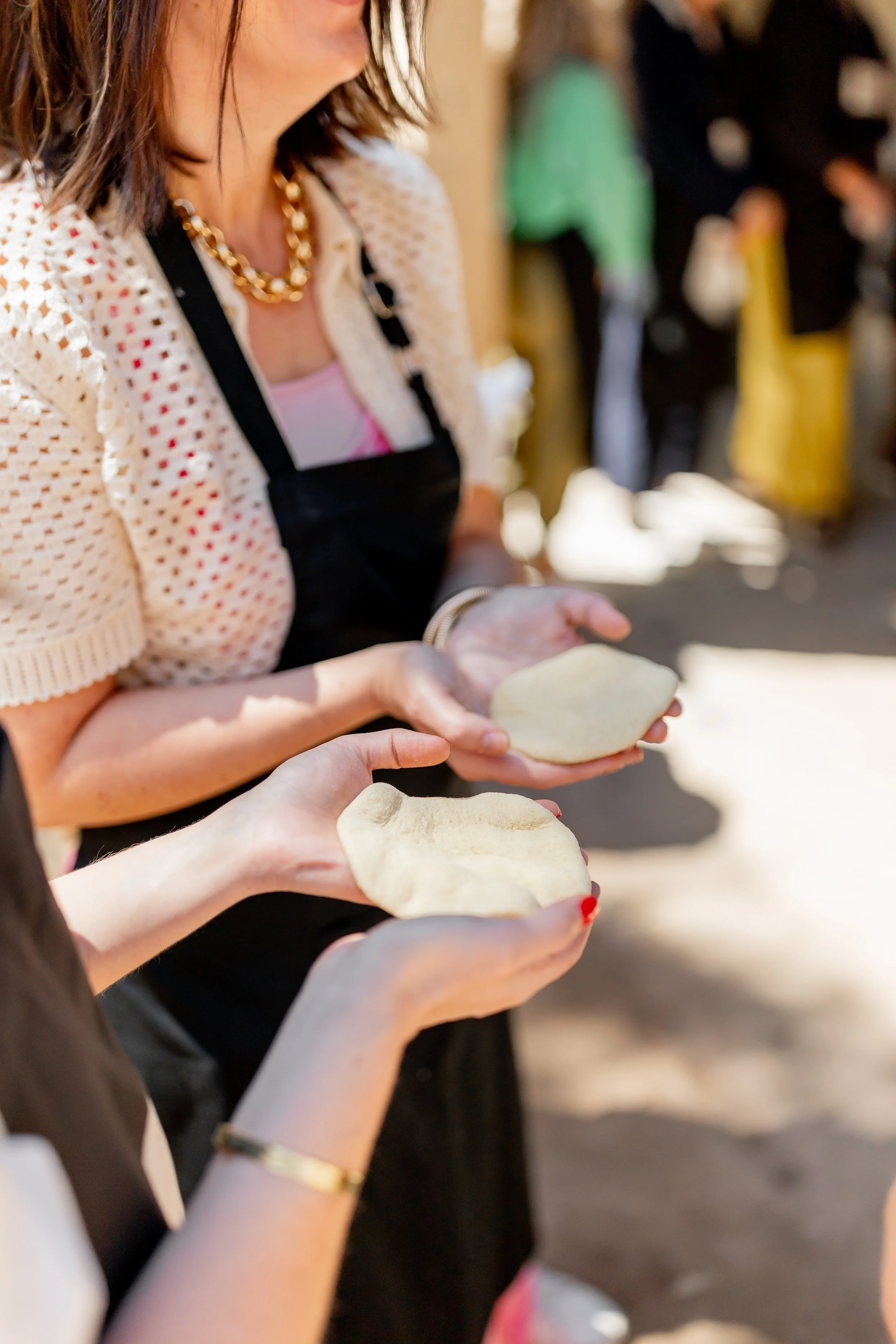
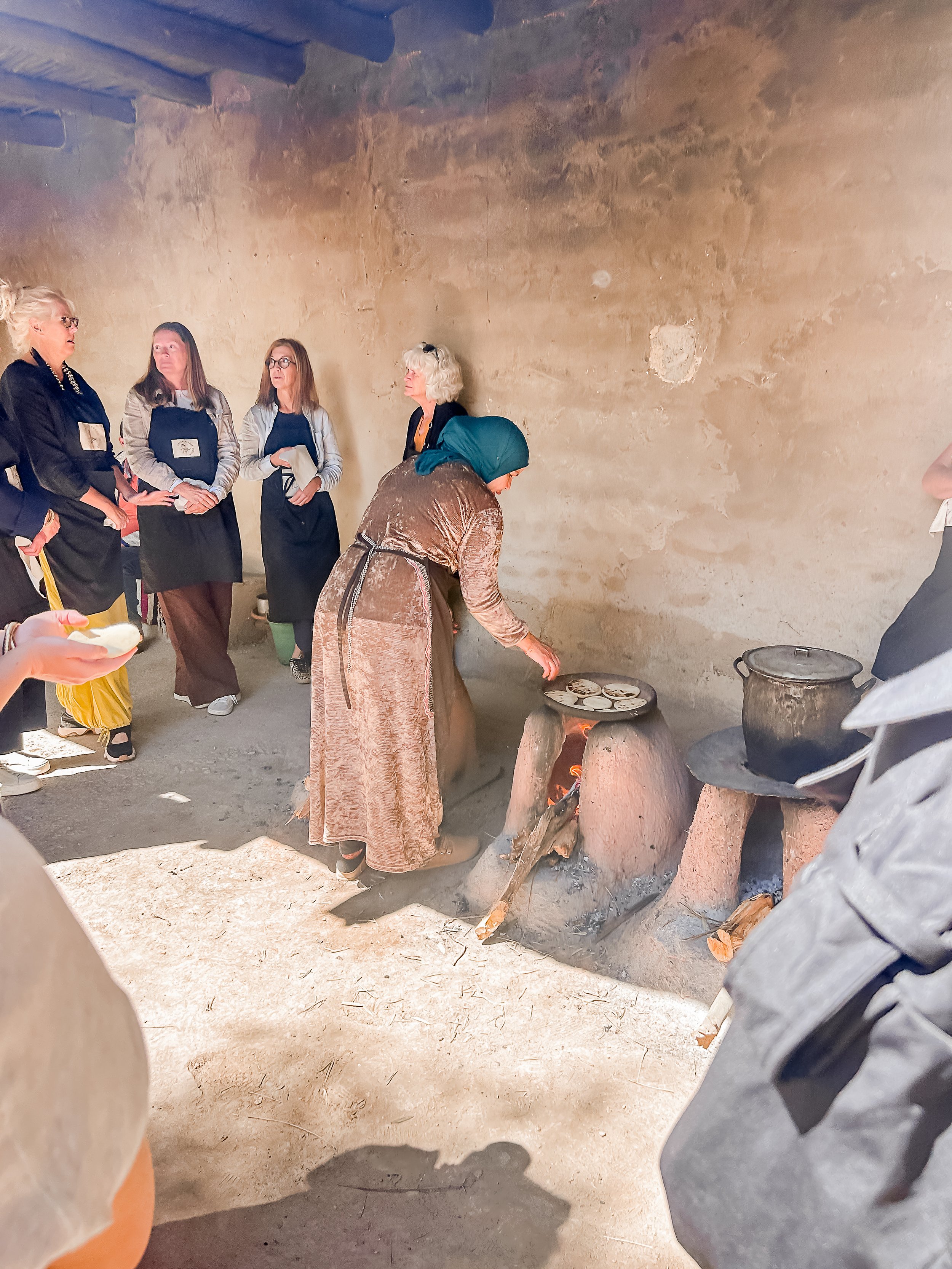
Then, while our tagines slowly cooked, we stepped over to the outdoor ovens to try our hand at making traditional bread. We shaped and baked our dough, laughing at our imperfect rounds while gaining a deeper appreciation for the daily rituals that sustain this community.
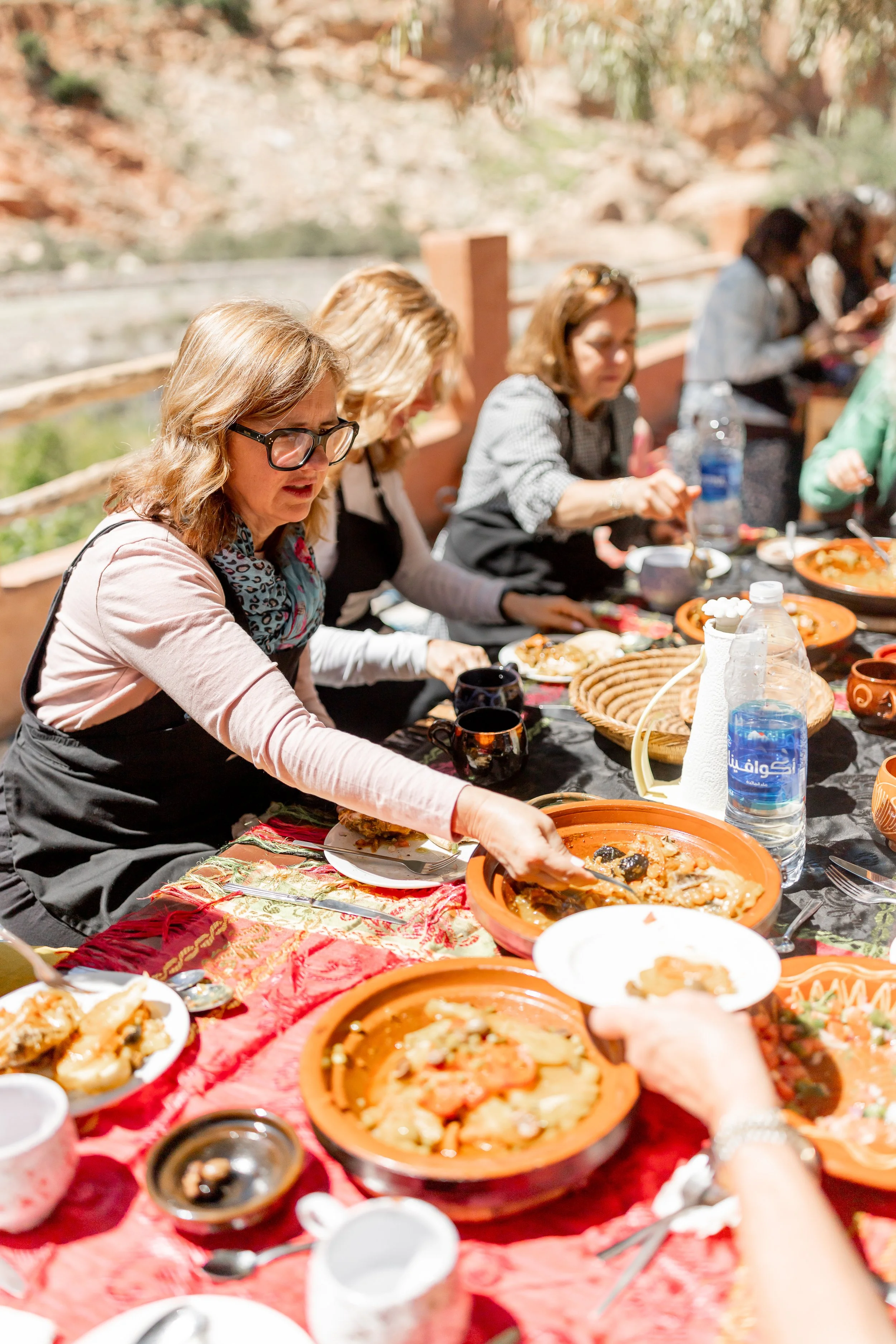
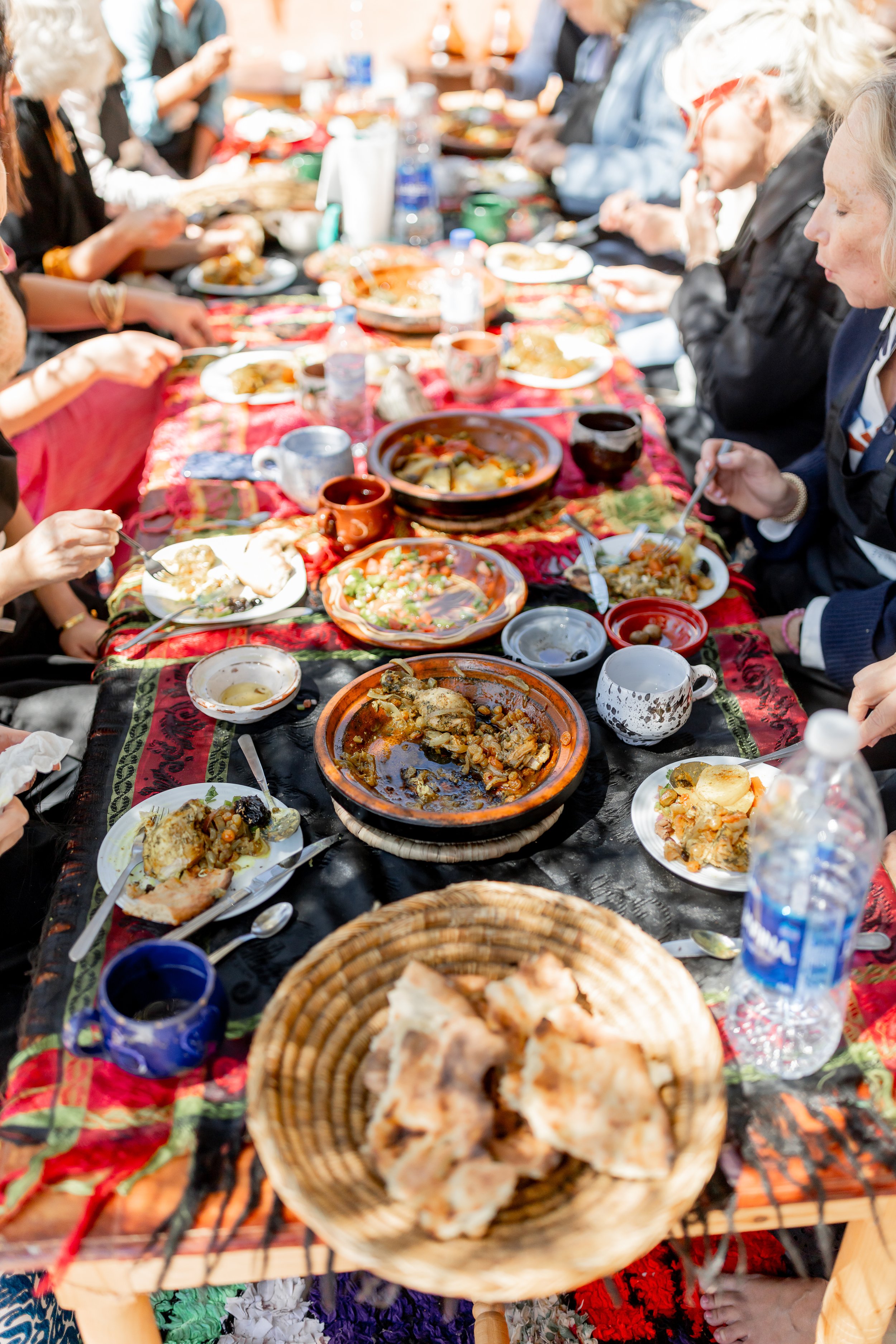
Then came the meal-one we had prepared together. Sitting down to share it felt different than any restaurant experience. It carried a sense of pride, connection, and gratitude that only comes from being part of the process from start to finish.
But the day wasn’t over yet.
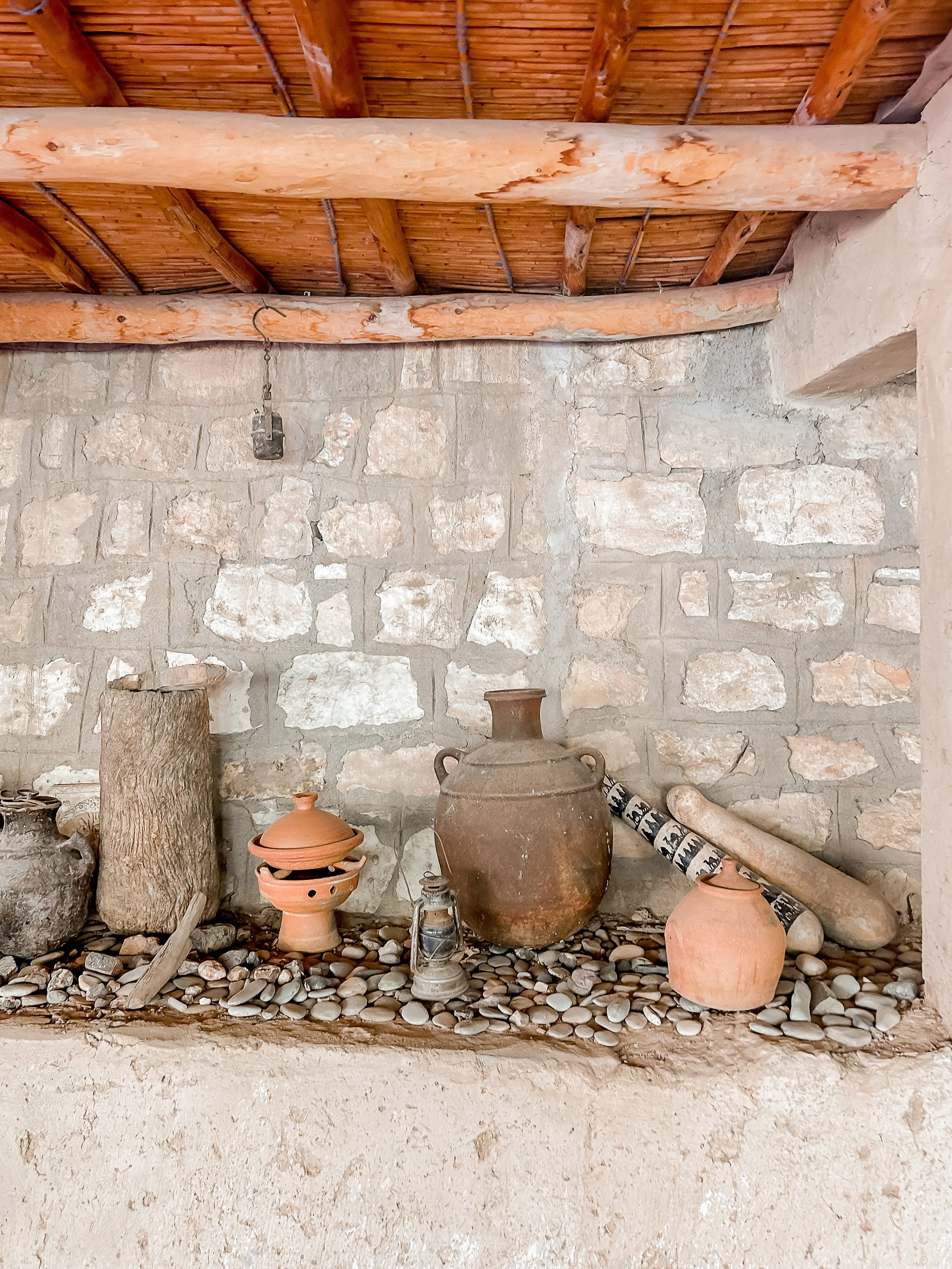
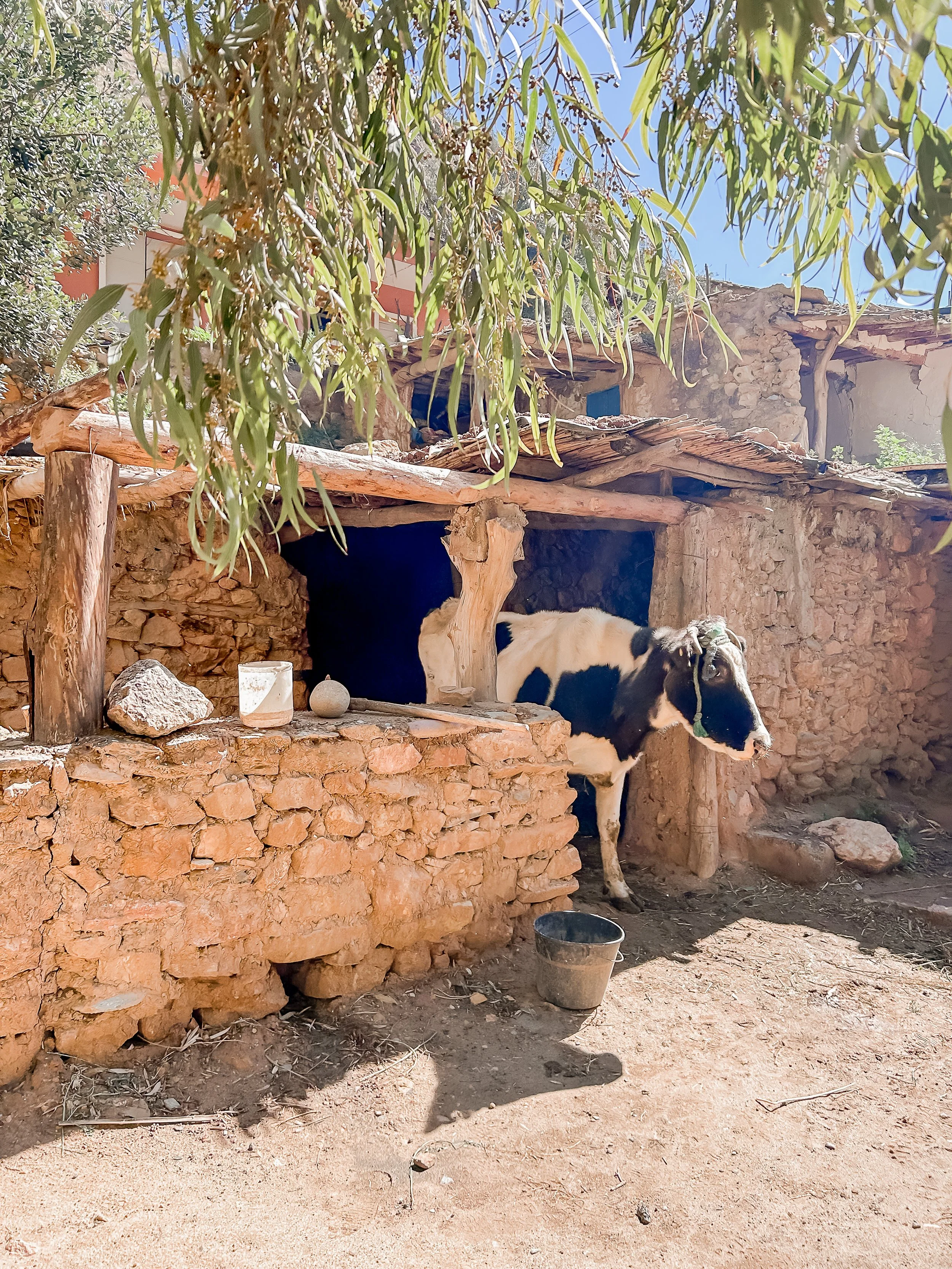
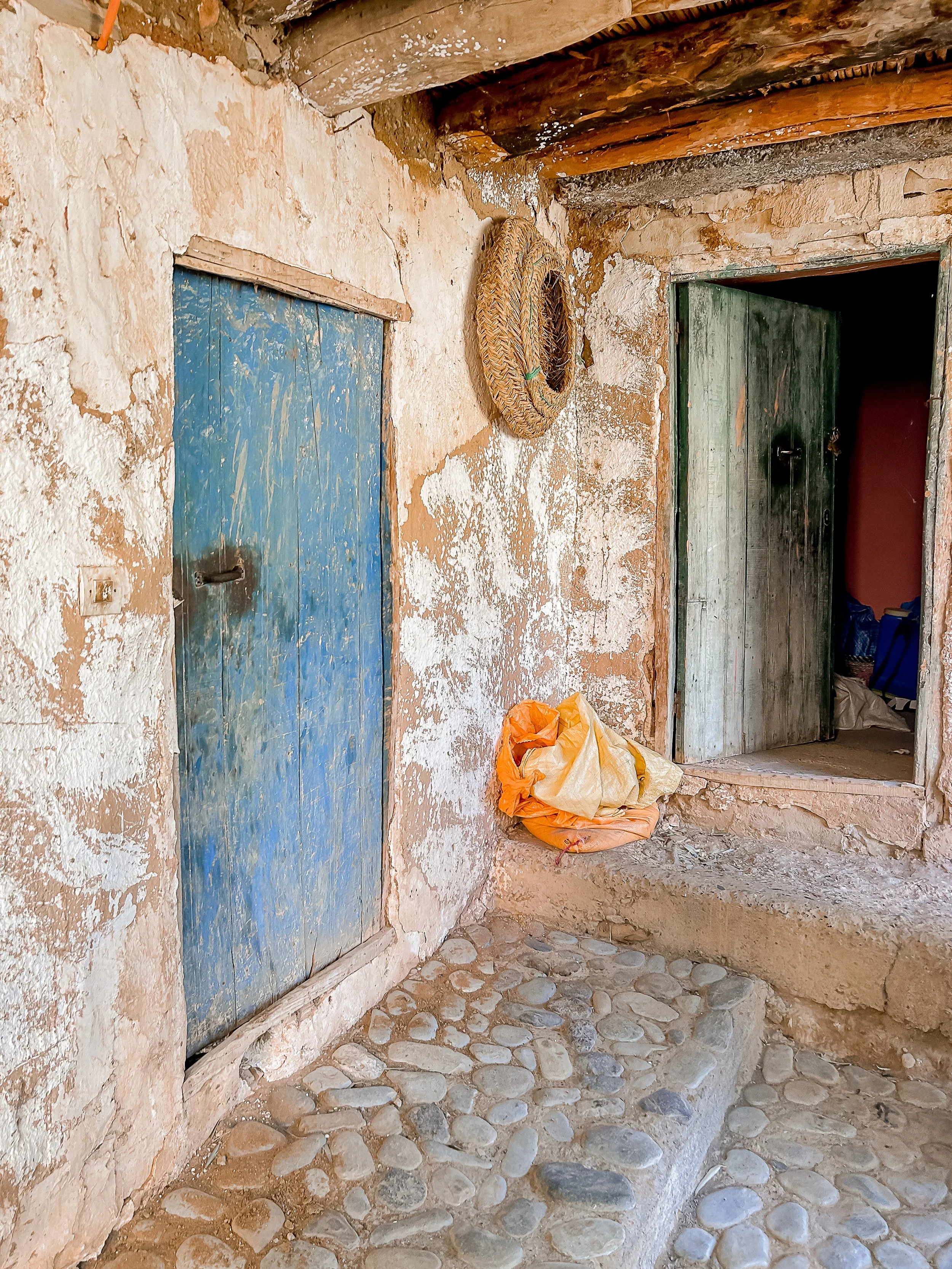
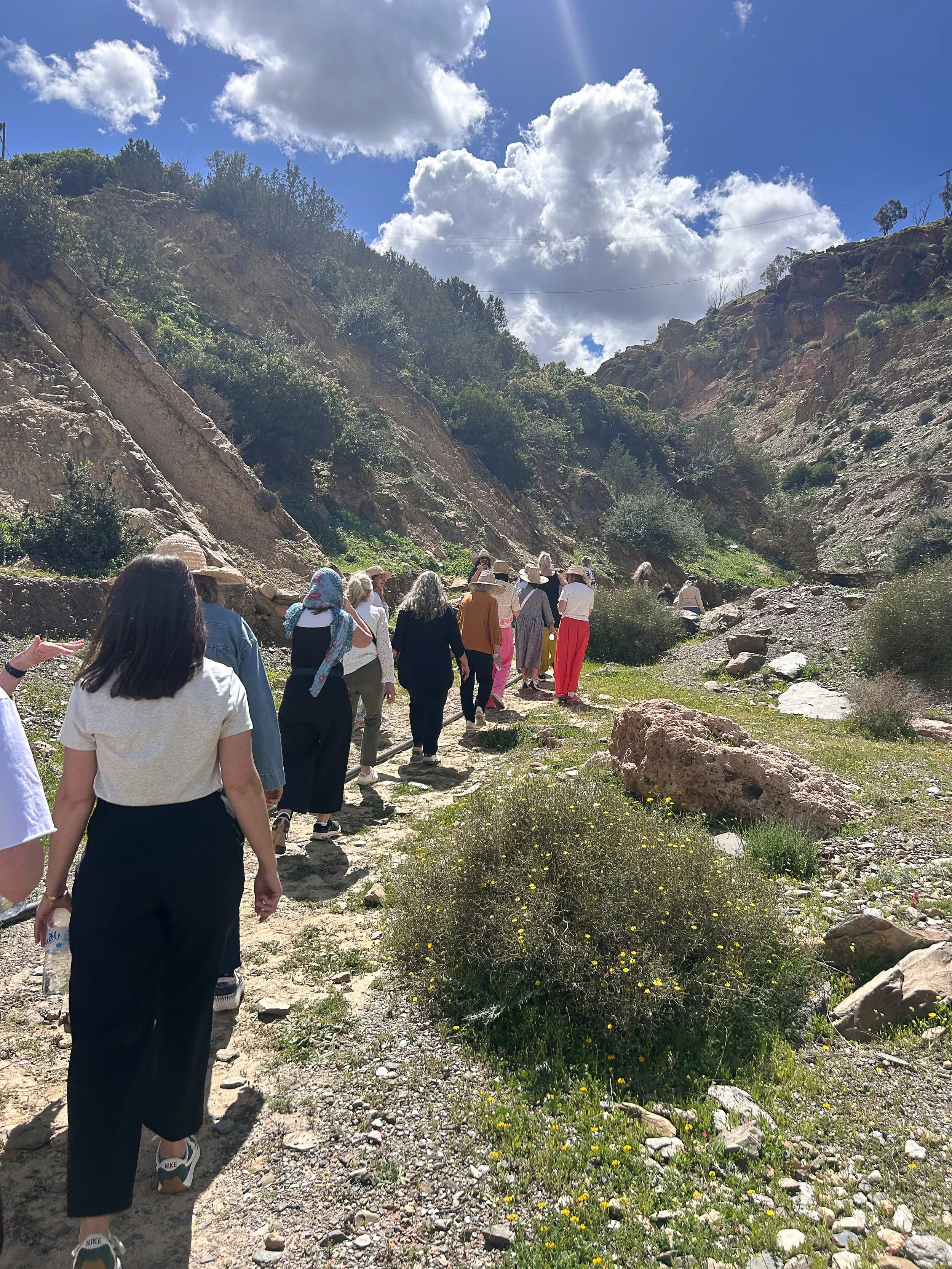
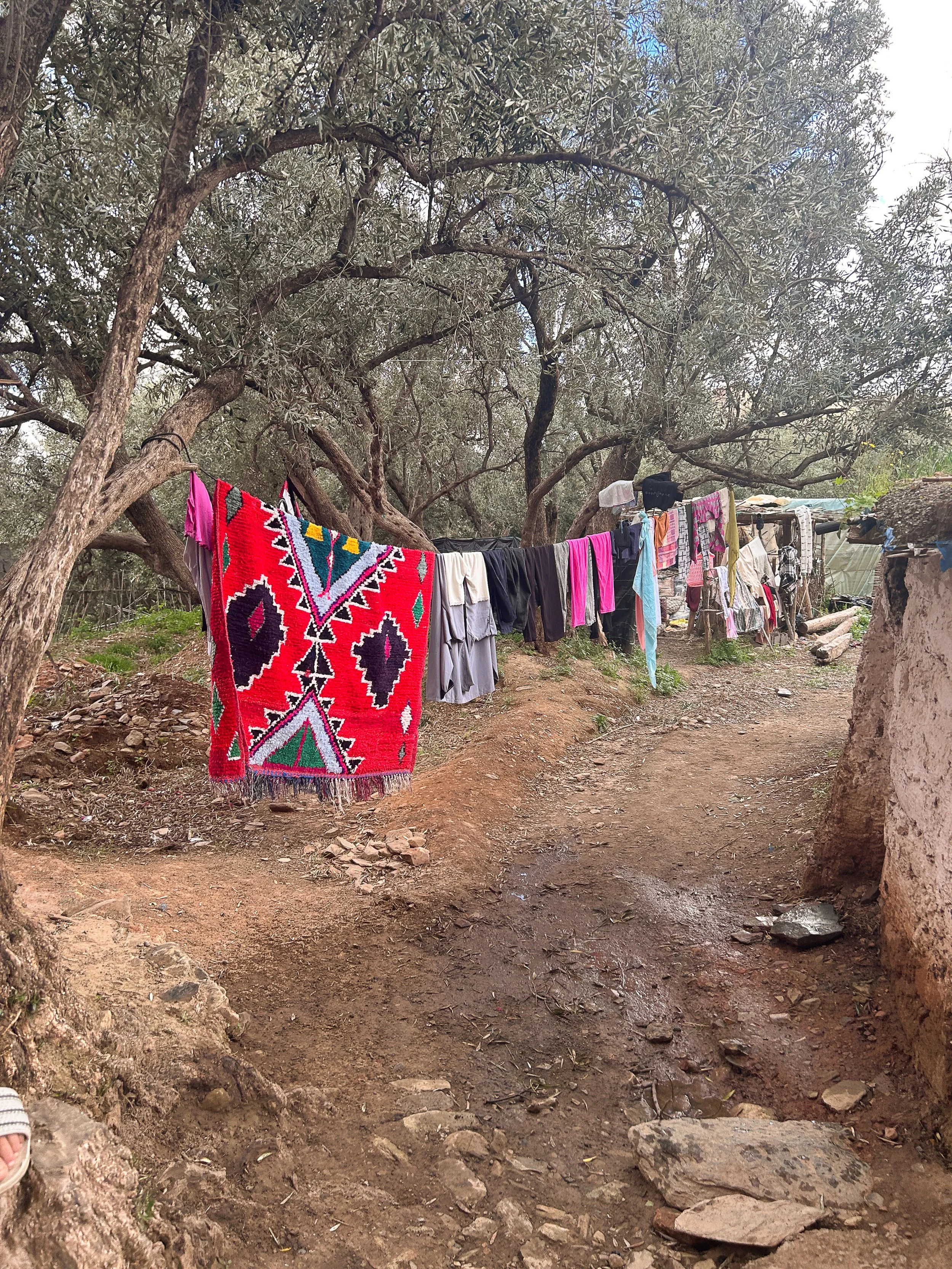
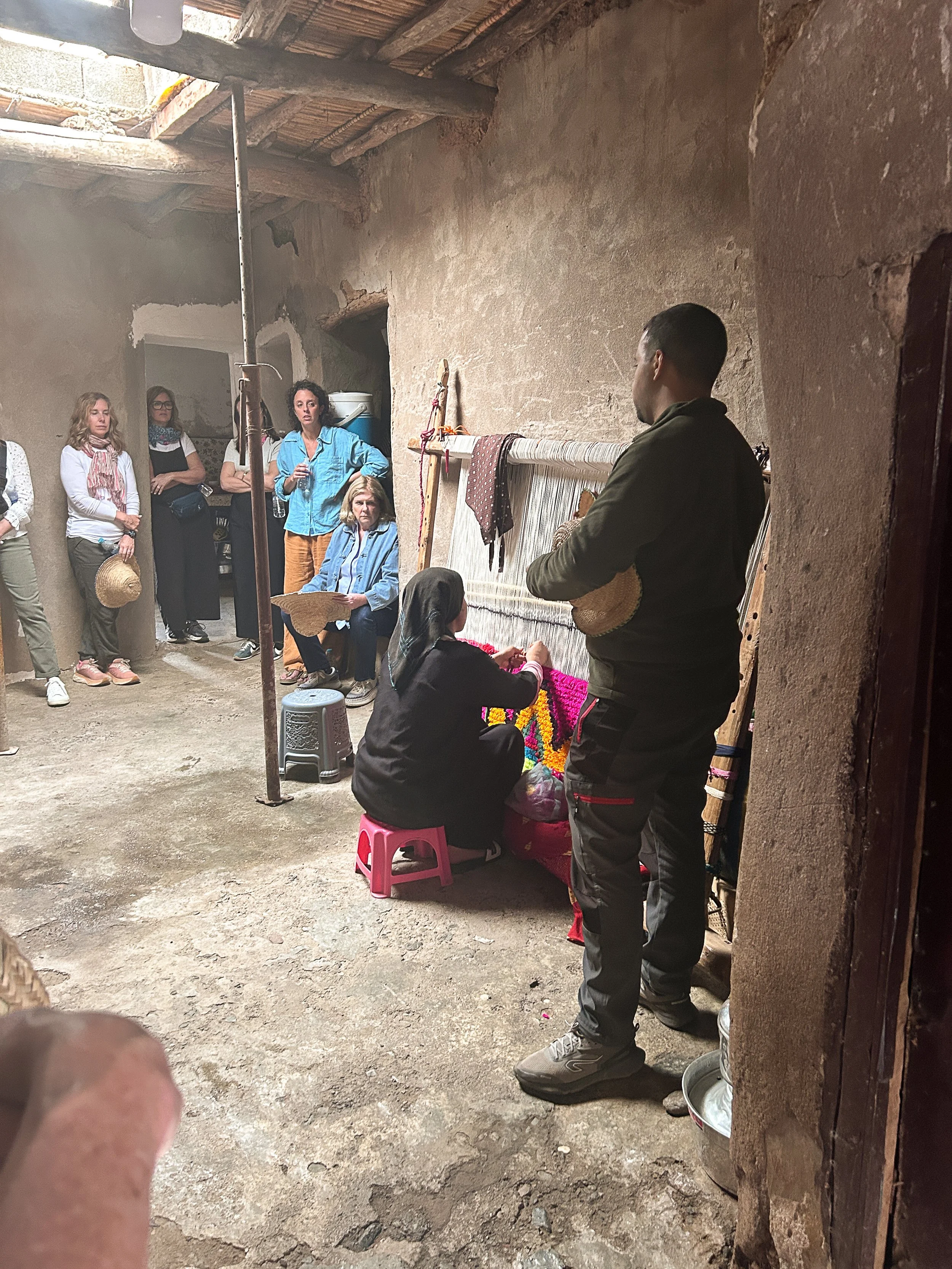
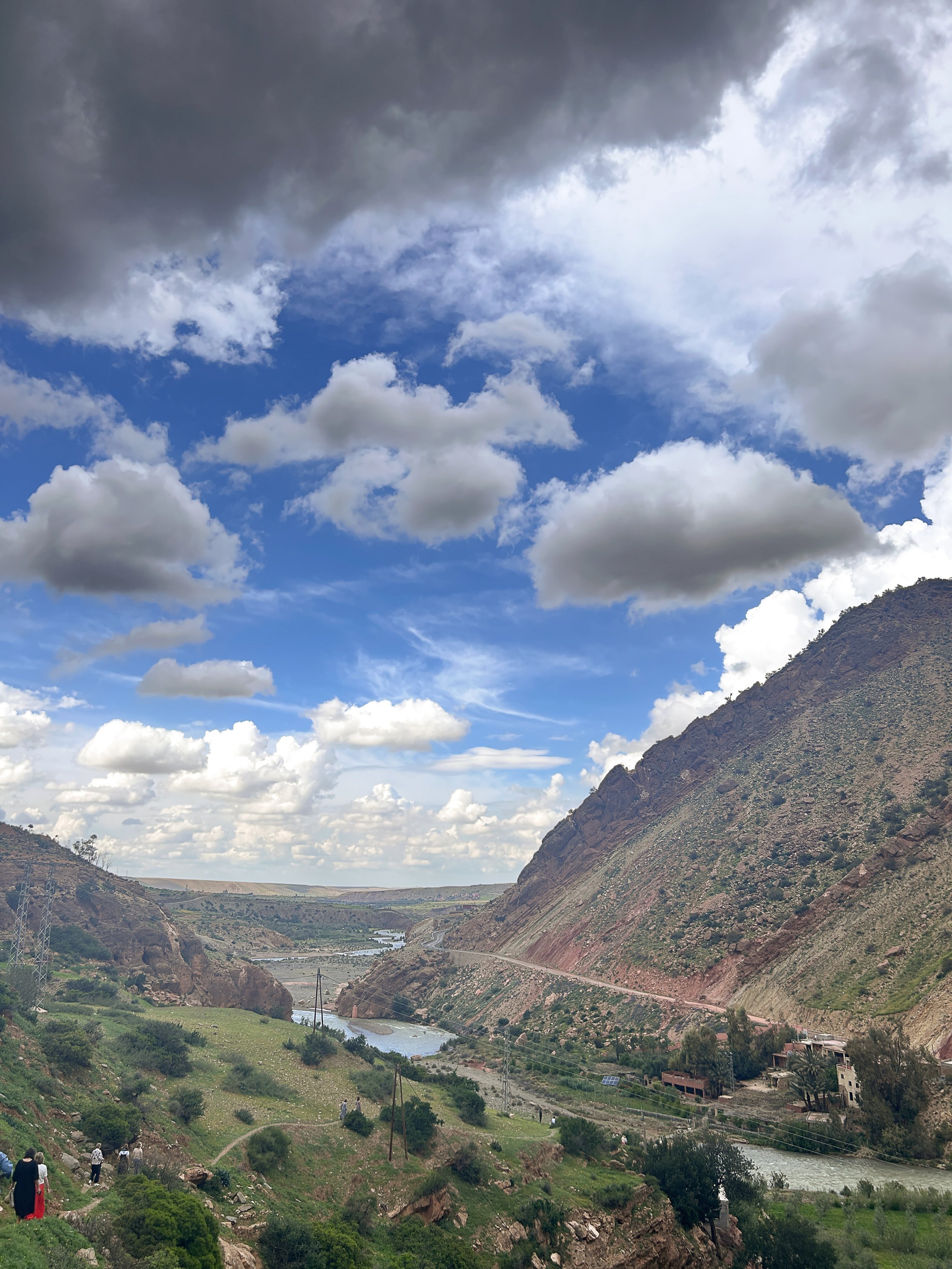
With bellies full, we set off on a trek into the Atlas Mountains, making our way to an ancient Berber village where time seems to move at its own pace. There, we were given a behind-the-scenes look at traditional weaving and olive pressing.
In these communities, rug weaving is far more than a craft—it’s an expression of identity, memory, and daily life. Often, two women will share the work on a single rug, weaving in rhythm with the demands of their day. Many patterns are created entirely from memory, incorporating symbols that tell personal or familial stories. It’s why no two rugs are ever the same. With no industrial machinery involved, each piece can take weeks—sometimes months—to complete.
Watching this process unfold, it became clear that what we were witnessing wasn’t just artistry. It was heritage, passed down through generations, thread by thread.
As we made our way back, there was a quiet sense among us that this day had been something special. Not just for what we did, but for what we felt: welcomed, grounded, and deeply connected—to the place, to its people, and to the new skills we had obtained.