Morocco : Zellige Tile Workshop
There are moments in travel when you don’t just observe a culture—you step directly into its rhythm. Our zellige tile workshop in Fes was exactly that kind of experience.
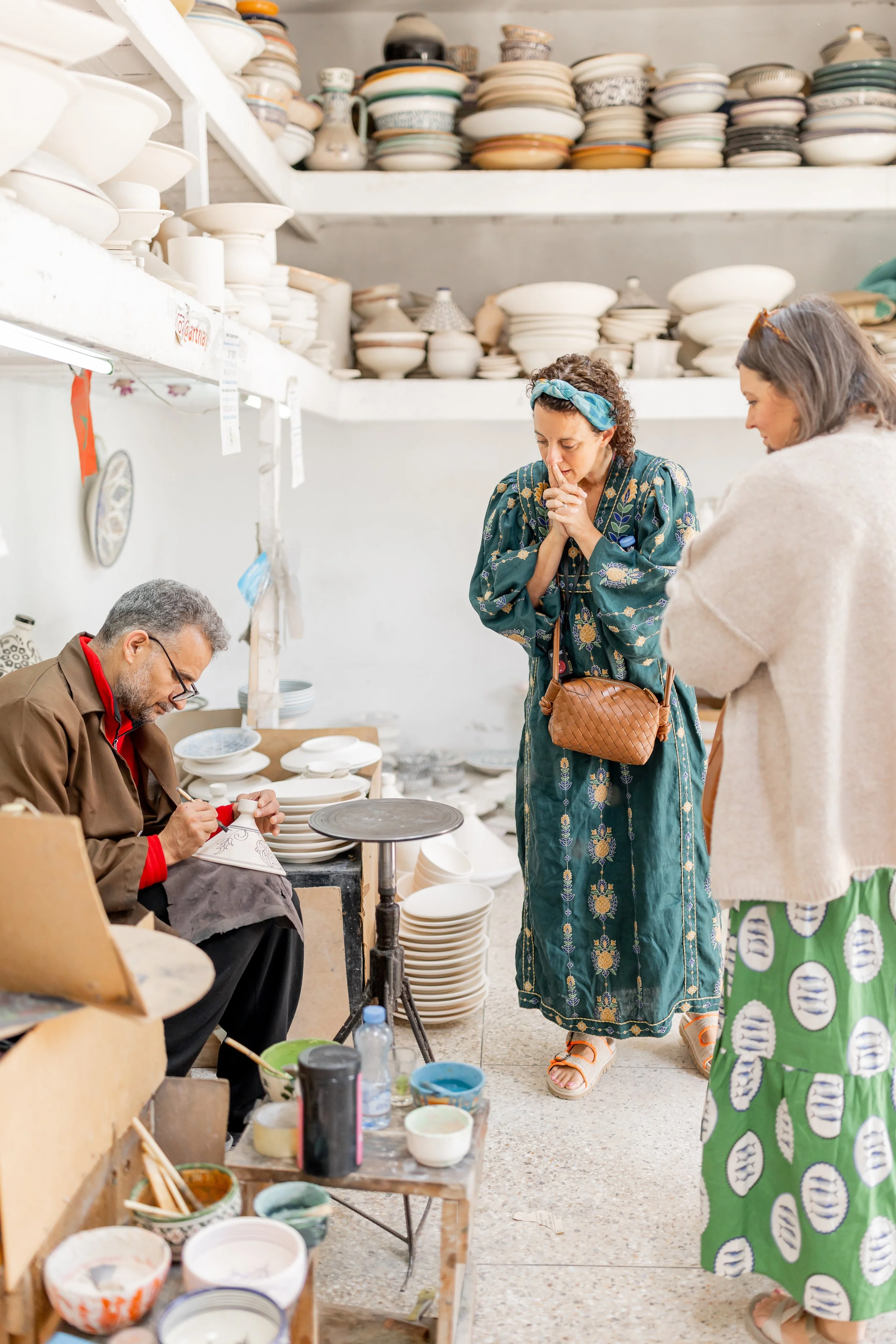
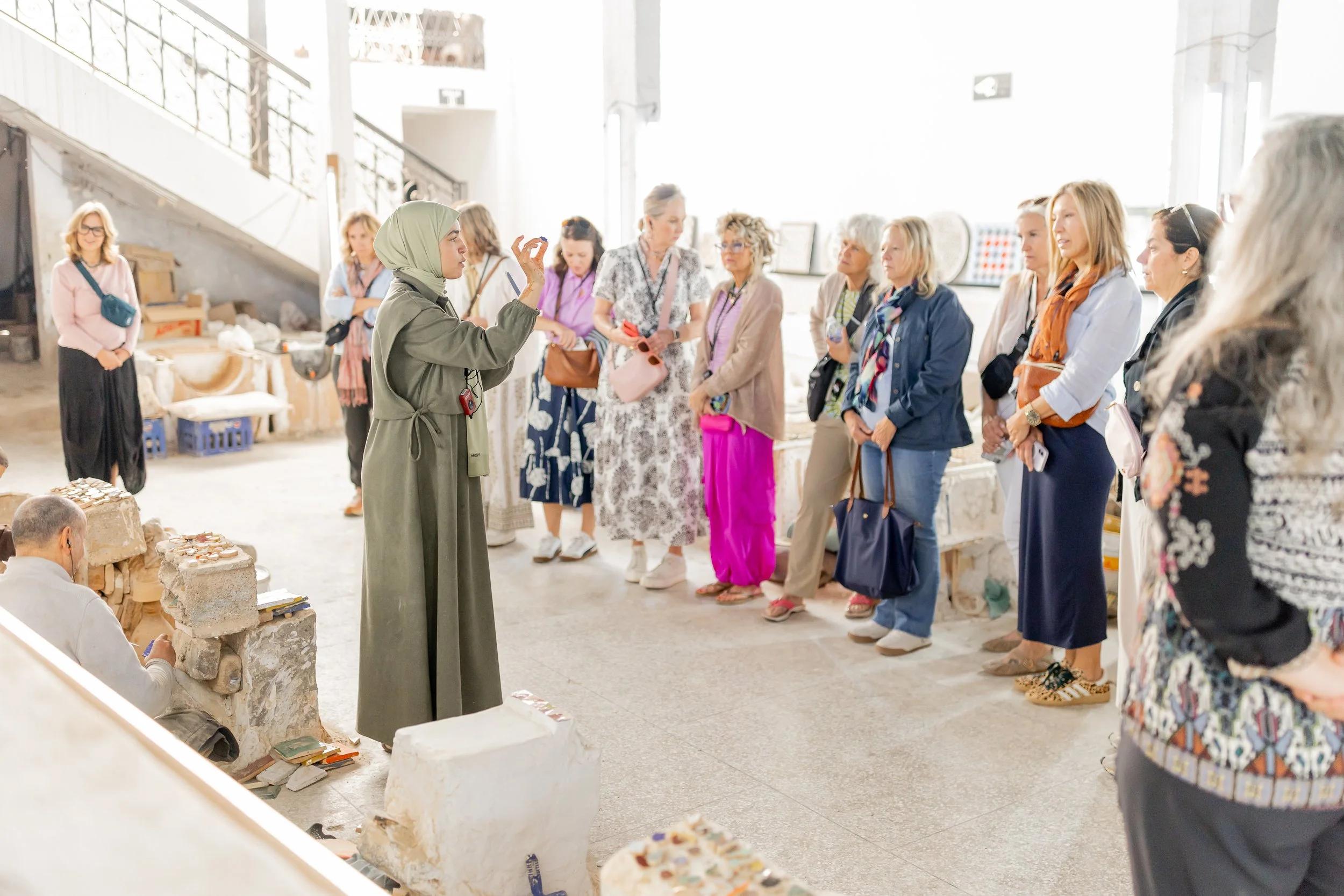
With a group of 20 women, eager and curious, we entered a world where tradition isn’t preserved behind glass—it’s lived, practiced, and perfected every single day.
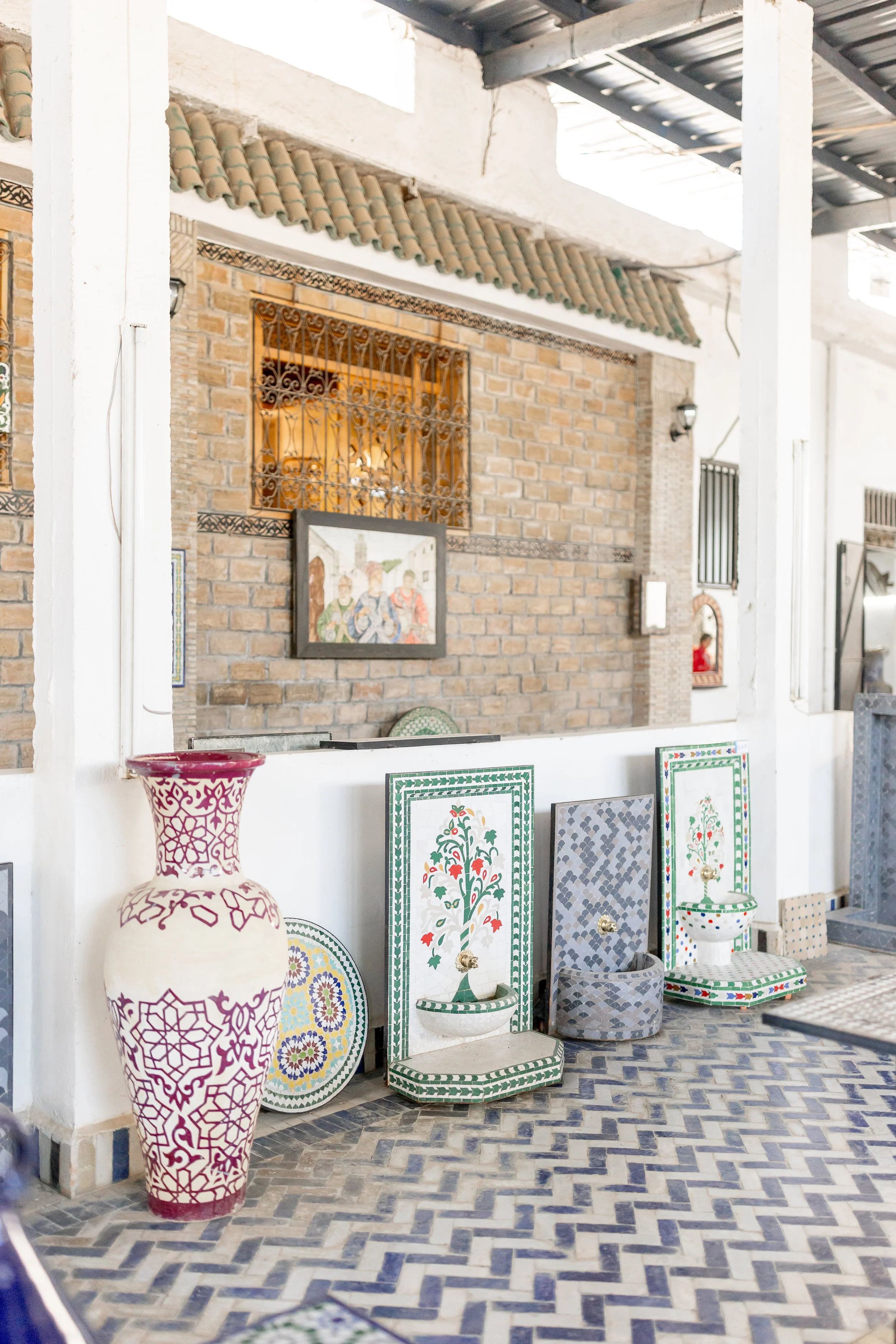
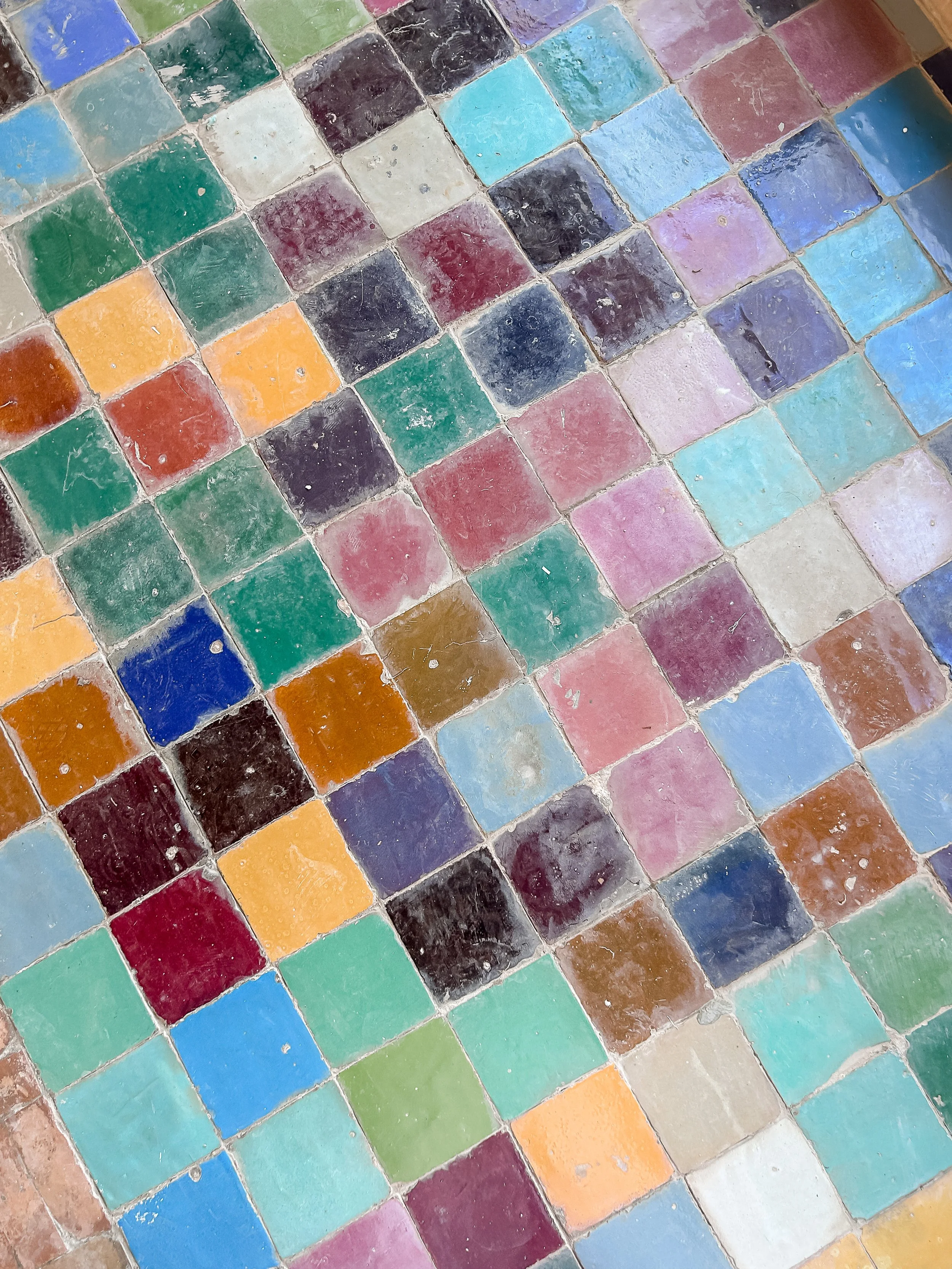
Zellige, the intricate mosaic tilework Morocco is so well known for, dates back to at least the 10th century, with roots in Islamic art and architecture. Zellige became a defining feature of Moroccan design—adorning fountains, mosques, palaces, and homes. Its geometric patterns are more than decorative; they reflect a deep cultural and spiritual emphasis on balance, repetition, and infinite possibility. What makes zellige truly remarkable is that, centuries later, it is still crafted entirely by hand using the same time-honored techniques.
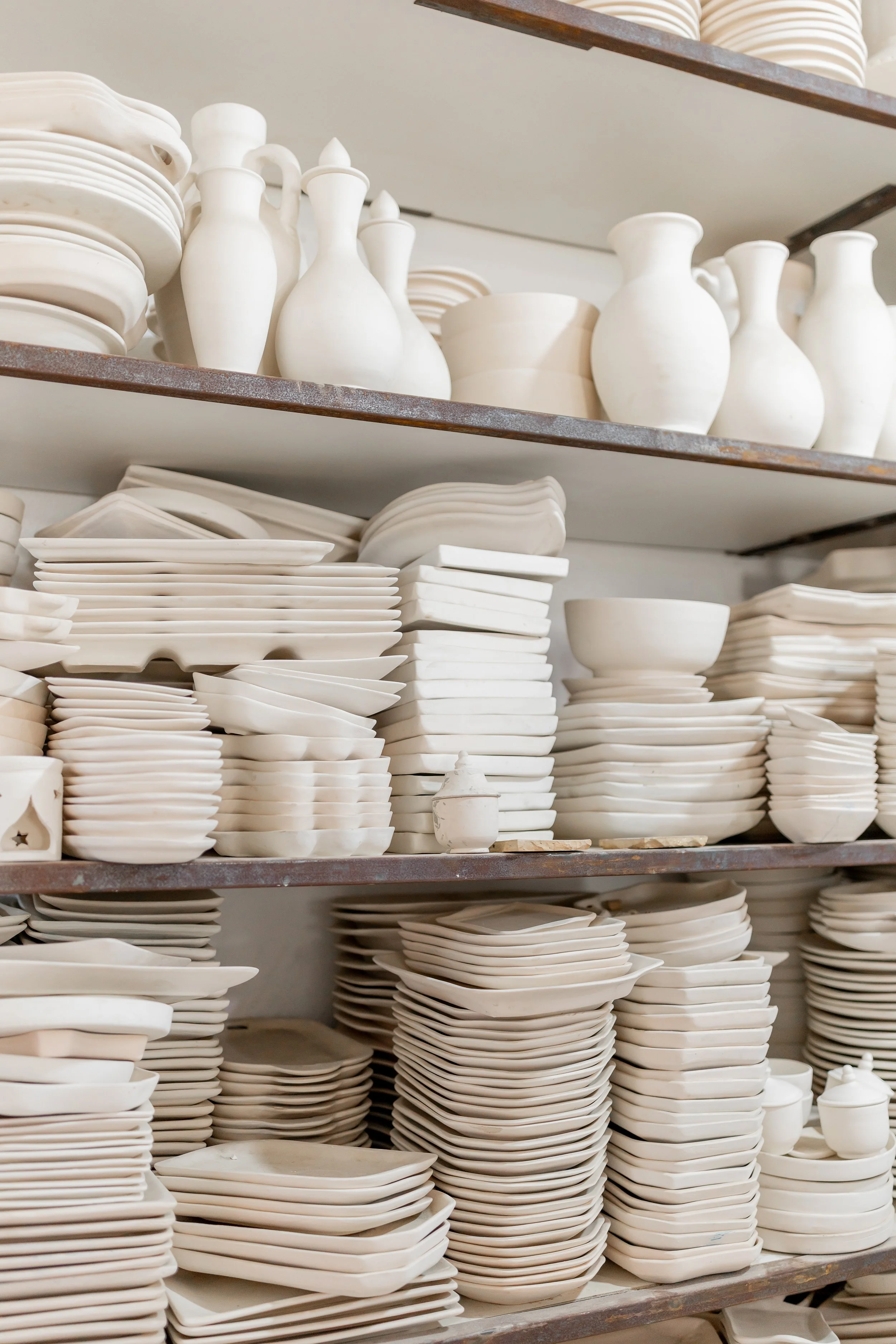
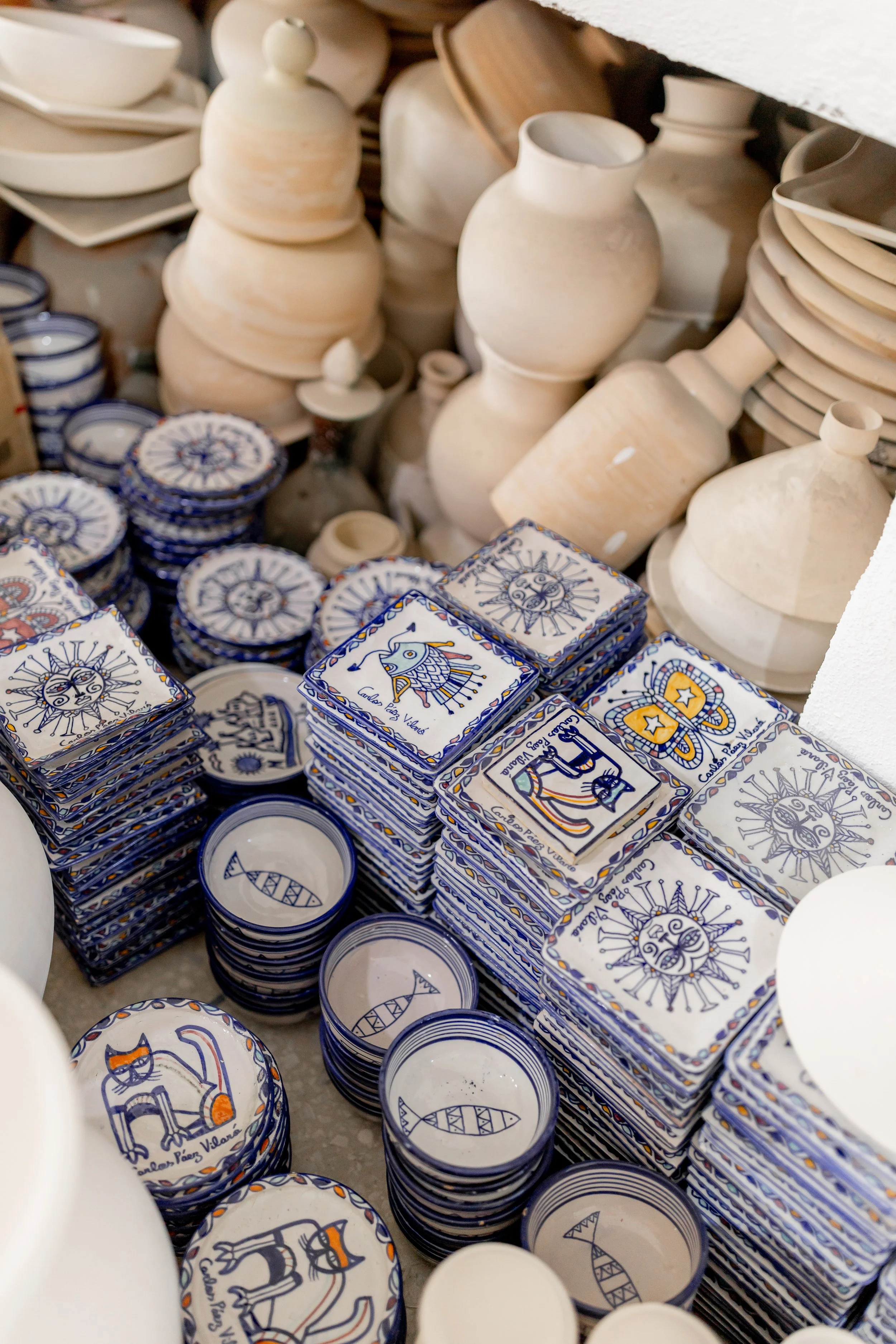
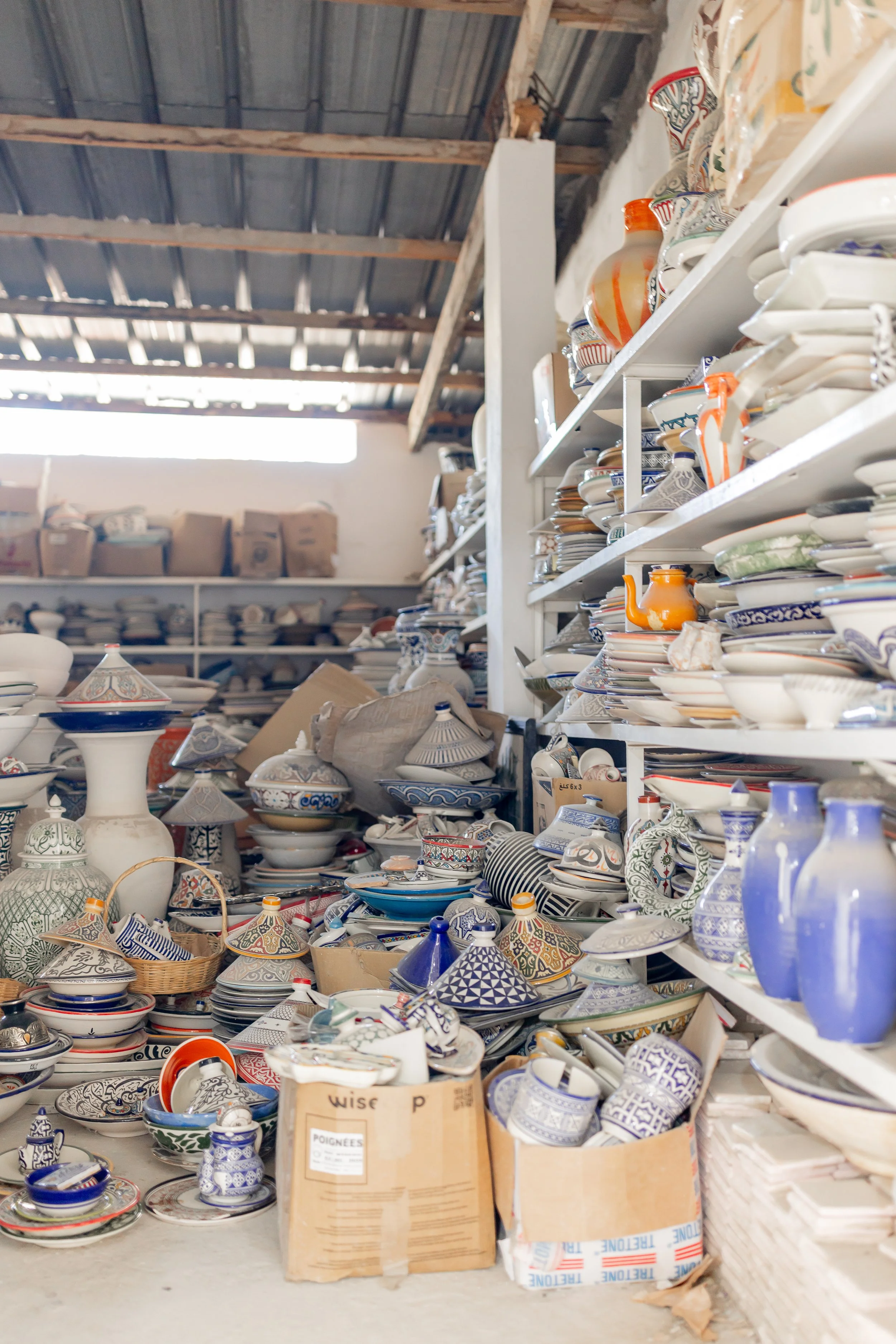
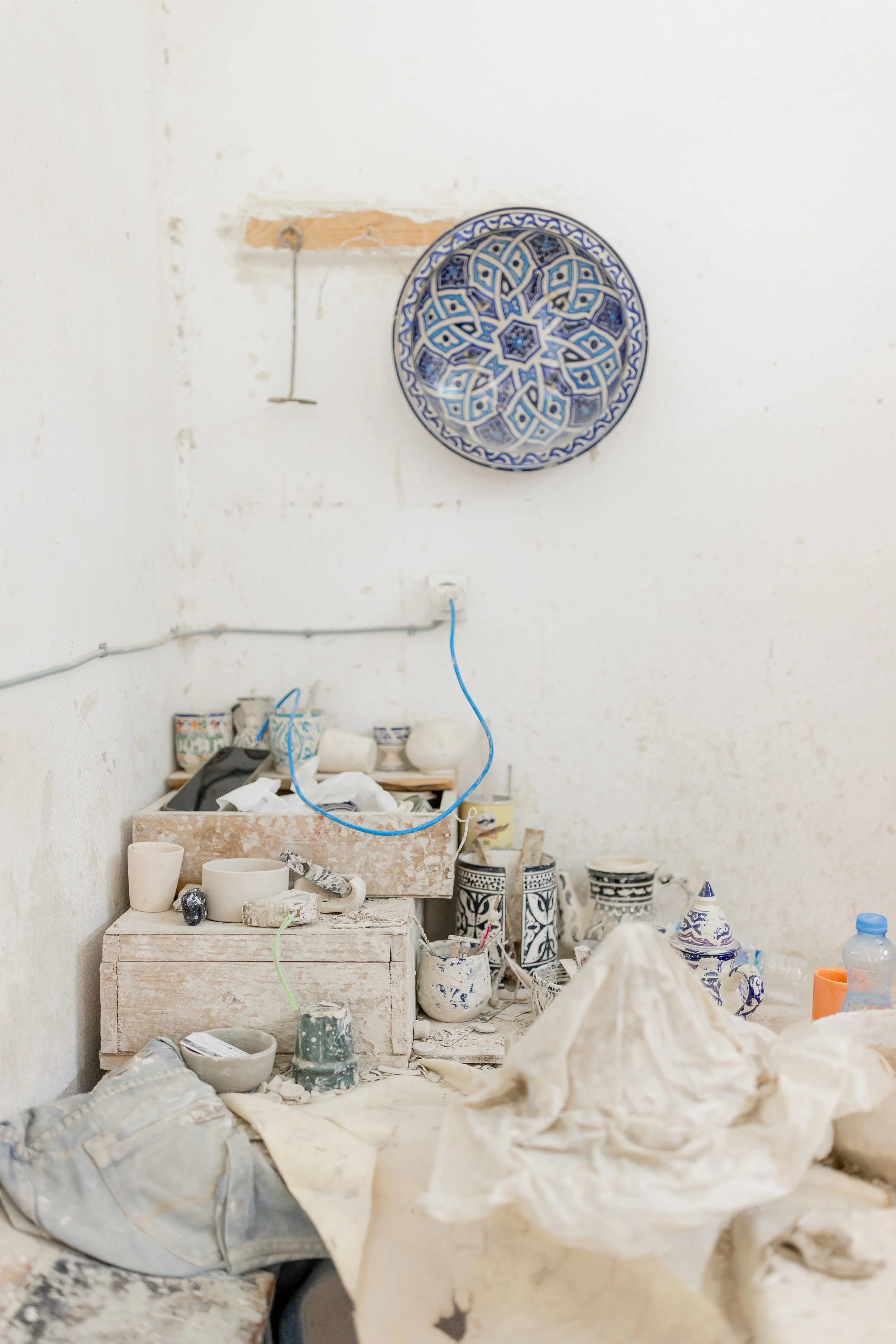
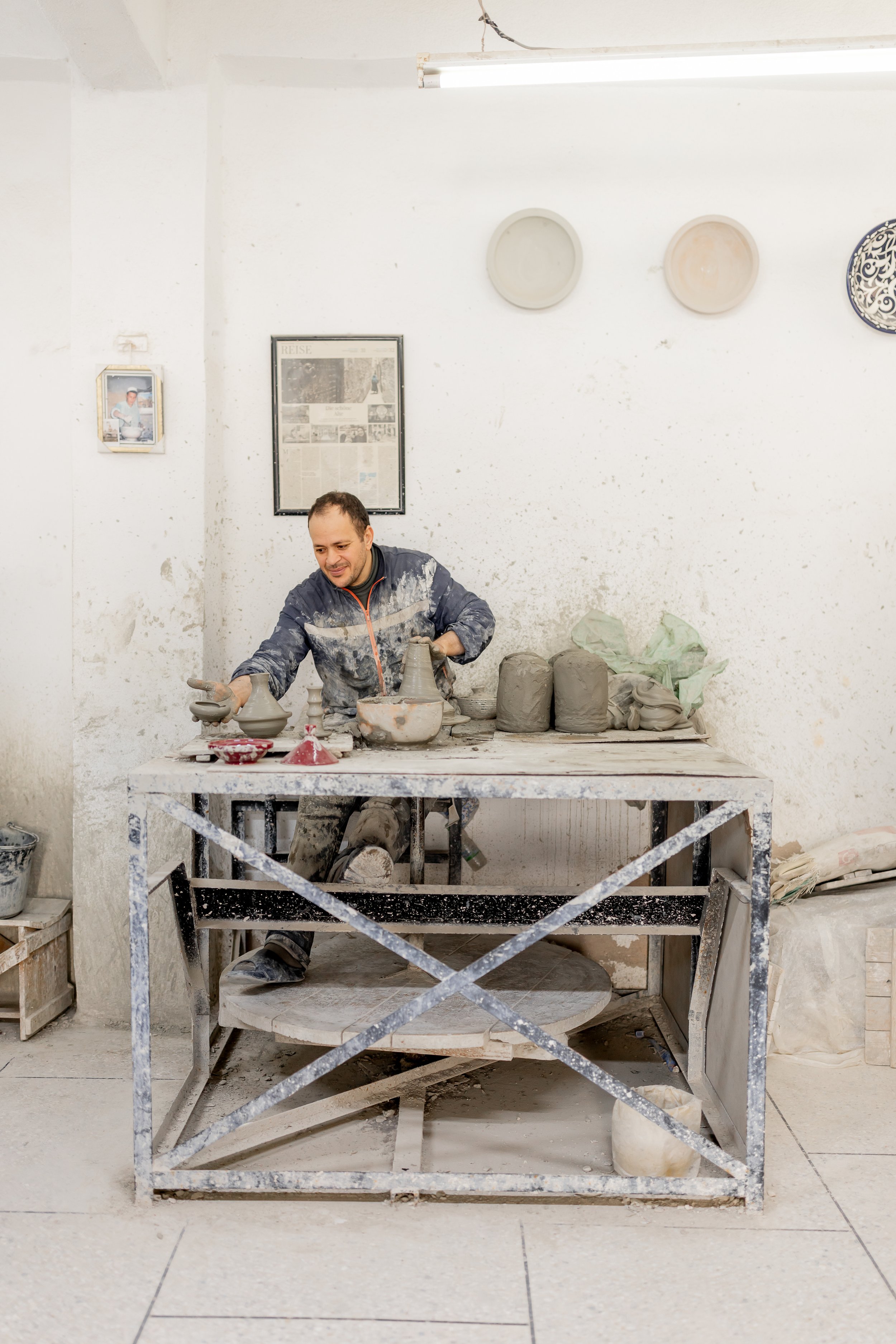
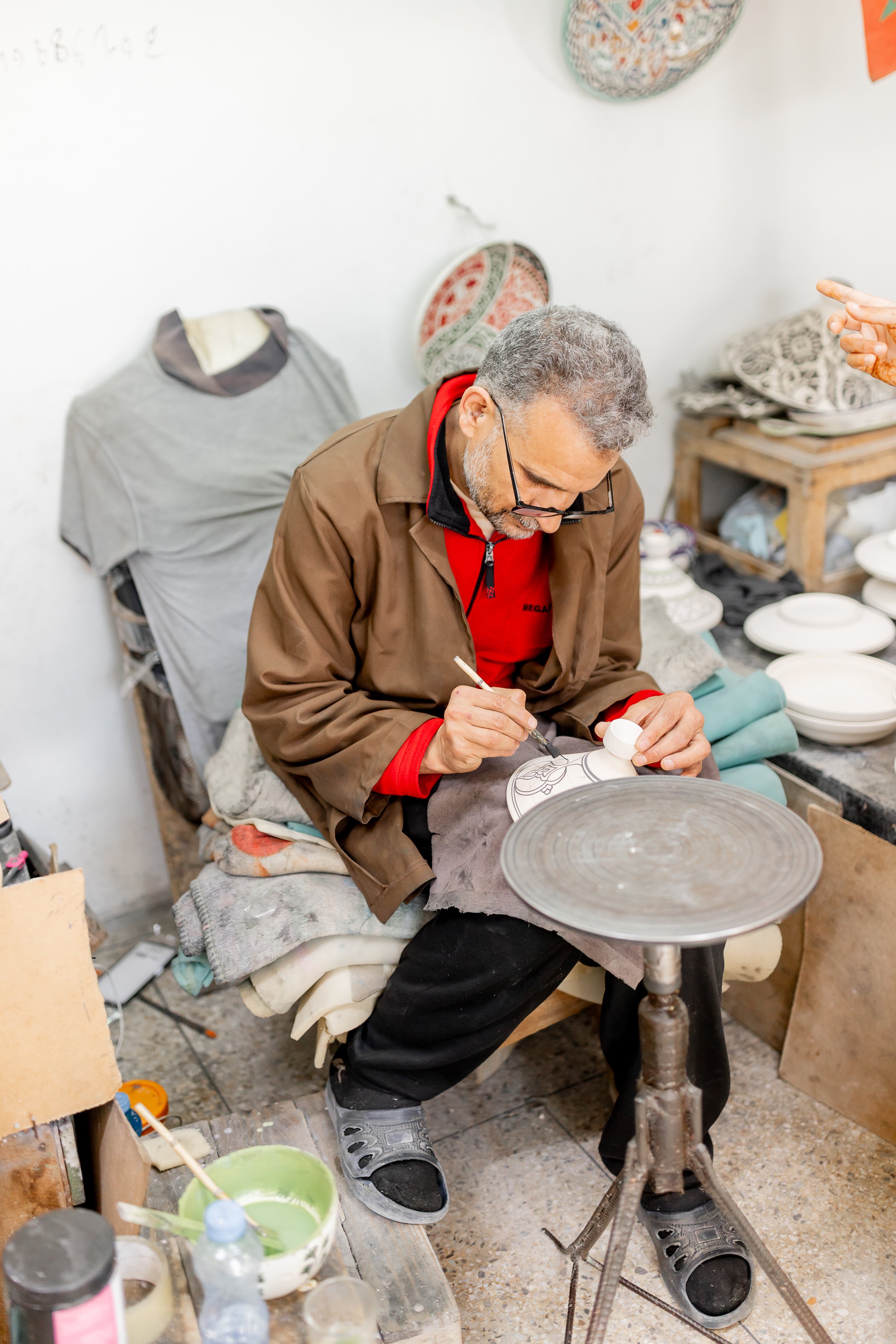
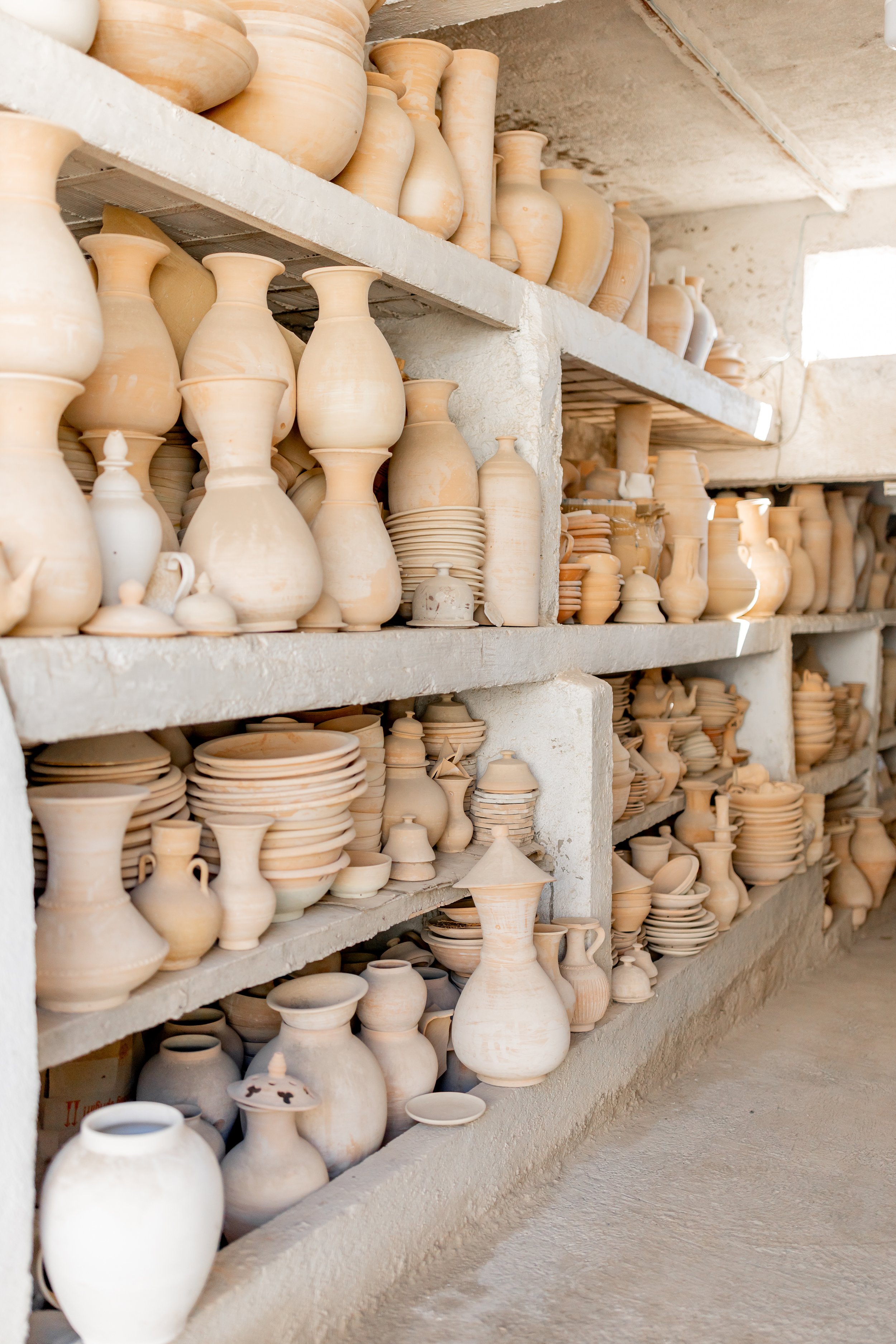
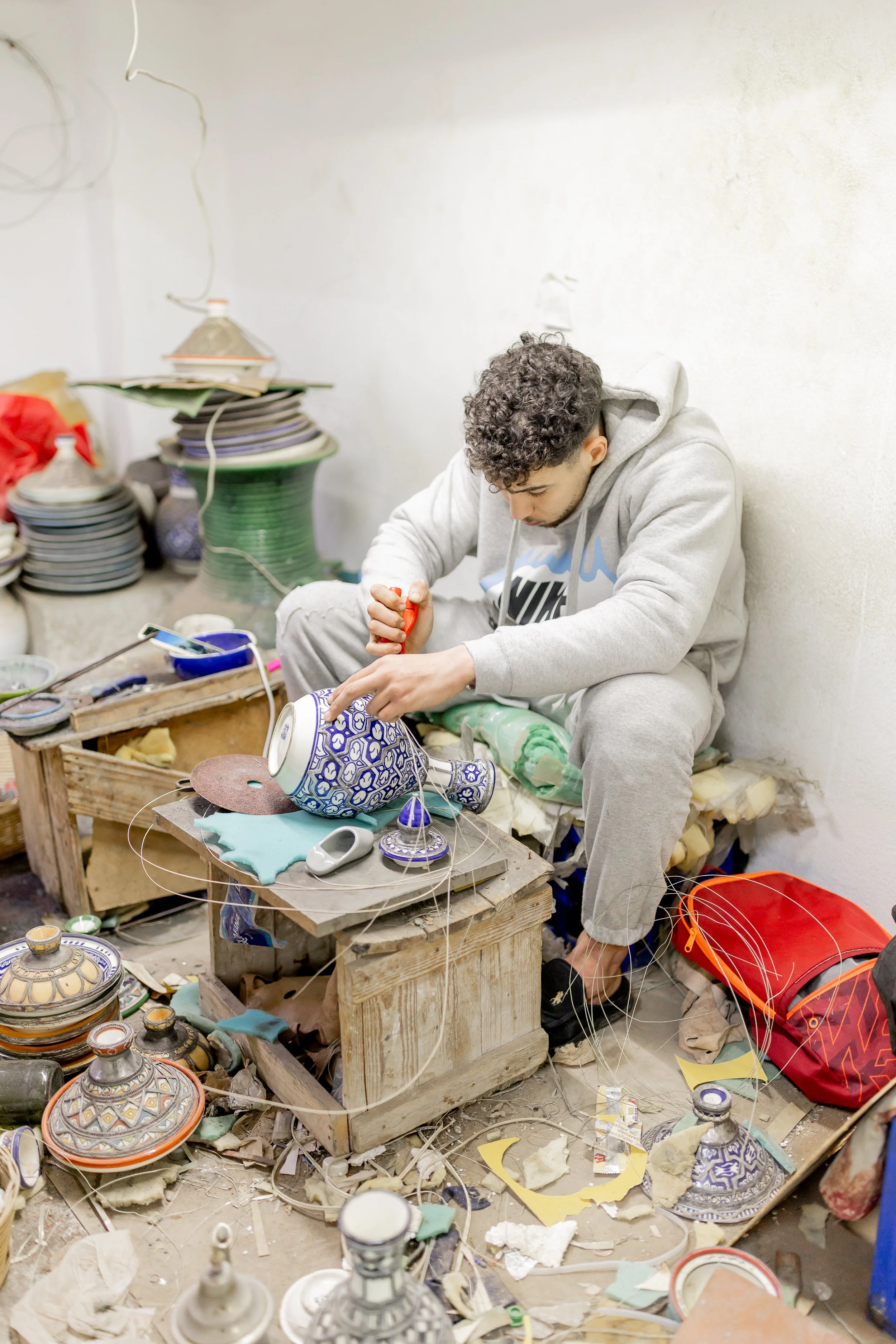
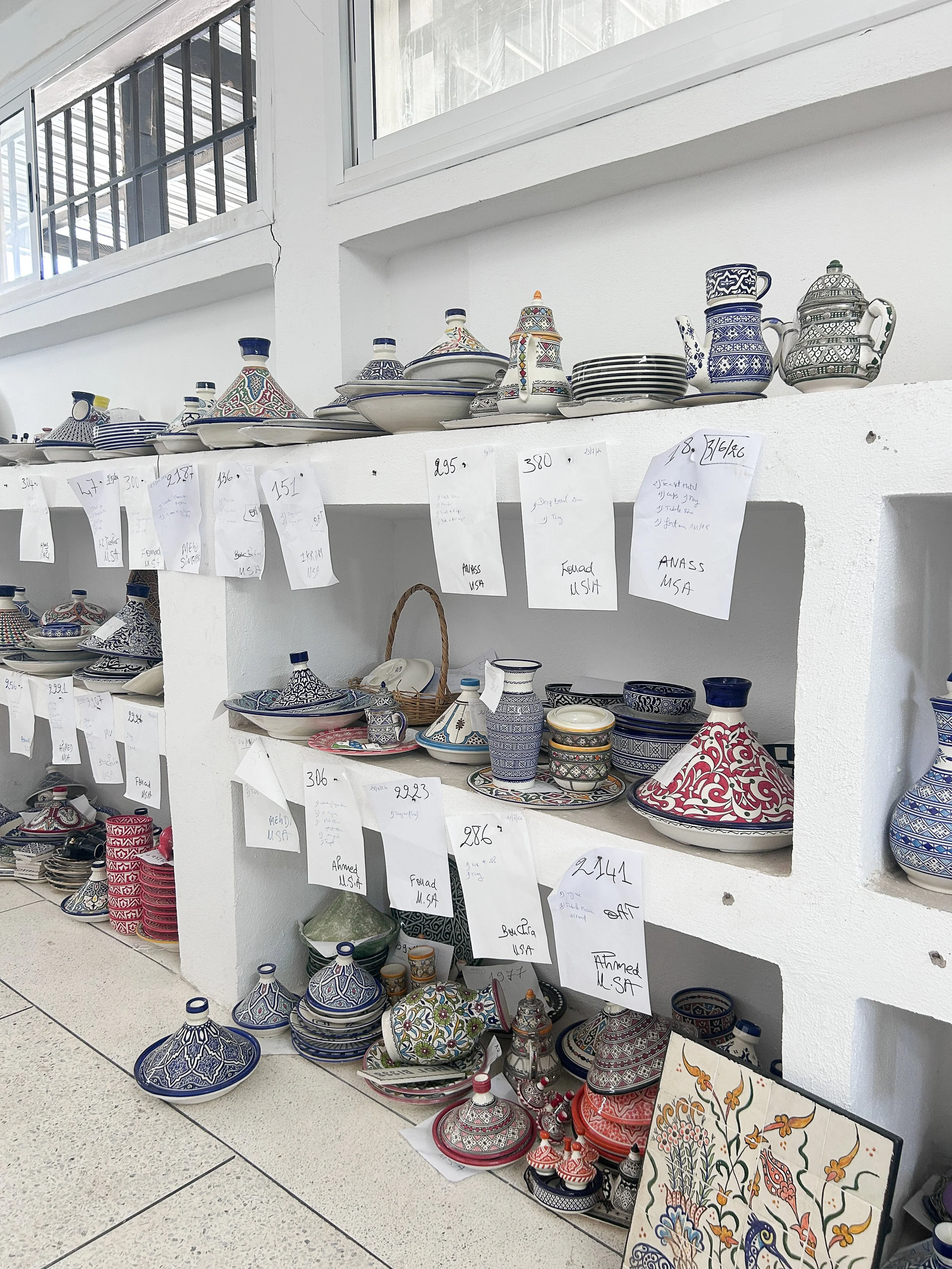
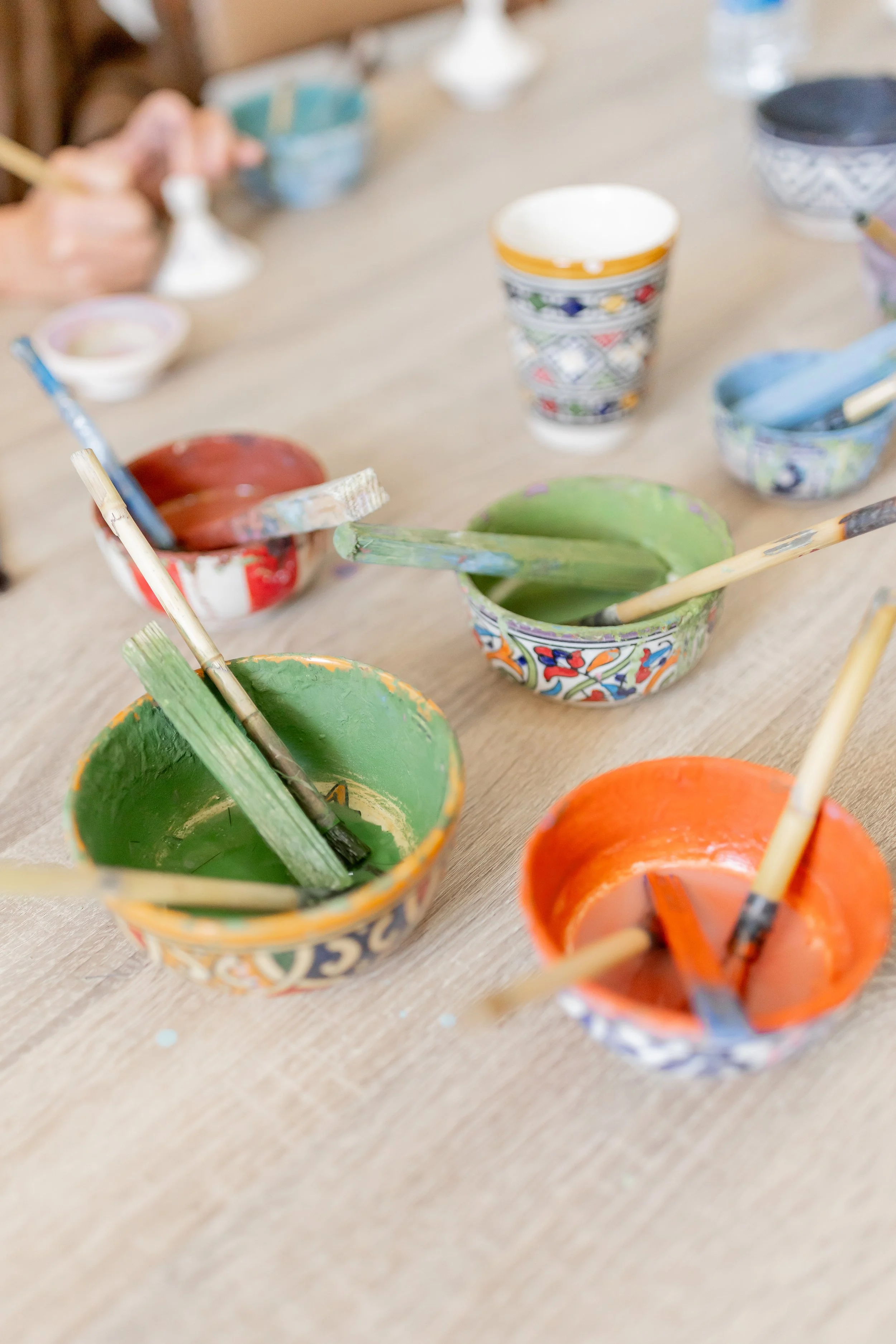
Our experience began with a guided tour through the workshop, where we witnessed each step of this meticulous process. From shaping clay on spinning wheels to baking the tiles in traditional kilns, every phase required patience and precision. We watched artisans hand-paint stunning designs, their brushes moving with quiet confidence built over years of practice.
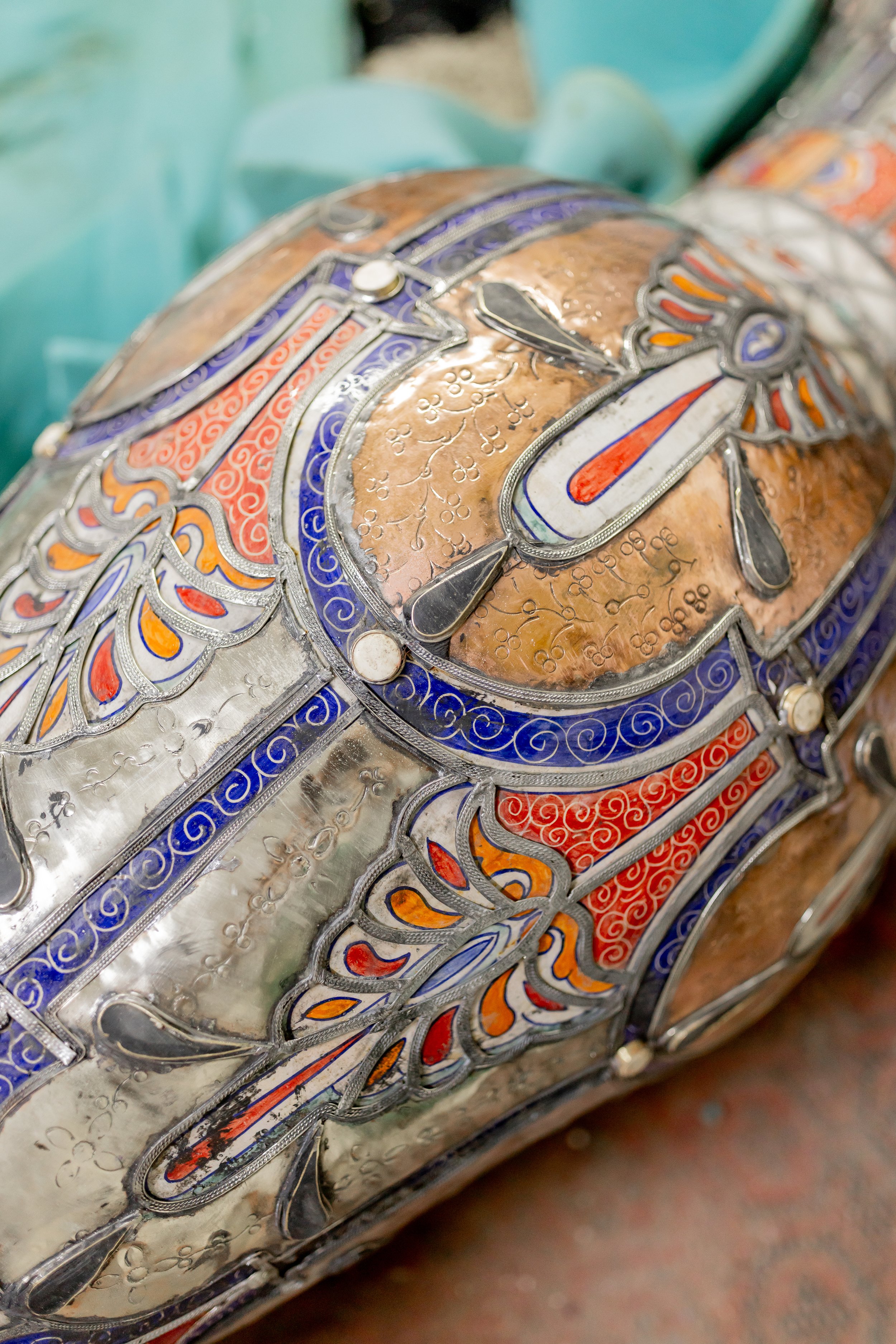
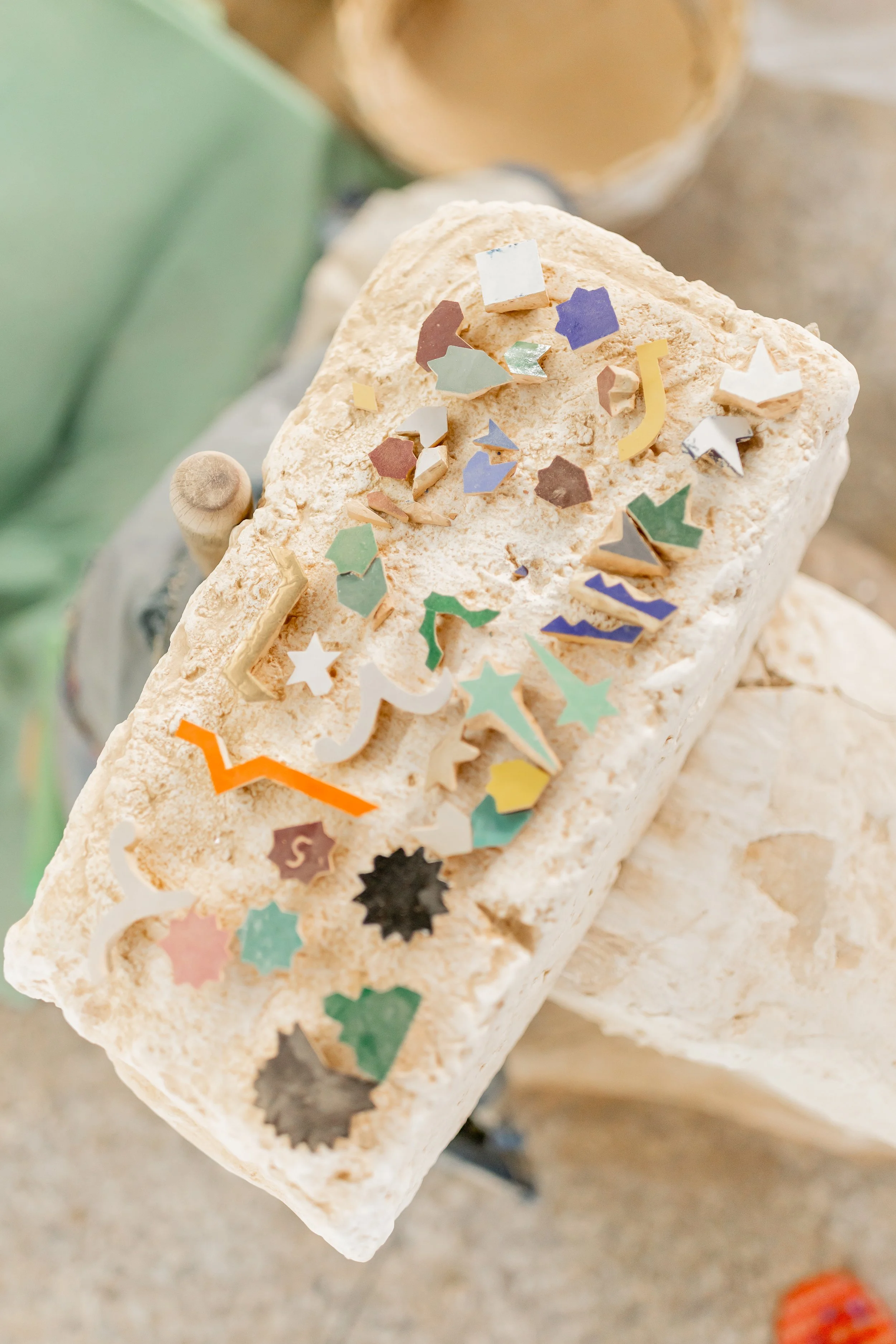
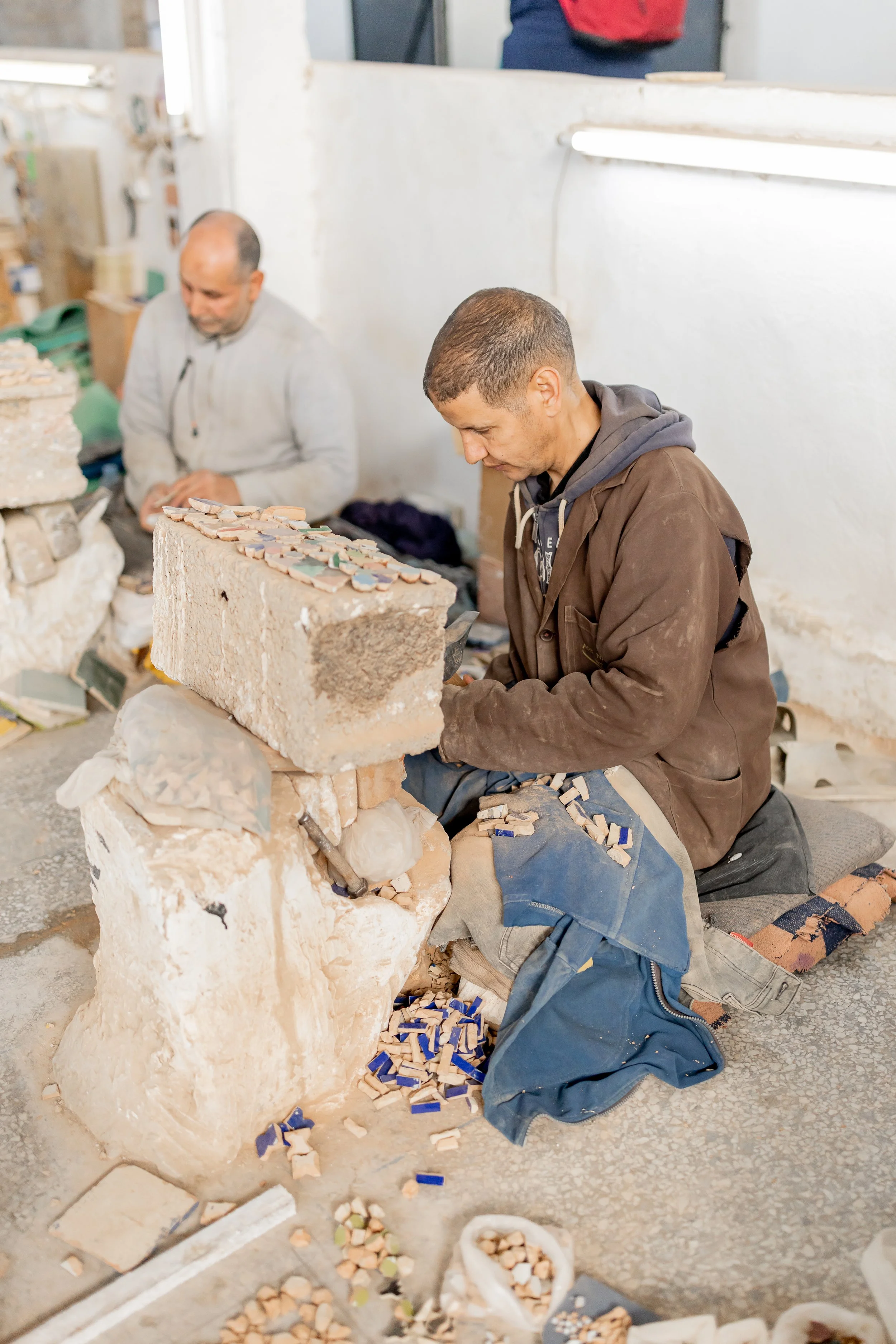
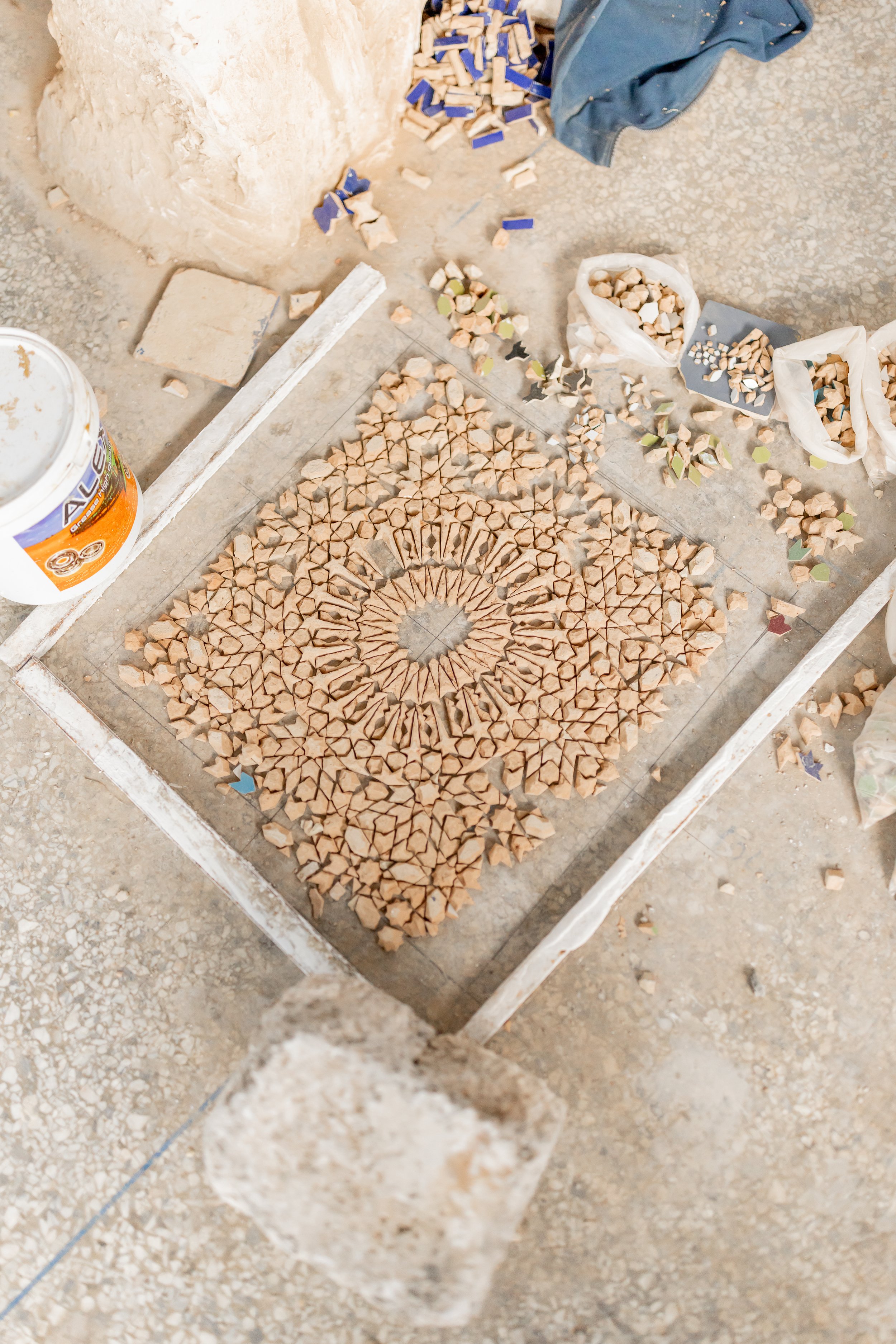
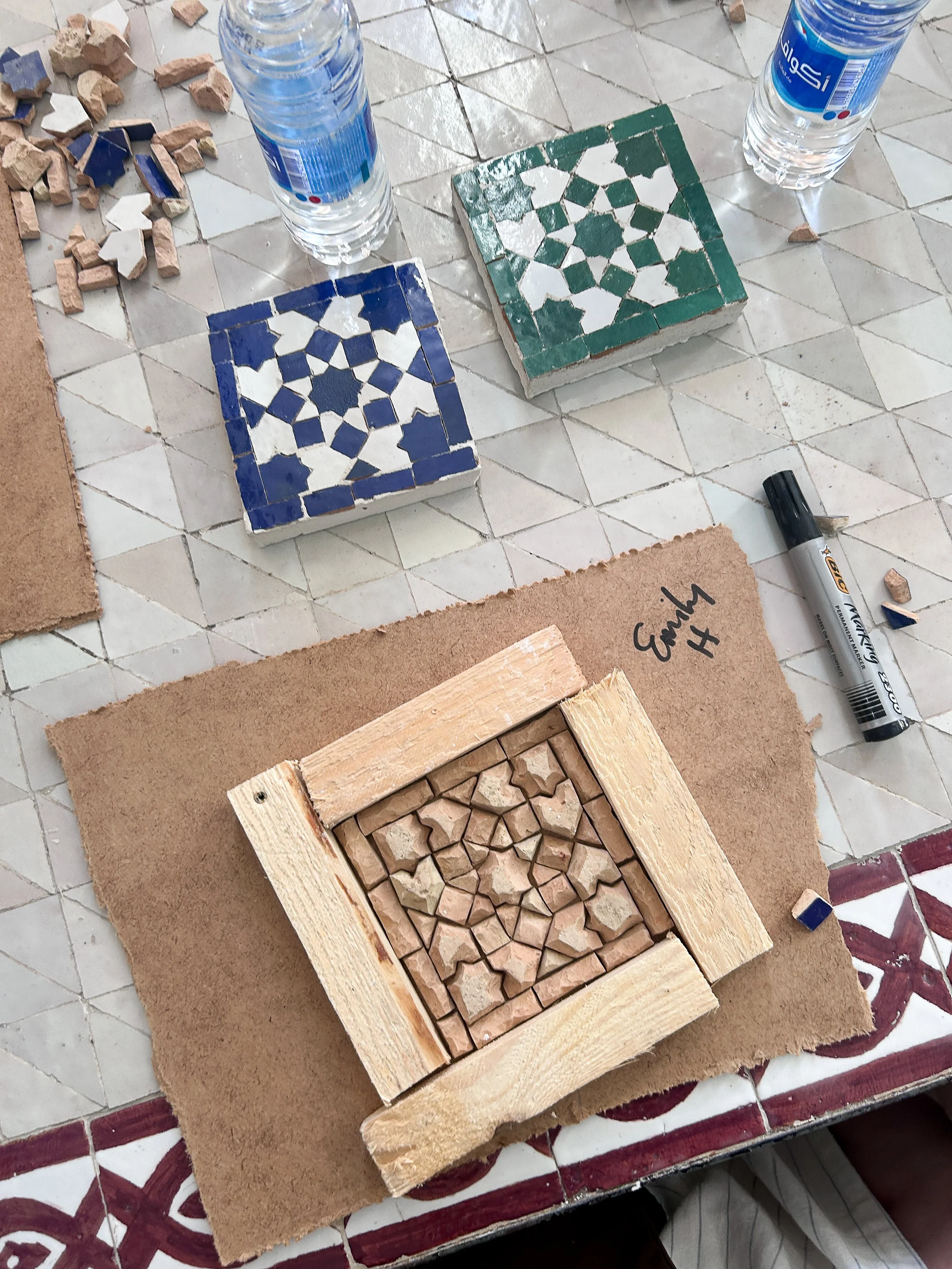
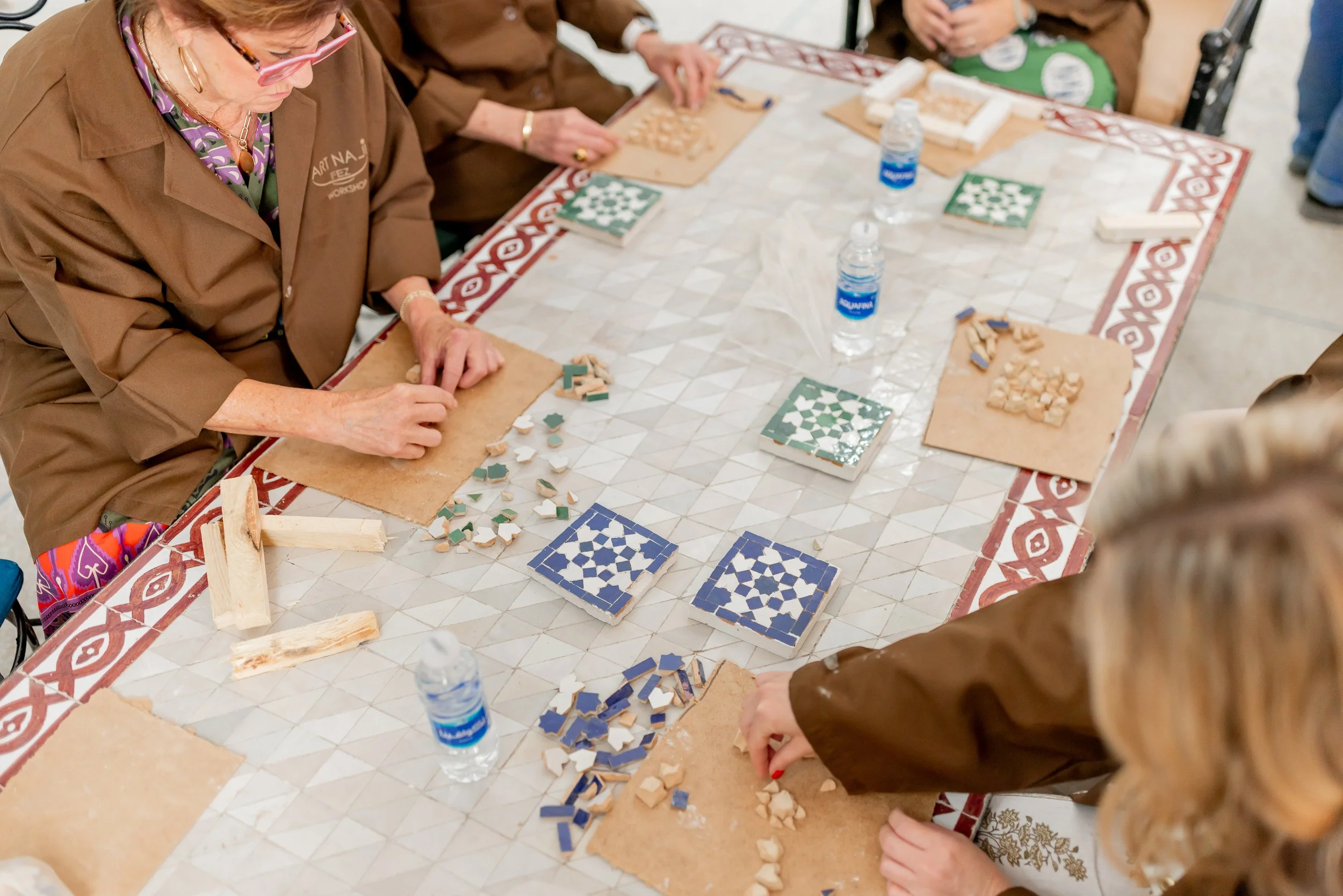
One of the most fascinating elements was learning about the traditional Safi method, where hand-stamped metal is incorporated into certain designs, adding both texture and depth. But perhaps the most mesmerizing moment came as we observed craftsmen chiseling tiny pieces of tile—each one shaped individually—before assembling them into elaborate mosaics. Even more incredible? These designs are often constructed upside down, a true test of both skill and vision.
Then it was our turn.
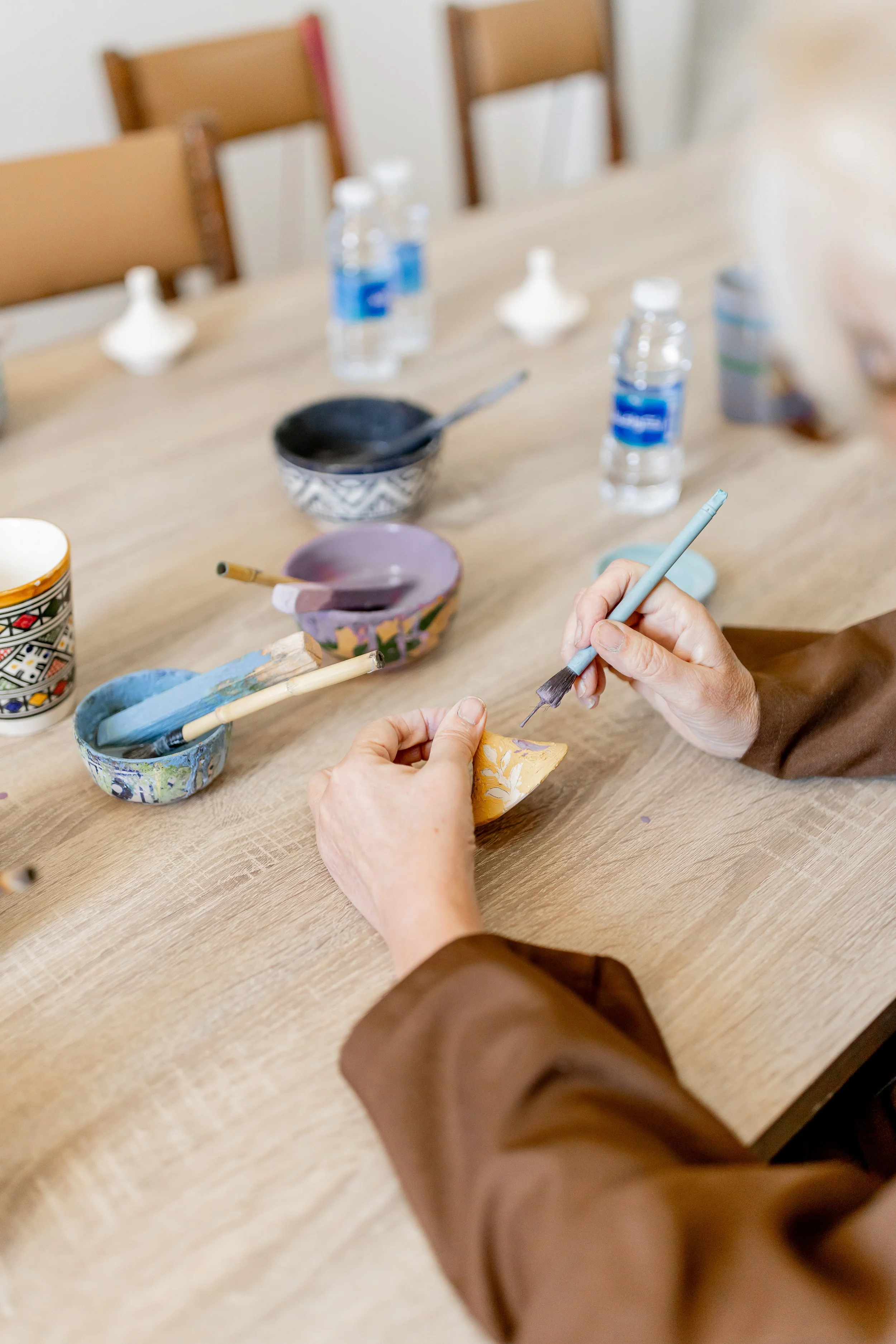
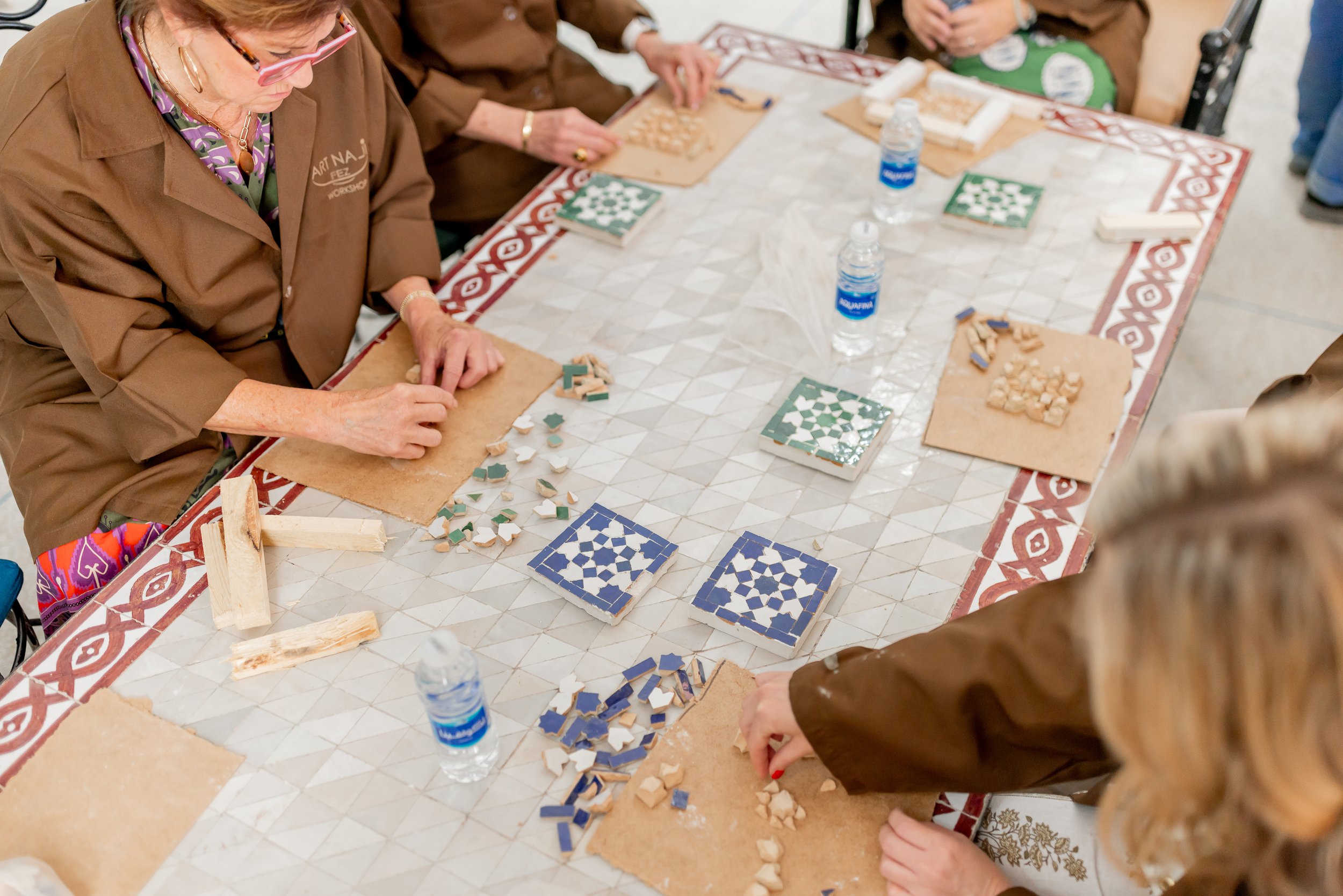
There’s something both humbling and exhilarating about attempting an art form that has been perfected over centuries. We each tried our hand at creating our own zellige mosaics, carefully placing each piece, gaining a newfound appreciation for the craftsmanship involved. What looked effortless in the hands of a master quickly revealed itself to be a delicate dance of precision and patience.
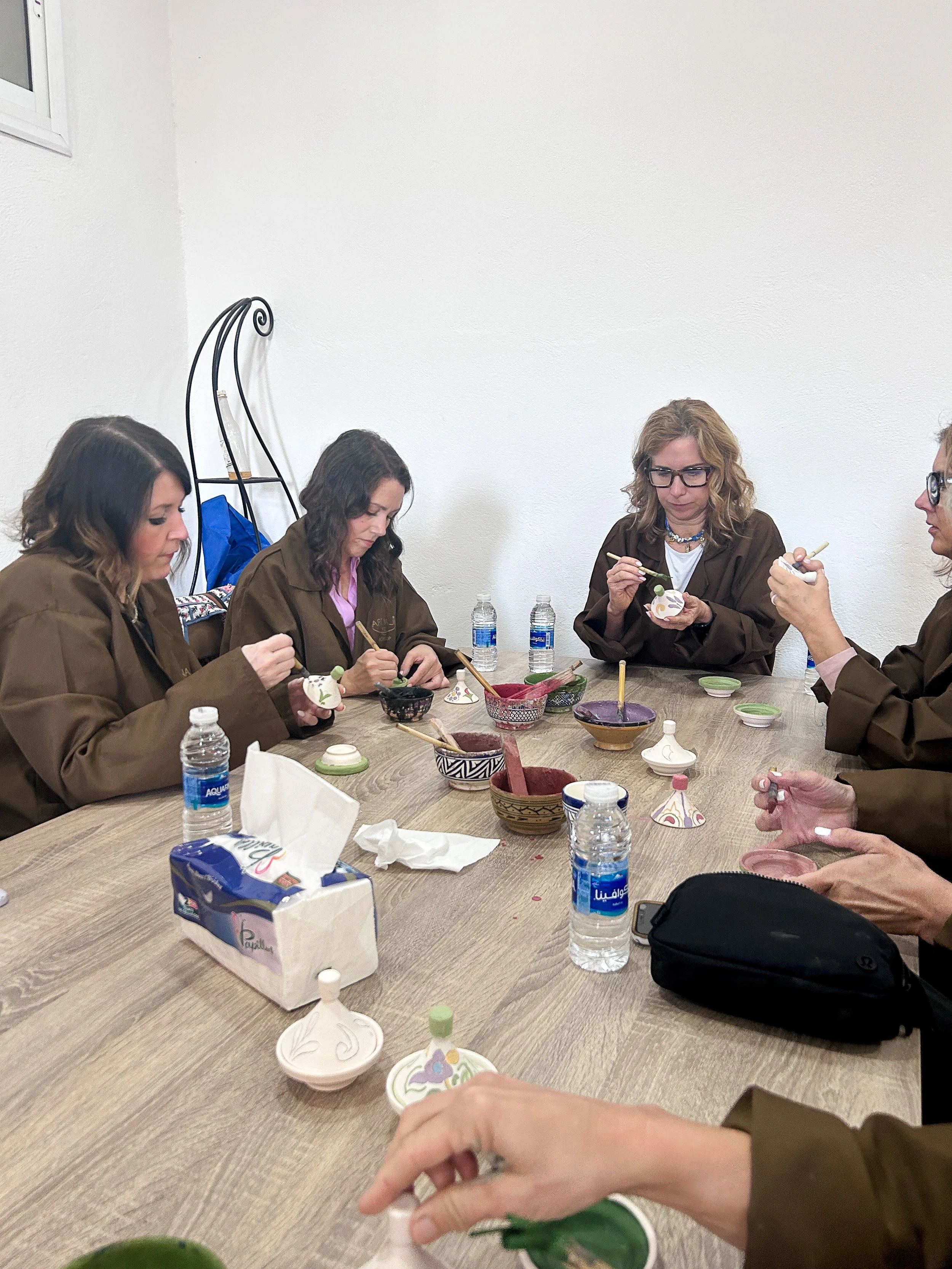
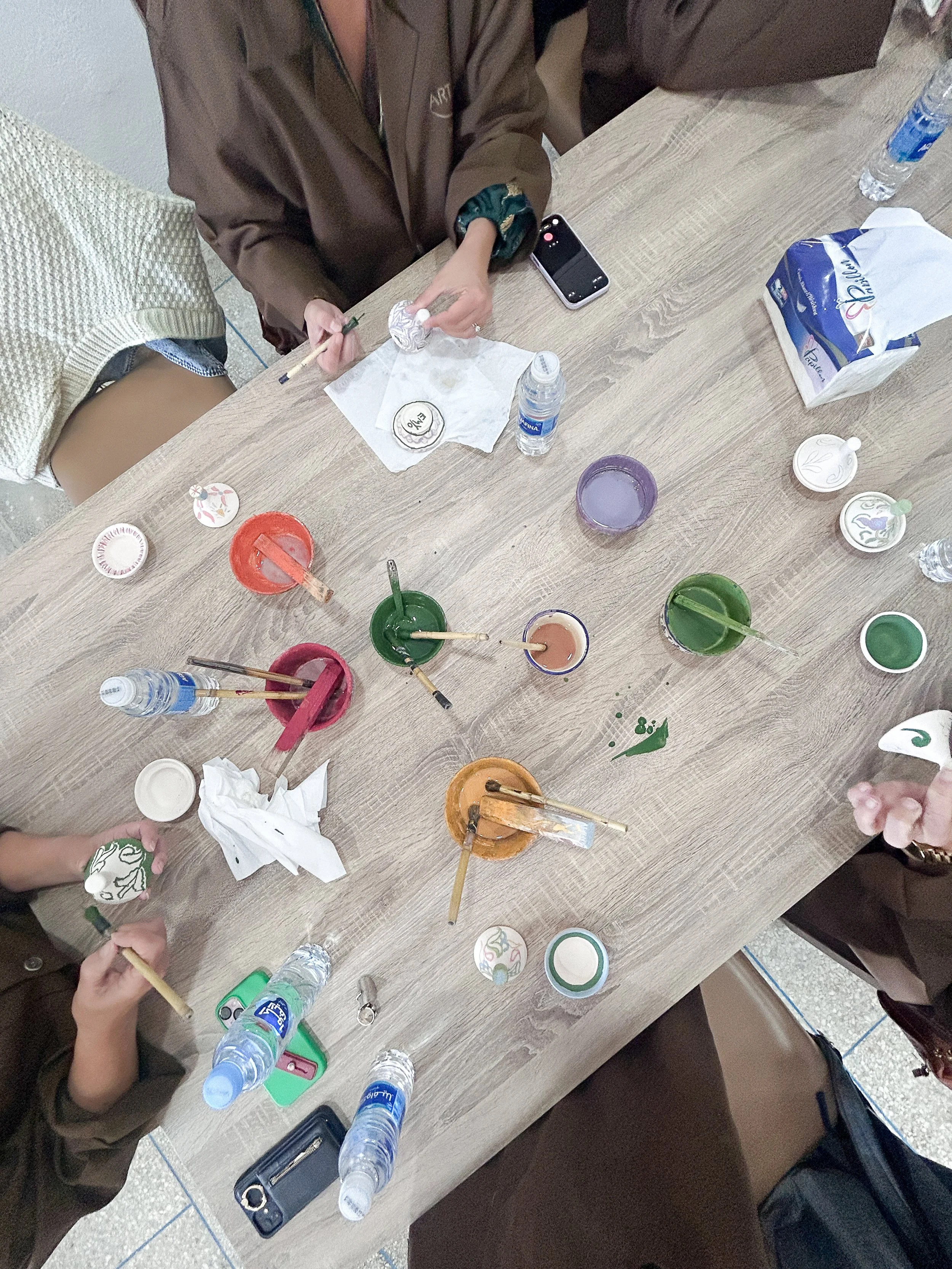
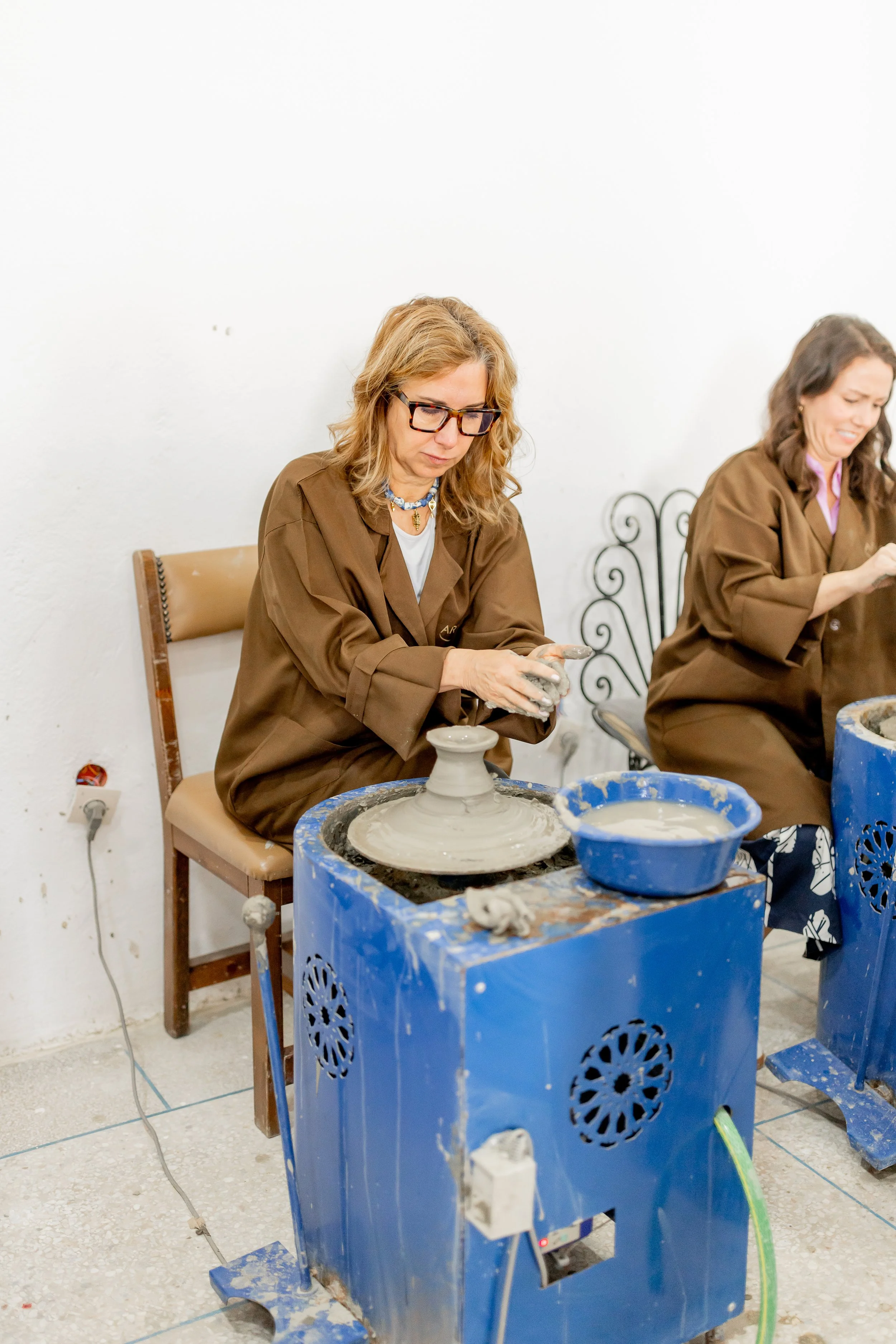
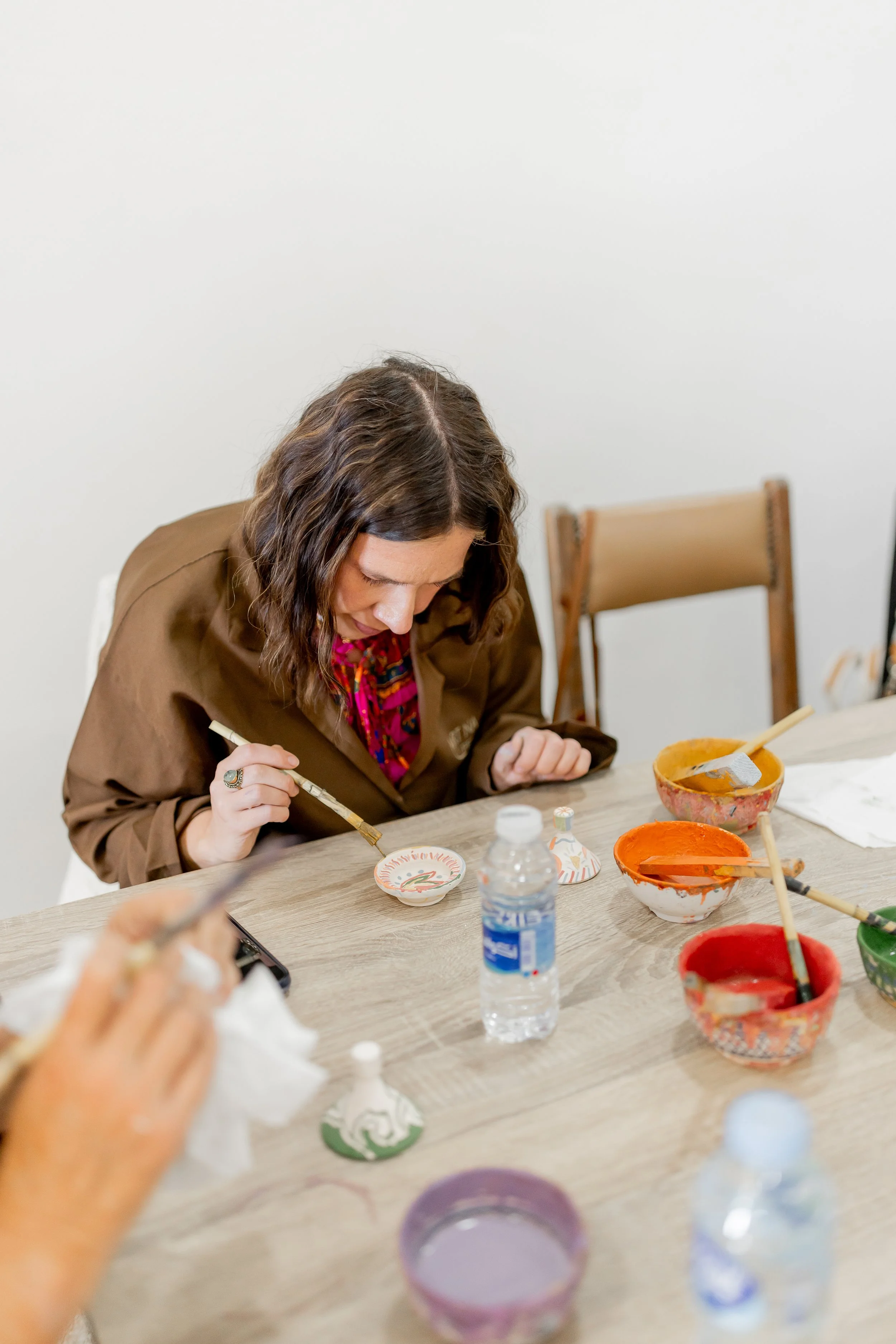
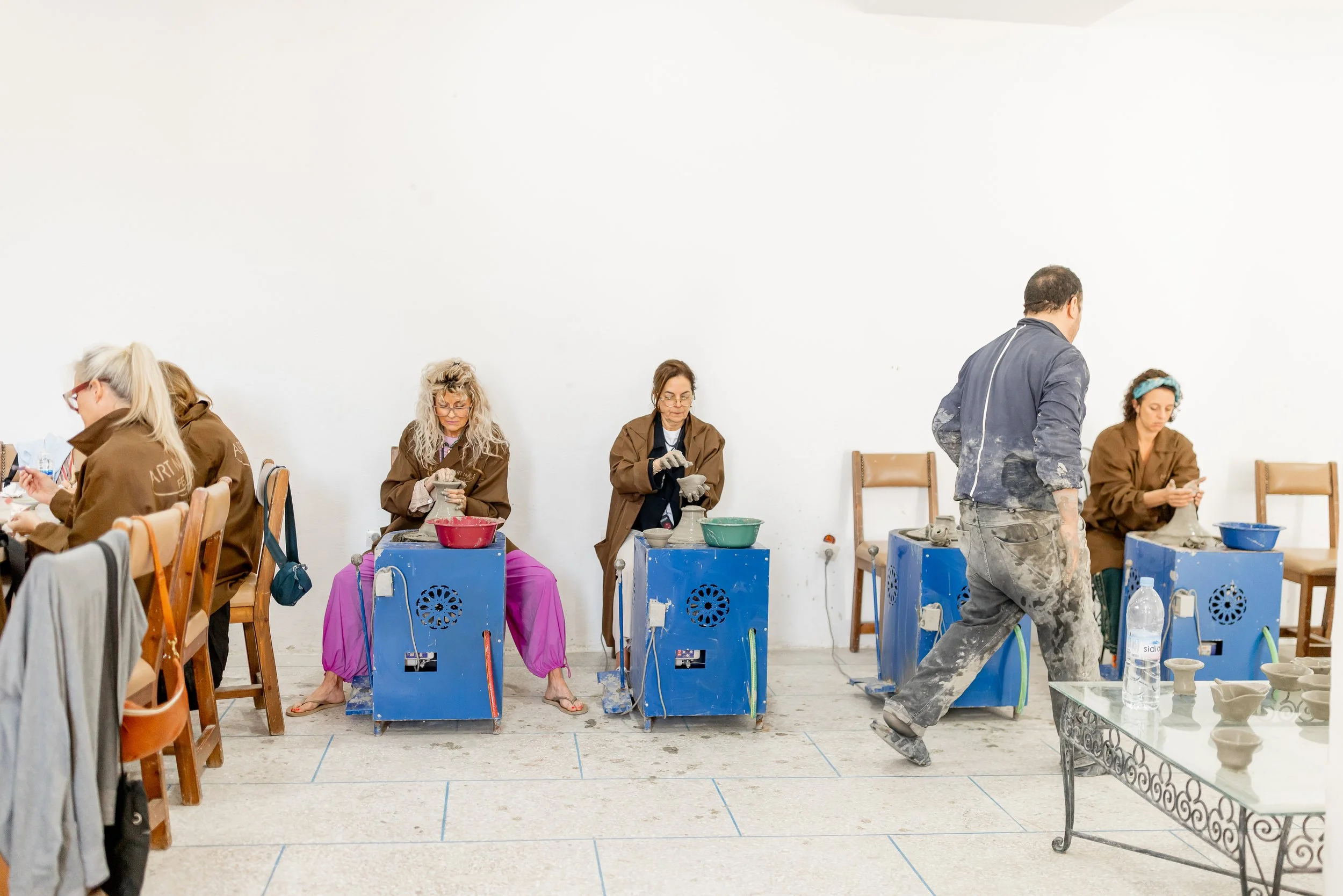
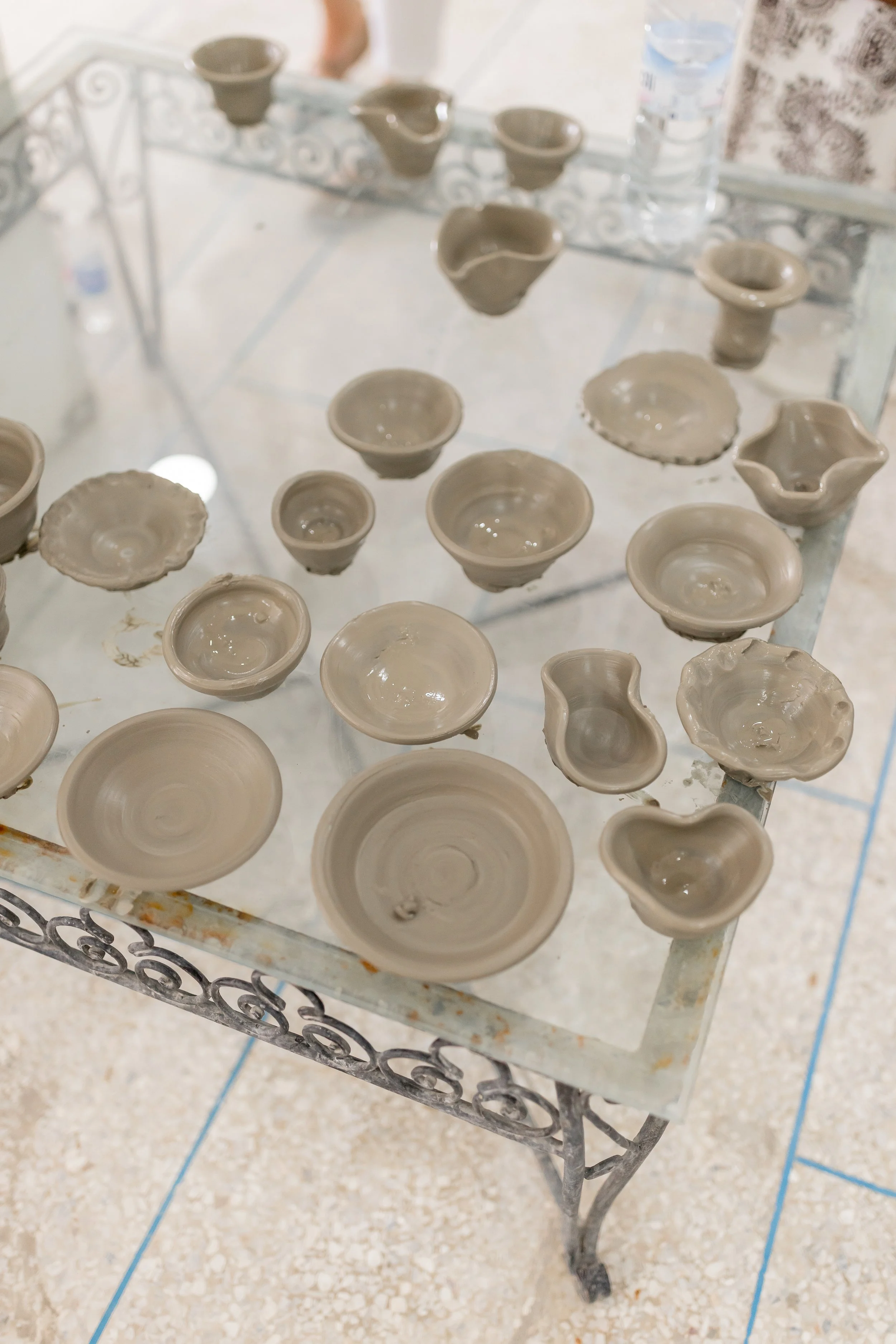
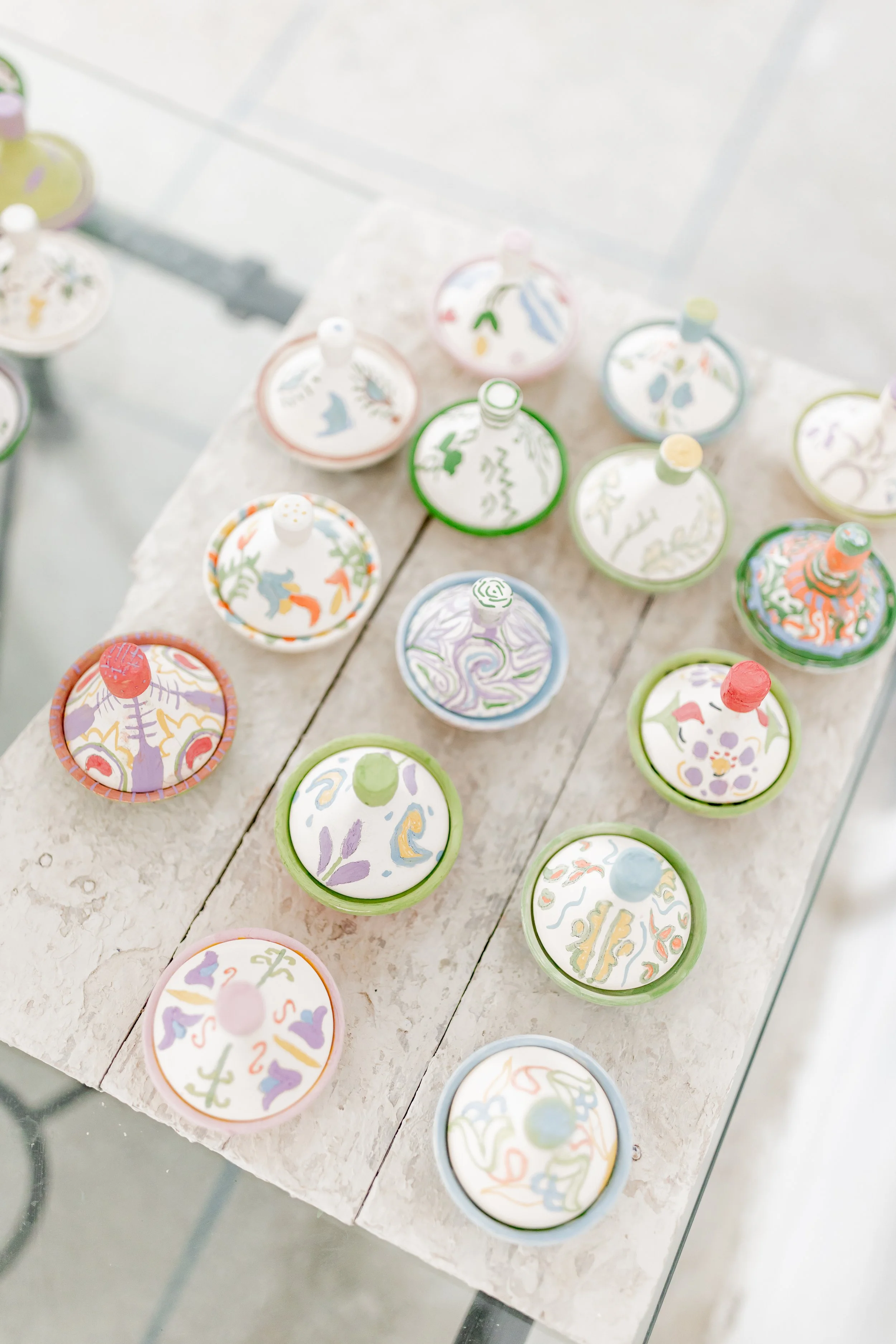
The experience didn’t end there. We also explored other traditional techniques, including painting miniature tagines—each one a small canvas for creativity—and trying our hand at throwing clay on potter’s wheels. Laughter filled the room as wobbly shapes emerged, a reminder that mastery begins with simply trying.
What made this experience so special wasn’t just the artistry—it was the connection. To history, to culture, and to each other. And long after the tiles are set and the clay has dried, what remains is a deep appreciation for the beauty of slow, intentional craftsmanship—and the stories each piece carries within it.